
Mr. Schmitt (01:42):
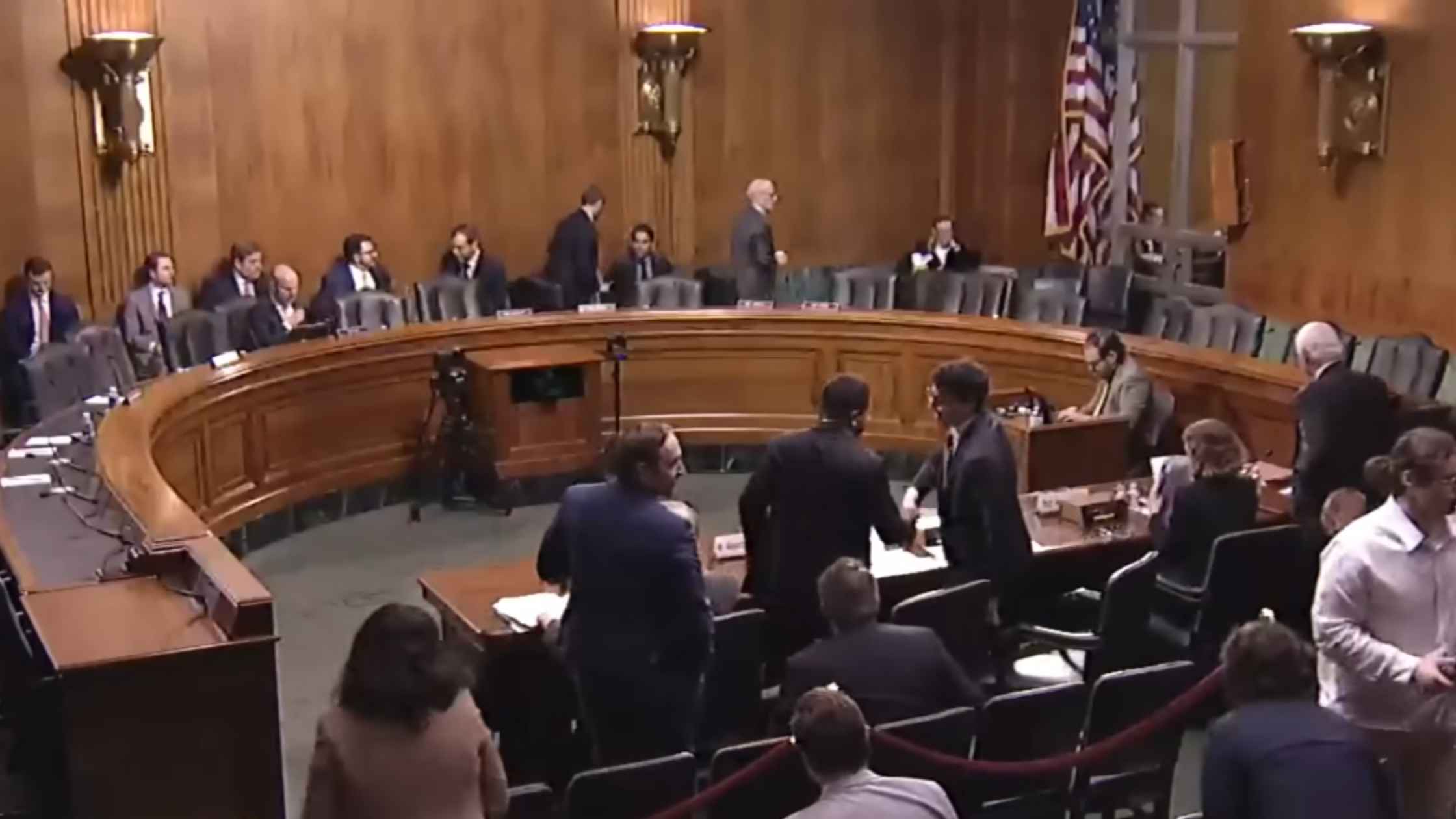
Okay. I call this hearing of the Senate Judiciary Subcommittee on the Constitution to order. I want to thank everybody for being here. Today's topic is Protecting American Citizenship: Birthright Citizenship for Illegal Aliens and Tourists. This is an especially pressing topic given the Supreme Court will hear arguments in the Trump v. Barbara case next month regarding President Trump's executive order, eliminating birthright citizenship for children of illegal aliens and temporarily present aliens.
(02:08)
For years, the American people have been told that the Constitution requires the United States to grant citizenship to almost anyone born here without any regard for such key questions like whether or not the parents were in the country legally in the first place. That claim has shaped our immigration system and our politics for decades. It has also reshaped how many people think about what it means to be an American. But if you actually read the Constitution, examine the ratification debates and research the common law, that claim is far from obvious.
(02:39)
This debate is not just about immigration policy. It's about the meaning of American citizenship. Citizenship is not just paperwork issued by the government. It's not a bureaucratic label. Citizenship is the essential bond between a nation and its people. In a Republic like ours, that bond carries enormous weight. Because in the United States, sovereignty doesn't belong to a king or ruling class. It belongs to the American people themselves. Citizenship defines the legal recognition of who the American people are. Citizenship defines the political community that governs the United States. It defines who exercises the sovereign authority of this republic.
(03:22)
For most of our history, Americans understood citizenship in straightforward terms. It reflected allegiance to the United States. It meant loyalty to this country and attachment to its institutions. It meant belonging to the American nation. But over the past several decades, that understanding has steadily been pushed aside. Lawyers, activists, and policymakers in Washington have advanced the idea that citizenship has little to do with allegiance or membership in the national community. Under that interpretation, citizenship is devoid of connection to the American people. Instead, regardless of if your parents are tourists, foreign students, or illegally in the country, if you're born here, you are automatically a citizen in equal standing with the American people, even if you have no connection to the national community.
(04:10)
This is a dramatic departure of how most nations understand citizenship and has produced predictable results. Foreign nationals travel the United States late in pregnancy for the purpose of securing American citizenship for their children. An entire birth tourism industry has emerged around that goal. Illegal immigration is fueled by the belief that a child born here will receive automatic citizenship. And one of the most serious institutions of the American Republic is increasingly treated like a loophole in the immigration system. Citizenship should never be a loophole. Citizenship shouldn't mean belonging.
(04:52)
Every serious nation recognizes that citizenship reflects membership in a national community, it reflects allegiance, it reflects loyalty to the country and its laws. Nations also recognize something else. They have the sovereign right to define the boundaries of their own political community. A nation that cannot determine who belongs to its political community begins to lose control of its own sovereignty. A nation that can't define who belongs to it has lost control of its sovereignty. The Constitution addresses this issue directly. The 14th Amendment provides that all persons born or naturalized in the United States and subject to the jurisdiction thereof are citizens of the United States. Those words matter, "subject to the jurisdiction thereof." That phrase reflects allegiance. It reflects political authority. It reflects belonging to the United States.
(05:44)
The Citizenship Clause was written in the aftermath of the Civil War to correct one of the greatest injustices in American history. It guaranteed citizenship to freed slaves and their children who owed full allegiance to this country, but had been denied their rightful place in the Republic. The Citizenship Clause was written to correct a grave injustice. It was not written to create an incentive to prop up our tourism industry or incentivize illegally crossing our borders. Yet today, that is effectively how it is treated.
(06:15)
As part of today's hearing, we will also hear from Peter Schweizer, whose recent work raises another concern tied to birthright citizenship. In his new book, The Invisible Coup, which was a number one New York Times bestseller earlier this year, he investigated a rising Manchurian generation of Chinese nationals with CCP ties who have exploited the United States automatic citizenship rules. China has sent individuals to give birth in America, securing US citizenship for up to 1.5 million Chinese nationals who will spend their entire lives in China, but can vote in our elections, attend our schools, and receive our government benefits.
(06:58)
President Trump's executive order has forced the country to confront this issue directly. It raises a basic question. Does the Constitution require the United States to grant citizenship automatically to the children of illegal aliens or temporary visitors? That question is now before the Supreme Court. But Congress has a responsibility to examine the constitutional text, the historical record, and the consequences of the policies we have today. That's why we're having this hearing, and that's why this hearing matters.
(07:29)
And the timing of this discussion could not be more appropriate. This year, the United States marks its 250th year. 250 years ago, the founders created a constitutional republic built on the idea of self-governing people. Citizenship was the legal expression of that idea. It defined the community that governs the country. It defined the American people. For two and a half centuries, the American Republic has endured through war, crisis, and enormous change. But institutions like citizenship do not endure by accident. Nations do not endure by accident. They endure because each generation chooses to defend the institutions it inherited. Anniversaries like this one are not only moments to celebrate our history, they're also moments to ask serious questions about our future. Who are we as a people? What does it mean to be an American? And what institutions must we protect if the American experiment is going to endure for another century and beyond?
(08:26)
Few institutions are more central to these questions than citizenship itself. Citizenship is the legal expression of the American people. It carries the responsibilities of freedom from one generation to the next. If citizenship becomes detached from allegiance and belonging, the institution itself begins to weaken. If citizenship loses its meaning, the foundations of the Republic begin to weaken from within. So, the question before us today is a simple one. Is American citizenship the inheritance of a nation and its people? Or is American citizenship simply a hollow legal definition without protections against fraud, abuse, and bad actors?
(09:07)
Protecting the meaning of American citizenship is not just a matter of immigration policy. It's a matter of preserving the American Republic and the American people. I look forward to hearing from our witnesses today, but before we do that, I want to recognize the ranking member and my friend of the subcommittee. Senator Peter Welch for his opening remarks.
Mr. Welch (09:25):
Thank you very much, Mr. Chairman. Thanks for calling this hearing. And it is at a time where immigration policy is fraught and it's conflicted. I want to thank our witnesses for being here. First of all, our nation was built on immigrants. Our nation was also built on slave labor. And our nation had this Dred Scott decision, which literally said African Americans were not citizens, not entitled to be citizens. And that wrong was finally righted when that Dred Scott decision was overturned by the Constitutional Amendment that did establish the right of citizenship by birth. But Mr. Chairman, you say, and I think this is a fair question. Does citizenship be conferred just by birth? Legally, most scholars say it is, and I believe it is. But real citizenship is embracing the responsibilities every single one of us has to live up and promote the ideals that every person is created equal and has an opportunity to be their best self and contribute to the betterment of our country. So this argument about what's legal and what isn't, and I believe it's very clear that the law says if you're born here, you are a citizen here. That is just the beginning. It is up to each and every one of us to accept the responsibility we have to create a more perfect union.
(11:05)
We're at a fraught time. What we're seeing is a rampage by ICE in the name of so called protecting our citizens. We've had a debate in this country about open borders, and Mr. Chairman, there's been success in closing the border. A country does have a right to define what its borders are. We've had a debate about deporting criminals. Criminals are being deported. But what we're now seeing is a reckless rampage of mass deportations and where people who have been here and are working hard in this economy, creating jobs, serving in the military, those people are being picked up by masked agents. And we saw how extreme it is in Minneapolis where a 37- year-old nurse, a 37-year-old mom of three, were both shot down without any justification. And this is in the name of so called enforcement of citizenship. The constitutional rights that we're talking about at this hearing, they're being violated. They are being violated. And what this hearing has to be about is ensuring that we protect the constitutional rights of people who are entitled to them in this country.
(12:33)
One of our witnesses here, Alejandro Barranco, a Marine, two brothers, Marines. His father, landscaper, was arrested with guns drawn, no criminal record, and it has not been deported, but that was because he had a status that was being challenged. He was picked up in that way. That is wrong. So what we're talking about here is not just about the legal definition of citizenship, because it's on us to have enforcement mechanisms that work, a judicial system that works, but in the name of cleaning out everybody who has a questionable status and you end up 86% of the people who are arrested have no crime at all associated with them where this man, Alejandro and his two brothers are Marines and their father is picked up. That is of concern to me and it's of concern to the American people. The enforcement actions of ICE have been on a rampage. They're trampling on the rights of the people of this country. It's time for us to protect constitutional rights, not violate them.
(13:48)
On the question of birthright citizenship, that's illegal. All right? That is illegal. So there's a lot of room here for people who are concerned about the border and concerned about the future of our country and concerned about the responsibility that anybody has who's here to contribute to creating a more perfect union. There is opportunity for us to work together, but we will not, I will not submit that an executive order by a president can overturn a Supreme Court decision. I yield back.
Mr. Schmitt (14:26):
Thank you. And I want to turn the floor over to Senator Durbin.
Mr. Durbin (14:31):
Thank you very much, Mr. Chairman. As members of Congress, we take an oath to support and defend the Constitution, so does the president. To quote former chairman of Joint Chiefs of Staff, General Mark Milley, "We don't take an oath to the king or a queen or to a tyrant or a dictator, and we don't take an oath to a wannabe dictator. We take an oath to the Constitution. We take an oath to the idea that is America." And yet here we are today to talk about an effort by the President of the United States to undermine the Constitution and overturn black-letter constitutional law and statute by royal fiat. Section one of the 14th Amendment of the United States reads, I quote, "All persons born or naturalized in the United States and subject to the jurisdiction thereof are citizens of the United States." In 1898, the Supreme Court held that the Citizenship Clause of the 14th Amendment guarantees citizenship to the children of foreigners present on US soil, even if their parents are not eligible to become US citizens.
(15:41)
In 1952, Congress enshrined this holding into law. Birthright citizenship is the law of the land, but President Trump believes he can issue an executive order, an attempt to end birthright citizenship guaranteed by our Constitution. Every court who has considered this order on its merits has soundly rejected it. District Court Judge John Keenan, who was appointed by President Ronald Reagan, called it, "Blatantly unconstitutional." President Trump's illegal birthright citizenship order is not just an attack on the Constitution. It's an attack on millions of immigrants who have contributed in countless ways to our culture and our economy, but this just isn't about notable birthright citizens. The executive order would create a permanent underclass of American-born children who would contribute to our nation and yet be denied the opportunity of citizenship. As General Milley said, "Our oath is to the Constitution and the idea of America. An America I love that rejects a caste system of residents and welcomes the contributions of immigrant families."
(16:50)
One week ago, Secretary Kristi Noem walked in and sat down at this table. By 48 hours passing, she was removed as the Secretary of Department of Homeland Security. What is at stake here? It is a national conversation about immigrants? Do we fear them? Do we hate them? Or do we embrace them as part of America? I certainly hope it's the latter. My mother was an immigrant to this country. My two brothers were born before she became a naturalized citizen. They served our country in the United States Navy, both of them. They've now passed away. Is there any question that they were really American citizens? Not in my mind. Not in the minds of so many others. We don't have a requirement of allegiance as part of the Constitution. And how are we going to make that judgment, if that's what the chairman has suggested?
(17:40)
I think it's important that we come to our senses when it comes to the role of immigrants in the future of America. If those immigrants have broken the law and are dangerous to our country, they should be gone. But if they are here making an honest contribution, they shouldn't be rounded up in a mass deportation. So far, six out of seven of those who have been deported or arrested by ICE are in this country without any criminal record of any consequence. Six out of seven. It was supposed to be the worst of the worst. They're rounding up now American citizens endangering them.
(18:15)
Mr. Barranco, thank you for being here today to tell your story. I'm aware of it and I respect very much what you've given our country and serving in the Marine Corps. Let us end this fear and hate of immigrants. Let's deal with these people in an honest American way.
Mr. Schmitt (18:31):
Thank you. Now I'll introduce the majority witnesses. First up, Mr. Charles Cooper is the founding member and chairman of Cooper & Kirk, a prominent litigation firm based in Washington, DC. He previously served as Assistant Attorney General for the Office of Legal Counsel during the Reagan administration. After graduating from the University of Alabama School of Law. Mr. Cooper clerked for Judge Paul Roney of the US Court of Appeals for the Fifth Circuit and Justice William H. Rehnquist of the Supreme Court. Over the course of his career, he has argued numerous cases before the Supreme Court. Nine times before each of the 13 federal courts of appeal and several state Supreme Courts as well. Mr. Cooper has appeared before congressional committees on 24 occasions testifying as an expert on a wide variety of legal issues. Thank you for being here.
(19:18)
Mr. Wurman is the Julius Davis professor of law at the University of Minnesota Law School where he teaches constitutional law and administrative law. His scholarship focuses on the 14th Amendment, separation of powers, administrative law, and originalist constitutional interpretation. Professor Wurman is the author of several books on constitutional theory. His work frequently examines the historical meaning of the Reconstruction Amendments, and he recently published a law review article on the scope of the Citizenship Clause and the common law scope of birthright citizenship. His new book, The Constitution of 1789: A New Introduction is forthcoming in June of 2026.
(19:59)
And Mr. Peter Schweizer is an investigative journalist. We're pleased to have him here, a bestselling author and the president of the Government Accountability Institute, a nonprofit research organization focused on public corruption and government accountability. Mr. Schweizer is the author of five straight number one New York Times bestsellers, including his most recent book, The Invisible Coup: How American Elites and Foreign Powers Use Immigration as a Weapon. Mr. Schweizer's investigative work has been featured on the front page of the New York Times, Wall Street Journal and Washington Post and is featured in two segments on 60 Minutes.
(20:32)
His work has spawned FBI and congressional investigations. His book, Throw Them All Out, which exposed insider trading on the stock market by members of Congress is credited with leading to the passage of the Stock Act. He received his BA from George Washington University and his master's from Oxford. Mr. Welch, Senator Welch, you want to introduce the minority witnesses.
Mr. Welch (20:52):
Thank you. Professor Amanda Frost, welcome. Professor is the David Lurton Massee, Jr., Professor of law at the University of Virginia Law School and the director of the Immigration Migration and Human Rights Program from 2022. She has many academic awards and publications. And before she entered academia, Frost clerked for Judge Raymond Randolph for the US Court of Appeals for the DC Circuit, worked as a staff attorney and public citizen and also worked as a legislative fellow for the Senate Judiciary Committee right here in this room, then chaired by Senator Ted Kennedy. She has a BA from Harvard and a JD from Harvard Law School. Welcome.
(21:39)
And Alejandro Barranco. Now, did I pronounce your name right?
Alejandro Barranco (21:43):
Yes.
Mr. Welch (21:44):
I did? Good. A Marine. Two brothers who were Marines. And you are out of the Marines, honorable discharge after service, including in Afghanistan, as I understand it. And you were there at that chaotic end. And your dad raised you and your brothers. Your mom, and the three brothers all became Marines. And you're back and you're working yourself as a landscaper, as I understand it. You work during the week and are starting to learn to get certified about this. And your dad was, and he was arrested when he was on his second landscaping job on a Saturday at an IHOP. And as I understand, he did those things. We look forward to hearing about what the shock was to you when you got the news that your father had been arrested. And thank you so much for your service of the country, and also thank you so much for being here and sharing your story. Mr. Chairman.
Mr. Schmitt (22:45):
Thank you. It's the tradition of this committee to swear in the witnesses who testify before it. So please stand and raise your right hand. Do you swear that the testimony you're about to give to this committee is the truth, the whole truth, and nothing but the truth, so help you God?
Witnesses (22:59):
I do.
Mr. Schmitt (23:02):
Thank you. We'll recognize Mr. Cooper first.
Mr. Cooper (23:05):
Well, thank you very much, Chairman Schmitt, ranking Member Welch and distinguished members of the committee. The scope of the Citizenship Clause depends on the original meaning of the phrase "subject to the jurisdiction thereof," as the chairman has mentioned. And because the term jurisdiction is ambiguous, one must look to the history of its use in the clause to help determine its original meaning. And further, because the central purpose of the Citizenship Clause was to constitutionalize the citizenship provision of the Civil Rights Act of 1866, the search must begin with the text and history of that act. The Civil Rights Act granted citizenship at birth to persons, "Born in the United States and not subject to any foreign power." The act on its face thus excludes from birthright citizenship American-born children of temporary foreign visitors and illegal aliens because the child's foreign parents and thus the child are by definition subject to a foreign power.
(24:10)
Any possible doubt about this is removed by the acts of congressional history. The citizenship provision of the act was introduced by Senator Lyman Trumbull, who explained that it would make citizens of everybody born in the United States who owe allegiance to the United States, and it would exclude from citizenship the children of " persons temporarily resonant in the United States whom we would have no right to make citizens." The Senate debate focused mainly on the citizenship of American Indians, and there was general agreement among the senators that Indians who belong to the Indian tribes should be excluded from birthright citizenship under the act because they owed allegiance to the tribe, a quasi foreign nation, they said. "And the Indians therefore were not regarded as part of our people, as part of our population."
(25:06)
Trumbull made clear that the act's disqualification of the birthright citizenship applies not only to tribal Indians, but to everyone. As he explained, "If a Black man or a white man belonged to a foreign government, he would not be a citizen." Senator Reverend Johnson, likewise added, "All Black persons born in the United States who are not subject to any foreign power would become citizens by virtue of birth." What was not said in the debate is equally revealing. No one argued that foreign citizens temporarily visiting United States are regarded as part of our people rather than part of the people of a foreign power. No one suggested that a child born to such foreigners while visiting here should be entitled to citizenship at birth, and no one even mentioned the English common law doctrine of Jus soli. Just two months after passage of the Civil Rights Act, the 14th Amendment was taken up by the same 39th Congress, and Senator Jacob Howard moved to add the Citizenship Clause.
(26:13)
The language he proposed differed from that of the Civil Rights Act, the phrase "not subject to any foreign power" was replaced by the phrase "subject to the jurisdiction thereof." But the change in language was clearly not intended to abruptly change the meaning and thereby to invalidate the Civil Rights Act's express disqualification of children of foreigners owing allegiance to a foreign power. As Senators Howard and Trumbull emphasized, the new language is simply declaratory of the law of the land already, the Civil Rights Act, and the object to be arrived at is the same. Instead, the language was changed to address concerns once again relating to the American Indians. As Trumbull stated emphatically, the new language means subject to the complete jurisdiction of the United States. What do we mean by subject to the jurisdiction of the United States, Trumbull asked, "Not owing allegiance to anybody else, and it cannot be said of any Indian who owes allegiance to some tribal government that he is subject to the jurisdiction of the United States."
(27:29)
So the dissenting opinion in Wong Kim Ark was right. In fact as the descending justices said, the Civil Rights Act was passed and the 14th Amendment proposed by the same Congress, and it is not open to reasonable doubt that the words "subject to the jurisdiction thereof" in the 14th Amendment were used as synonymous with the words "and not subject to any foreign power" of the Civil
Mr. Cooper (28:00):
... Civil Rights Act. The bottom line, Mr. Chairman and members of the committee, is this. American-born children of foreign visitors and illegal aliens are not subject to the jurisdiction of the United States and are therefore not entitled to birthright citizenship. Thank you.
Mr. Schmitt (28:17):
Professor Frost.
Amanda Frost (28:20):
Chairman Schmitt, ranking Member Welch, and distinguished members of the subcommittee, thank you for the opportunity to discuss the meaning and significance of the 14th Amendment Citizenship Clause. Some provisions of the US Constitution are vague or ambiguous, but the Citizenship Clause is not one of them. The text, the history, the original public understanding all confirm that the Citizenship Clause applies to everyone born in the United States with narrow exceptions, the only relevant one today being for the children of diplomats. And by the way, they did say this in the legislative history. We have Senator Conas saying that the Citizenship Clause applied to children of quote, "all parentage whatever," end quote. They also, we all agree, especially distinguished children of diplomats. There would have been no need to carve out that group if in fact anyone who is the child of a visiting immigrant would not be a citizen.
(29:18)
Because of that, the Supreme Court precedent stretching back 127 years has also affirmed what everyone understood at the time. The Citizenship Clause applies to everyone with those narrow exceptions, again, the only relevant one being children of diplomats. In fact, in Wong Kim Ark, the Supreme Court held that and it's repeatedly held that and restated that in a case in 1957, 1966, 1985. Again and again, it confirms what we already know. Every court to address President Trump's executive order unsurprisingly has rejected it, including judges appointed by Republican ... nominated by Republican presidents such as John Koonauer, who was nominated by Reagan and who declared it to be blatantly unconstitutional. So I'm not going to spend any more time today discussing the legality of the executive order. It's clearly unconstitutional and illegal. I'm going to talk about the consequences of the executive order were to go into effect. First, it would immediately take away citizenship from 250,000 children born every year who would be born, some of them stateless, potentially deported from the country day one of their lives with no access to the rights and privileges of citizenship.
(30:26)
And by the way, a recent Pew Research Poll asked Americans whether they wanted children of immigrants, temporary immigrants, or any immigrants lawfully present in the United States to be citizens. 94% said yes. I think there's hardly anything else the country agrees on as much as the fact that this executive order is unconstitutional. In addition, it would require every child born in the United States, that's 3.5 million children a year, they'd all be born presumptively non-citizens. They would all be born with their parents now required to prove their parents' citizenship and ancestry, perhaps going back for generations in order for the child to be established as a citizen, putting those kinds of paperwork burdens on families at a vulnerable moment, on hospital officials, on state officials, and on our already overburdened immigration officials.
(31:18)
So what's the problem? Why would we need this executive order that Americans in polls say they don't like, and that has been struck down by every court as unconstitutional and illegal? Well, the problem that I'm guessing we're going to address today is this problem, which I'll put in quotes, of birth tourism. Well, a couple things about birth tourism. First is, that according to Mr. Schweitzer's book, no one really knows how many people are birth tourists, so we don't have numbers. The citizenship and ... Sorry, Mark Crocorian, who's been a witness here before, has estimated that it's less than 1% of the children born in the United States are birth tourist children. So it doesn't seem like this is a huge problem, but if it is, there is an easy fix, which is there's a law on the books, 21 CFR 41.31, which makes it illegal to enter the United States on a tourist visa for the purpose of giving birth, and empowers immigration officials to deny a visibly pregnant woman entry into the United States if they believe she will give birth during her visit.
(32:18)
So as this suggests, if we do have a problem with birth tourism, and I don't think there's any evidence that we do, but if we do, then the solution is to enforce the law on the books and not to deprive American families of the citizenship of their children born on US soil or force them to prove their lineage or lose their citizenship. Thank you.
Mr. Schmitt (32:39):
Thank you. Professor Wurman.
Ilan Wurman (32:44):
Chairman Schmitt, members of the committee, thank you. It is often believed that the common law of birthright citizenship was that mere birth on the sovereign soil was sufficient to confer such subjectship or citizenship. That is incorrect. Although that statement is an approximation of the rule that usually gets the correct result, the precise rule that common law was birthed on the sovereign soil to parents under the sovereign's protection. That is how Edward Cook described the rule in Calvin's case, the leading common law decision from 1608. Aliens from friendly countries with permission to be in the realm, and I'll get to that point, were under the sovereign's temporary protection and owed in exchange a temporary allegiance. They were, while in the realm, natural subjects of the king. That is why their children born in the realm were understood to be natural born subjects.
(33:27)
In contrast, the children born of invading soldiers were not birthright subjects, although born upon the king's soil, because they were not born under the [inaudible 00:33:36] or connection of a subject nor under the protection of the king. That is, the natural born subject is one who is born to another subject, a subject who is under the protection of the king. Invaders did not count, but aliens generally were subjects of the king if they were under his protection and gave him in exchange allegiance. William Blackstone in his influential commentaries described the rule respecting foreign ambassadors similarly. Their children were not natural born subjects because they were born under the protection and within the allegiance of another sovereign represented by the father of the ambassador.
(34:06)
To summarize the rule, here's Supreme Court Justice Joseph Story. "Nothing is better settled at the common law than the doctrine of the children, even of aliens born in a country, while the parents are resident there under the protection of the government and owing a temporary allegiance thereto are subjects by birth." The status of the parents did matter, and the relevant status was whether they were under the protection of the sovereign. What is more, in the relevant periods of English history, it appears that an alien could come under the sovereign's protection through one of two ways. Through a grant of a royal safe conduct or free statutory permission to enter.
(34:42)
Safe conducts were formal legal documents from the King granting permission to enter and specifically extending protection. The examples of these safe conducts using the language of protection are legion. For present purposes, here's William Blackstone's summary. "During the continuance of any safe conduct, either express or implied, the foreigner is under the protection of the king and the law." Now, eventually safe conducts were replaced by statutes. Magna Carta guaranteed friendly aliens safe and secure conduct to engage in trade, unless they have been previously and publicly forbidden. A 1353 statute provided clearly and unequivocally merchant strangers may safely and truly, under our protection and safe conduct, come and dwell in our said realm.
(35:25)
Even subjects of warring nations could be under the sovereign's protection so long as they had the permission to remain. In an American case arising out of the war of 1812, Chancellor Kent explain the rule as follows. "A lawful residence implies protection and a capacity to sue and be sued." In summary, it appears from the historical record that unlawfully present aliens would not have been considered or certainly may not have been considered under the protection of the sovereign, and their children may not have been considered birthright subjects or citizens. Now, the case from the War of 1812 also illustrates another important proposition, the connection between protection and jurisdiction. As Kent wrote, not only does a lawful residence imply protection, but it also implies a capacity to sue and be sued. An alien caught at the border may be subject to you as criminal jurisdiction, but does it follow that alien must be allowed to sue and be sued in US courts and to enter into contracts?
(36:20)
In other words, such aliens may not have been subject to the complete jurisdiction in the sense of the amendment, as Mr. Cooper suggested. Now, the case of temporary visitors was more complicated in common law. The parents of lawfully present were under the temporary protection of the sovereign. That is why one judge in a famous case held that a child born of temporary sojourners was a citizen, but the rule was contested because of the increased international travel and resulting dual allegiances. Joseph Story suggested that an exception for temporary visitors would be a reasonable qualification to the rule. Henry St. George Tucker in his treatise stated that temporary visitors fell outside of the rule. An appellate decision in New York from 1860 strongly suggested similarly. Most significantly, perhaps, the military authorities in the Department of the Gulf had to decide whether during the Civil War, they could conscript into the Union Army children born in Louisiana to French parents.
(37:12)
A provost judge and the commanding general both concluded that such children, though born on US soil, were only liable to the duties of American citizenship such as conscription if their parents had been domiciled at the time of their birth. The Louisiana example also suggests ways in which temporary visitors may not be subject to the complete jurisdiction of the United States. Would it be lawful under the law of nations or international law to conscript them or their children? The Union military authorities appear to have thought not. In this and other ways, temporary visitors may also not be fully subject to the jurisdiction of the United States in the sense of the amendment. I look forward to your questions. Thank you.
Mr. Schmitt (37:45):
Thank you. Mr. Barranco.
Alejandro Barranco (37:51):
Chairman, ranking member, and members of the subcommittee, thank you for the opportunity to be here today. My name is Alejandro Barranco. I am a United States citizen, I am a Marine, and I am an American because I was born here. I want to be clear at the start that my views today are my own. While my perspective is shaped by my service in the Marine Corps, I am only speaking for myself. I was raised to love this country. That was something my parents taught me from a very young age. I was taught to respect the flag and to be thankful for the opportunities this country gave me and to give back whatever I could. I grew up proud to be an American. I still am. That upbringing is why I chose to join the Marines. I wanted to do something bigger than myself. I wanted to serve my country, set an example for my younger brothers, and make my parents proud.
(38:40)
The Marine Corps gave me that opportunity, and I love serving my country alongside Marines from every background you can imagine. Different races, different religions, different family histories. What we shared was an allegiance to this country. We raised our right hands, wore the same uniform, followed the same orders. We were judged by our actions and our commitment, not by where our parents were born. That is what patriotism looks like to me. I am able to stand here today because I am a citizen by birth, because I was born here, and I was able to go to school. I was able to graduate high school, the first in my family to do so. I was able to go to college. I was able to enlist in the Marine Corps and serve my country.
(39:23)
Without my citizenship, none of that would've been possible. I would not have lived a normal American life. I would not have worn this nation's uniform. I would not be who I am today. I also want to speak briefly about my family because I do not believe citizenship is just a legal status on paper. I am a patriotic American with Mexican roots. Those two things are not in conflict. I want to explain why I believe my identity as a US citizen is strengthened, not weakened, by my family's Mexican heritage. My father is a hardworking man. He worked since the 1990s to support our family. He always told us to be good people and to give back to this country. He raised three sons who all chose to serve as Marines. He is proud of that. We are proud of him.
(40:09)
Last year, my father was arrested and detained by ICE. During that arrest, he was violently beaten. He was treated in a way that no human being deserves. That experience have left lasting physical and emotional harm. He cannot work the way he used to. He does not feel safe leaving his home. Our family still lives with that trauma. I share this not to assign blame, but to explain what these policies look like in real life. They affect families who have built their lives here. They affect American citizens like me. When we talk about birthright citizenship, we are not talking about a loophole or a theory. We are talking about clear constitutional guarantee that has been part of this country for more than a century. I believe that birthright citizenship reflects a core American principle that people had to fight over time. That belonging is defined by presence, contribution, and shared civic life, not ancestry or wealth.
(41:07)
The 14th Amendment drew a clear line against systems that limit being American lineage ... Delimit being American to lineage, ancestry, or wealth. For me, this is not about politics. It is about certainty. It is about knowing who belongs. It is about making sure that children born in this country are treated equally no matter what state they were born in or what their parent's status may be. I cannot imagine a system where my citizenship would've depended on geography or timing, where I might have been a citizen in one state, but not another. That kind of uncertainty would have changed my life forever. I stand here as proof of what birthright citizenship makes possible. I was born here. I grew up here. I served here. I love this country and I have shown that through my actions. I ask this committee to remember that behind this debate are real people and real families. People like me who have pledged allegiance, not just with words, but with service and sacrifice. Thank you for listening to my story. I am proud to be an American and I appreciate the chance to be here today.
Mr. Schmitt (42:13):
Thanks for being here and thank you for your service. Mr. Schweizer.
Peter Schweizer (42:17):
Mr. Chairman, ranking member, and distinguished members of the committee, thank you for the opportunity to testify today on the matter of profound national security and concerns about our sovereignty. That is the exploitation of America's birthright citizenship policy through birth tourism and related practices, particularly those by nationals of the People's Republic of China. What is birth tourism? Birth tourism is essentially an industry that provides concierge service at every step of the way for a foreign national, in this case China, to pay the firm roughly $100,000, they will transport them to the United States, arrange medical care, arrange for citizenship for the child, and as soon as the child is old enough to travel, they will return back to China.
(43:01)
The scope of this is industrial. In China alone, we have identified more than 1,000 birth tourism companies that are almost exclusively focused on the United States. Our federal government does not track this information because there's no centralized collection of information on the nationality of parents who are giving birth. China, however, has done estimates themselves, and the numbers are eye-popping. The Chinese government gave an estimate a few years ago. Their estimate was that on average 50,000 Chinese citizens a year were giving birth in the United States or at US territories like Saipan. There are others like Professor Salvatore Barbonis from Australia who believes that number is higher. He's estimated 100,000. There was a research firm in China that estimated in 2018 alone 180,000 managed to give birth in the United States.
(43:56)
No one knows what the actual number is, and that is the challenge that we face today. If you do the math, if you look at the ramping up of this activity over the last 13 years, and you take the ballpark estimates, you are looking at roughly one million, quote unquote, "US citizens" who are being raised in the People's Republic of China today. If you look at the websites of these birth tourism companies, they will tell you who is hiring them. These are not political dissidents. These are military officers, people from the Ministry of Propaganda, people that are high ranking officials in the Chinese Communist Party. In other words, these are part of the CCP establishment. But in addition to this problem of birth tourism, we have the added challenge of surrogacy that is also being exploited by China on a massive scale.
(44:48)
Here we have no numbers and we don't even have estimates, but the surrogacy works very simply in this fashion. A Chinese couple, or it could be simply a Chinese man, decides that they want to give birth, they hire a woman in the United States, pay her roughly $60,000, and she will carry the child. It will either be a child that comes from just the sperm of the father, or it could be both the sperm and the eggs. We have no numbers, as I said, but there are a couple of eye popping examples that have already come to our attention that explain the scale of this activity. First, there was a CCP official in California in May of last year that was found by California Child Services. He had 26 children through surrogacy in the state of California. All of those children, of course, would become US citizens.
(45:38)
The Wall Street Journal about eight weeks ago had a front page story about a Chinese billionaire who's also close to the CCP who has more than 100 children done through surrogacy in the United States. In the research that we did looking at research, sorry, looking at surrogacy companies operating just in Southern California, which is where this is very active, we identified 107 Chinese-owned surrogacy companies operating just in that area. Now, China does not officially recognize dual citizenship, but they allow defacto dual citizenship to operate. And the fact of the matter is that these services, whether it's for surrogacy or whether it is for birthright tourism, they operate openly in China. They are not regulated, they are not shut down, and they advertise openly.
(46:32)
Why? I can only speculate that they're doing this for their advantage and not for ours. The challenge that we face is how do we deal with this issue? I'm not a legal scholar, so I'm not going to have much to contribute on the legal debate, but the challenge is that the rules and regulations governing this are subject to manipulation. Yes, people with Customs and Border control can deny entry to somebody who is pregnant and say they want to come to the United States on a tourism visa. The problem is that under certain administrations, the Obama administration, the Biden administration, they were told not to do that. That was the testimony before this Homeland Security Committee of the Senate back in 2016, that Customs and Border Patrol officials were told not to exclude people from coming to the United States in terms of birth tourism. This is a serious national security issue. We need to close loopholes and we need to recognize the magnitude of this problem. Thank you.
Mr. Schmitt (47:30):
Thank you. Mr. Schweizer, I'll begin with you as you've raised this, and I think this is, for a lot of people, new information, whether at this hearing or with your book that came out recently. So you discussed the growing use of birthright citizenship among Chinese elites. Do you believe the CCP itself, the apparatus, is encouraging this and why would they be?
Peter Schweizer (47:56):
It's a great question. Again, we can only look at what their actions are. They have run articles in the People's Daily, which is the main organ of the Communist Party, explaining that you have a constitutional right in the United States. A certain irony there that CCP officials are explaining constitutional rights to their own elite, but they in fact are. There are nationalist websites that talk about rent a womb. So there is discussion about this in the Chinese media. There's no condemnation of it. There doesn't seem to be any perceived threat that I was able to detect. So yes, I clearly do see that they encourage it. And the question as to why, we know that this was happening also in Hong Kong, but in 2013, the government of Hong Kong, the government at that time, shut off the practice because there was so many Chinese babies being born in Hong Kong and the Chinese government there said that this was an effort at subversion by the CCP, and I think that's probably an accurate rendering of the motivation behind this.
Mr. Schmitt (48:58):
I want to move over to ... Well, you didn't mention in your opening statement, but give you the opportunity to talk about what the Mexican government is doing and some of the nefarious activities there.
Peter Schweizer (49:08):
Yeah, mexico is interesting because we have a certain view of immigration in this country that is different than theirs, if I can just read a couple of quotes. These are from senior Mexican officials. The first one is from a Mexican Senator, a member of the Moreno Party, the ruling party. He sits on the Senate's National Defense Committee, probably the most powerful committee in the Mexican government. He says, quote, "Mexicans are in our territory. California, Nevada, Texas, Utah, New Mexico, Arizona, Kansas, Oklahoma, Colorado, and Wyoming. We're going to take back the territory that was stolen from us." Sounds crazy. And yet you can find dozens of quotes from senior officials that work for Scheinbaum, other senators.
(49:50)
They view mass migration as a tool by which they can advance sovereignty in the United States, and a lot of people are surprised to learn that the Mexican government actually has elected senators and members of their chambers of deputy that serve in their government, but actually live in the United States, and their job is to represent Mexican Americans living in the United States before the Mexican government. I would certainly see that as a challenge to our sovereignty.
Mr. Schmitt (50:15):
I would say so. Mr. Cooper, I want to turn to you. In your brief, you explained that the text of the 14th Amendment suggests more than mere birth is needed for birthright citizenship, and the text says those born in the United States and subject to the jurisdiction thereof. This is the crux of the case, right? This is what the whole case is going to come down to. Could you just explain again, I know that we've got some members that have come in since you gave your opening statement, what that actually means. What was the public understanding of those actual words at the time?
Mr. Cooper (50:51):
Thank you, Mr. Chairman. That is where the rubber meets the road in the case, absolutely. What does subject to the jurisdiction of the United States mean? And therefore, what does jurisdiction mean? And the one thing I think we can say it doesn't mean is simply the laws of the United States. And that's essentially the argument that most of the advocates of universal birthright citizenship advance. If it were that easy, why didn't they just say subject to the laws thereof? They didn't. They used the word jurisdiction, and that's an ambiguous term. But they clearly had an understanding of that term that was related, as I mentioned earlier, and as you did as well, Mr. Chairman, to the complete jurisdiction of the United States, not the kind of temporary and local jurisdiction that a visiting foreigner and allegiance that a visiting foreigner owes to the United States, because that visiting foreigner has to obey our laws. But rather the complete jurisdiction, the kind of jurisdiction that when the person is away in a foreign country, this country cares about and extends its protection to complete jurisdiction.
(52:22)
And Mr. Chairman, the clearest understanding of what jurisdiction meant was not subject to a foreign power, because the ink on the Civil Rights Act was not even dry when they adopted the 14th Amendment, and clearly the supporters of the Citizenship Clause understood and intended that to mean the same thing. The final point I would make is that the Civil Rights Act was passed in 1866, saying, " Not subject to a foreign power." The 14th Amendment adopted and ratified in 1868. In 1870, the Congress came back around and reenacted the Civil Rights Act of 1866 with the same language, not subject to a foreign power. It's just not credible at all, not remotely credible at all, that that Congress didn't understand and mean that being subject to a foreign power as is a transient foreign visitor, and certainly as is an illegal alien would be entitled to birthright citizenship and to extend that citizenship to a child.
Mr. Schmitt (53:48):
Thank you. Senator Welch.
Mr. Welch (53:51):
Thank you very much. Mr. Cooper, if the president's executive order were enforced, would that mean that Mr. Barranco and his two brothers, three Marines, would not be citizens?
Mr. Cooper (54:06):
No, it wouldn't.
Mr. Welch (54:07):
Why?
Mr. Cooper (54:08):
Because the executive order is on its face prospective only.
Mr. Welch (54:12):
Professor Frost.?
Amanda Frost (54:14):
Oh well, a couple of things about that. First is the executive purports to interpret what the Citizenship Clause has always meant. It purports to say it's always meant this. It says it's restoring the original understanding of the Citizenship Clause. That clause has been on the book since 1868, so all of us would then be subject to scrutiny of our ancestry. And for those who had a parent who was temporarily present or grandparent or great-grandparent or who'd violated immigration law maybe three generations in the past, everyone's citizenship would be suspect. And the administration recognizes that. They note that in their brief and they ask the Supreme Court to apply the law prospectively only, but they recognize they're arguing for an interpretation that would unwind the citizenship of the nation.
Mr. Welch (55:00):
That sounds like it would create an immense amount of uncertainty for people who are here like Alejandro and his brothers who served in the Marines as to legally what their status was, as opposed to they'd have to argue about it.
Amanda Frost (55:17):
Yes, it would create uncertainty for all of these families and not just people whose parents are immigrants. According to the Trump administration, and this is the memos that they've issued to implement their executive order if it's to go into effect, everyone has to provide evidence of their citizenship or immigration status at the time of their child's birth or their child is presumed not to be a citizen of the United States.
Mr. Welch (55:41):
How would Alejandro deal with that if this were a few years ago?
Amanda Frost (55:48):
It would be a nightmare for him and his family.
Mr. Welch (55:50):
Mr. Schweizer raised some alarming arguments about birth tourism and the surrogacy.
Mr. Welch (56:00):
Are those issues that could be addressed through legal means?
Amanda Frost (56:05):
Yeah, so surrogacy should be regulated if it's not being regulated, and the California case you mentioned was a case of child abuse. By the way, I'll also add, nothing in the executive order would've affected the children born to what was a green card holder in California through surrogates, the executive order doesn't deal with that. That's a surrogacy problem and it should be regulated through that.
Mr. Welch (56:24):
Okay. All right. Mr. Barranco, I want to come back to you, because there's a part of me that thinks we're just missing the boat here when we're talking about citizenship as a legal status, because there's a lot of people who have unquestioned legal citizenship who have served our country way less than you. You do have legal citizenship, but your father would be affected by this. My view is that citizenship has to also include an affirmative commitment on the part of those of us who are citizens to live up to the aspirations of our Declaration of Independence. What did your dad say to you when you were telling him you were going to go to the Marines?
Alejandro Barranco (57:06):
He always showed support, and he just told me he was proud of me, and to go out there and do my best, and do my thing as being an American.
Mr. Welch (57:15):
And when you say "do your thing as being an American", what does "doing your thing" mean?
Alejandro Barranco (57:23):
Yeah, to me, that's what it means to be an American: to serve your country, to love your flag, love and respect it, and just do whatever it takes to protect that.
Mr. Welch (57:34):
Well, thank you very much. Professor Frost, I want you to just go through some of the other consequences that would affect people's situation if this executive order were enforced.
Amanda Frost (57:51):
Yeah, so first, I just want to point out, because I think it's not clear to everyone when they discuss this issue, that the executive order denies citizenship, not just to the children of undocumented immigrants or tourists, but also to the children of people that have been legally present in the United States for years, who are applying for green cards, who maybe receive a green card the day after the child is born. Doesn't matter. Under the executive order, that child is born a non-citizen, potentially stateless, denied all the benefits and privileges of citizenship, and theoretically, deportable on day one of their life. And then every single American family having a child will now have to prove their status before that child is considered a citizen by the US government. And that doesn't matter if they go back to the Mayflower, that's what everyone will have to prove, going forward.
Mr. Welch (58:38):
Okay. Thank you very much. I yield back. Thank you, Mr. Chairman.
Mr. Schmitt (58:41):
Thank you. Senator Lee.
Mike Lee (58:45):
Thank you. Mr. Schweizer, let's go to you first. I want to talk about surrogacy arrangements. How could commercial surrogacy arrangements involving foreign clients, particularly if facilitated by foreign government political elites, end up creating a long-term national security risk for the United States?
Peter Schweizer (59:04):
Well, you have the reality that if you're granted citizenship and your father is, say, a high ranking CCP official, you'll certainly have the opportunity to vote in elections, apply for government jobs. I think it creates an ambiguity, right? Problem of where is the commitment? So, that's the security issue. And when you're talking about the scale of numbers, whether it's the Wall Street Journal case or the case in Southern California, you're talking about large-scale numbers, that's the concern.
Mike Lee (59:33):
Right. Burrowing into the United States through people who would become citizens.
(59:38)
All right, let's shift gears for a minute. Mr. Cooper, in Wong Kim Ark, frequently cited, of course, by proponents of automatic birthright citizenship, the Supreme Court seemed to suggest that domicile was meant to render a person "subject to the jurisdiction thereof", meaning of the United States. But wasn't the domicile at issue there, the specific type of domicile at issue there, a type of lawful, permanent residence, as we might put it in our parlance today, wasn't that a little different than what we're dealing with here? And wasn't that sort of uniquely probative of allegiance and consent of the sovereign? And if so, doesn't that make it inappropriate for use here?
Mr. Cooper (01:00:23):
Absolutely, Senator Lee. Wong Kim Ark's holding was clearly that a lawful permanent resident, the Chinese individuals, immigrants in that case, were entitled, their child was entitled to birthright citizenship, because they were domiciled. The word "domiciled" appeared about 20 times in the opinion, and the question presented, which the court articulated twice verbatim, assumed, in the question, that the individuals, the parents, were domiciled lawfully, and that is with the consent of the sovereign.
Mike Lee (01:01:10):
So, they weren't looking at it for purposes of determining domicile for purposes of federal diversity jurisdiction or something like that. They're using a different meaning than what might otherwise be attached with that term?
Mr. Cooper (01:01:21):
The traditional meaning in the law of nations, Senator: that is to say, the place where that is your home, the place where if you leave, you intend to come back, you never plan to leave. That's your domicile.
Mike Lee (01:01:39):
So, in that respect, isn't it true that illegal aliens fall outside the holding of Wong Kim Ark? Such that that case avails them of nothing if they're talking about a different term.
Mr. Cooper (01:01:51):
They plainly fall outside of Wong Kim Ark. Illegal aliens are, by definition, not lawful, permanent residents who are domiciled in this country. They are here in defiance of the sovereign's law, not with the consent of the sovereign.
Mike Lee (01:02:10):
Now, Professor Frost, would you agree with that fact? Would you agree that the individual in Wong Kim Ark was, as we would put it today, a lawful, permanent resident? And if-
Amanda Frost (01:02:24):
No, the individual in Wong Kim Ark was born in the United States and he's a US citizen.
Mike Lee (01:02:28):
Okay. But would you suggest that the holding of Wong Kim Ark is relegated to the facts of the case?
Amanda Frost (01:02:37):
No, the holding of a case is the rationale that supports the judgment, and in Wong Kim Ark, the Supreme Court, the majority, said it applied to people who were here for business or pleasure. Chief Justice Fuller, who dissented, described the majority's opinion, he didn't like it, as giving citizenship to, quote, "Children of foreigners happening to be born to them while passing through the country." End quote. So, everyone understood the rationale of this decision: applied to everyone born in the United States.
Mike Lee (01:03:06):
Mr. Cooper, what's your response to Professor Frost?
Mr. Cooper (01:03:09):
That was the dicta of the decision, to be sure. Professor Frost is right about that. And Chief Justice Fuller and Harlan, the sainted Justice Harlan, objected to the dicta in the case, not to the holding of the case.
Mike Lee (01:03:25):
So, John Marshall Harlan, the first, was pointing out, among other things, that this dicta went further?
Mr. Cooper (01:03:32):
This dicta went-
Mike Lee (01:03:34):
That that dicta was a problem?
Mr. Cooper (01:03:34):
... went further and said that if this adoption of the common law use solely theory of subjectship was actually adopted in this country, it was adopted by that majority, not by those who authored and ratified the Fourteenth Amendment.
Mike Lee (01:03:58):
Right, right. And of course, the precedent has to be limited to the holding, otherwise it [inaudible 01:04:04] dicta. And the holding of this case dealt with an individual who satisfied this definition of what we would think of as a lawful, permanent resident, did it not?
Mr. Cooper (01:04:11):
That's right.
Mike Lee (01:04:12):
Okay. Thank you, Mr. Chairman.
Mr. Schmitt (01:04:14):
Senator Durbin.
Mr. Durbin (01:04:16):
So, Mr. Schweizer, I'm struggling to figure out numbers, because several times you've gotten close to give us a number of this threat of Chinese birth tourism companies and such, and you've drawn short of saying any specific number, yet in your written testimony, this practice, you say this practice has flourished over the past 15 years, meaning at least 750,000, and possibly one and a half million Chinese nationals now hold US citizenship by birth on American soil. Now, Professor Frost tells us there's a violation of federal law here, if you're using this practice in coming into the United States, and your rejoinder to her is Democrats don't pay any attention to those laws.
Peter Schweizer (01:05:03):
So-
Mr. Durbin (01:05:03):
That's what you said, sir. Obama, Biden, they don't pay attention to those laws, suggesting that Republicans do. So, give me a number. How many prosecutions under President Trump, either in his first term or this term, have there been for violations of this practice, birth tourism?
Peter Schweizer (01:05:20):
That's an excellent question, Senator. A couple of things have happened. One, there has been prosecution of some birth tourism companies.
Mr. Durbin (01:05:29):
How many?
Peter Schweizer (01:05:29):
I'm not sure of the number, sir.
Mr. Durbin (01:05:30):
You're not sure of many numbers before us. You've got some big claims, but when it comes to numbers, you don't want to... You ought to be able to tell us how many of them prosecute-
Peter Schweizer (01:05:37):
The initial number of the estimate of Chinese birth tourism comes from Chinese sources, what they believe it is on their side.
Mr. Durbin (01:05:44):
I'm asking you what the Republican administration of Donald Trump, in his first term or this term, have prosecuted under this existing law that you say is creating a million and a half Chinese Americans, American Chinese, however. How many?
Peter Schweizer (01:06:01):
Well, there's a couple of things. Number one, during the Trump administration, now instructive Customs and Border Patrol, if somebody does appear to be pregnant, to set them aside for further questions.
Mr. Durbin (01:06:11):
So, they have now done it, to suggest they did nothing before?
Peter Schweizer (01:06:15):
Well, I think-
Mr. Durbin (01:06:16):
Add them to the category of presidents who didn't pay attention to the law?
Peter Schweizer (01:06:19):
They did it during the first term and they also-
Mr. Durbin (01:06:22):
How many?
Peter Schweizer (01:06:23):
I'm not sure, sir.
Mr. Durbin (01:06:24):
Well, I wish you would be sure. You're making some pretty wild claims here about a million Chinese who are going to vote absentee in the next election or do something that may be suspicious. You ought to come back to us with some data that backs that up. Professor Frost, is this law being enforced?
Amanda Frost (01:06:41):
So, I FOIAed the Trump administration to try to get information about whether they were enforcing this law. And it's been over a year, I've appealed, I've gotten no response. Mr. Schweizer, I would love help getting information. This administration has not shared whether it's enforcing this regulation.
Mr. Durbin (01:06:54):
Isn't that interesting? The premise of this hearing is the Chinese are invading America through surrogates and birth tourism, and it's something we should all be concerned with, and yet they won't tell us what this administration is doing to stop it with the existing law. Something's missing here.
Amanda Frost (01:07:12):
Agreed.
Mr. Durbin (01:07:13):
Let me ask you, when it comes down to the situation where families, if this executive order is found to be valid by the court, how would a family go about establishing that they were properly in the United States and citizens under the new executive order?
Amanda Frost (01:07:28):
So, we have a couple of pages of memos from the Social Security Administration, the Department of State, USCIS, that they issued this summer if the executive order goes into effect. They're vague. They're just a couple of pages each. They say every family must provide, quote, "acceptable evidence", end quote, of their own citizenship or immigration status at the time of the child's birth. And if they can't do that, the child isn't a citizen.
Mr. Durbin (01:07:55):
How do they prove it? I mean, what kind of documentation? It clearly is not the birth certificate.
Amanda Frost (01:08:00):
Yeah, so-
Mr. Durbin (01:08:01):
What is documentation to prove?
Amanda Frost (01:08:03):
Yes, you potentially would need to go back generations, because if your great-grandparent came in without permission, or was temporarily visiting when the child was born, your grandparent was born, then that would put into question your citizenship, according to the Trump administration's reading of the Citizenship Clause, which, of course, I think is wrong.
Mr. Durbin (01:08:21):
This is part of the Steve Miller plan to save America, in his eyes. And I think of the SAVE Act in the same category, that we have to prove now, before we can vote, that we're citizens. And there are only two ways to prove it, basically: a passport, which half of Americans don't own; or a birth certificate, which many women will find their maiden name on that doesn't square with vote of the name they're using for registration today. Why is this administration... This is a rhetorical question. I'm trying to wonder why this administration is so damned determined to question whether people are here legally, we want people to be here legally, or whether or not they're trying to diminish the rights of other Americans before an election, which they're very worried about. I yield.
Mr. Schmitt (01:09:06):
Thank you, Mr. Durbin. Since you asked the question, maybe you and I can work together actually, Senator, maybe you and I can work together on making sure the current law is being enforced. Okay. Senator Blackburn.
Marsha Blackburn (01:09:18):
Thank you so much. And I agree with you, these laws do need to be enforced. We need to know that people are indeed a citizen in order to protect one person, one vote. I am so pleased that Mr. Durbin brought up birth tourism. And Mr. Schweizer, I want to come to you. You know that I have introduced the Ban Birth Tourism Act, and that would indeed amend the Immigration and Nationality Act to clarify that birth tourism is not permissible. And to help Professor Frost, this would apply to people that are here illegally, or people that are coming on a temporary tourist visa, so that there's clarification on that point.
(01:10:11)
But what we do know is this. And these are not Marsha's numbers, these are numbers that are coming to us on reviews by different agencies. We've got about 33,000 individuals that are exploiting our immigration and trying to circumvent the system when it comes to birthright citizenship. And we also know this: this isn't something that is accidental. This is something that really is quite intentional. And we are seeing the advertising of this in Russia and in China. People that are our adversaries that want to get in, want to have a child that is a citizen, want to have that Social Security number. They are here for a period of time, they go back. These companies ought to be illegal. As a veteran told me last week, our citizenship has never been injured, not ever. It'd be addressed in this manner with people trying to game the system. So, I want to give you a moment to talk about the importance of being explicit in our rule of law about not having birth tourism.
Peter Schweizer (01:11:39):
Senator, I think your legislation is a fantastic idea, and I think the reality is that the birth tourism industry essentially rests on the need to engage in visa fraud. These companies all instruct Chinese women who want to do this in the United States, that when you come to the United States, lie on your visa. Do not say you're coming for a medical procedure.
Marsha Blackburn (01:12:01):
And I think that it's important to note right there. They are instructed how to game the system and how to lie as they fill out the form. And it is the Chinese Communist Party providing this instruction.
Peter Schweizer (01:12:17):
Yes, that's right, and it's members of the elite who are primarily doing this. And then you also have the reality that when they come to the United States, many of them are instructed by the birth tourism firms to tell the local hospitals, California, wherever they're going to have it done, that they're destitute, even though they're members of the Chinese elite, so many of them, this is well documented, pay $6,000 for a procedure that really in fact costs the hospital $40,000. So, there's also a financial cost to this as well. So, this is an industry that's predicated on gaming the system and lying about legal status.
Marsha Blackburn (01:12:58):
Well, I agree with you on that. Mr. Cooper, let me come to you. I'm pleased that you are here with us, and I know that you led an amicus brief for Senator Schmitt and Congressman Roy. And we've had others, Senator Cruz and Congressman Jordan have done some talking about the Citizenship Clause in the Fourteenth Amendment. So, talk about the rationale and the legal foundation used to arrive at the conclusions we see about the importance of upholding the original intent of the Citizenship Clause.
Mr. Cooper (01:13:39):
Yes, Senator Blackburn, thank you. As I've outlined, the original meaning of the Section 1 of the Fourteenth Amendment can be linked directly with the meaning of the Civil Rights Act of 1866, and the proposition there that only the children of individuals who are not subject to a foreign power are entitled to birthright citizenship. It was clearly, as the leading authors and supporters of the Citizenship Clause made clear in the debates, that they did not intend to change that meaning. In fact, they intended to preserve that meaning, but even though they used different words, "subject to the jurisdiction thereof".
(01:14:41)
And the interpretation of the ambiguous term "jurisdiction" comes clear in that debate. Really, it's not a close question, it means complete jurisdiction, not a temporary or local jurisdiction, like a visiting foreigner might owe to the United States, but the complete and total jurisdiction, meaning, as the Supreme Court in the Elk against Wilkins case said, which is the most directly relevant precedent on this, that the individual must owe an immediate and direct allegiance to the United States. That is not something that illegal aliens-
Marsha Blackburn (01:15:36):
Sure, yeah.
Mr. Cooper (01:15:36):
... qualify, nor visiting sojourners, as they were called, from foreign countries.
Marsha Blackburn (01:15:44):
Thank you. Thank you, Mr. Chairman.
Mr. Schmitt (01:15:45):
Thank you, Senator. I just want to make clear, if people want to open it up for a second round, I know that at least one Senator has offered, and obviously for both sides. Senator Padilla.
Alex Padilla (01:15:56):
Thank you, Mr. Chairman. Let me begin by quoting the Constitution. The Fourteenth Amendment to United States in the Constitution is pretty straightforward. Citizenship is granted to, quote, "all persons born or naturalized in the United States." End quote. All persons born in the United States. Doesn't matter if your ancestry goes back to the Mayflower or if you're a first gen like myself, or somewhere in between, if you were born on American soil, you're an American citizen. Full stop. End of story. But I know there's a question before the Supreme Court and I'll get to a question about that in a minute.
(01:16:45)
I'm going to begin by thanking my constituent, Mr. Barranco, once again for your service, for your bravery, not just in service. You're a veteran now, but I know the last many months have been trying for you and for your family, but you have not been deterred, you've continued to be vocal and strong, and this is not your first time testifying in the US Capitol. So, I thank you for that as well. And I congratulate you and your family on the dismissal of your father's deportation case. The ability to pursue a green card is the least that we can be doing for you and your family, given what you have been through. And I won't ask you to repeat, you've been so eloquent in previous hearings and your opening statement here today, about what this has meant, not just for your father, but for you and your brothers as well.
(01:17:42)
My question is actually for my colleagues here in the Senate, both sides of the aisle. Think about the message that this is sending, when Mr. Barranco and his brothers chose to enlist, and went to enlist, the United States government, the United States Marine Corps, was more than willing to say, "Yes, thank you. Welcome. We can use you. We will train you. We will educate you. We will deploy you at risk." Mr. Barranco's been honorably discharged. He's a veteran. But when it comes to how this administration is treating the father of three Marines, it is the opposite question. Despite years of living in the United States, despite working, despite paying taxes, despite raising a family, despite encouraging and inspiring not one, not two, but three service members willing to pay the ultimate sacrifice for the United States of America, this administration thinks Mr. Barranco needs to go. Think about the message that this administration is sending.
(01:19:06)
Question for Professor Frost. President Trump is trying to change the way we fundamentally understand citizenship. My question is yes or no: is the Fourteenth Amendment Citizenship Clause clear about birthright citizenship? Yes or no?
Amanda Frost (01:19:22):
Yes.
Alex Padilla (01:19:22):
All right. So, in my minute and a half left, a few more seconds if you'd like, let me transport you. Let's suggest that you are appearing before the United States Supreme Court. What would your message be to the justices?
Amanda Frost (01:19:38):
I would tell the justices that the Reconstruction Congress in 1866 and the nation in 1868 added this provision to overturn Dred Scott and the stain of that decision as it had sullied our Constitution. And during those debates, they made clear that the Citizenship Clause applied to everyone born on US soil. The only exceptions discussed were the narrow common law exceptions for children of ambassadors and Native Americans, which they added in light of the unique American tradition of Native sovereignty.
(01:20:09)
And then I would point out to the Supreme Court in addition to that language, in addition to what that Reconstruction Congress told us and what the nation understood at the time, that its own precedent from 1898 established, clearly, that Wong Kim Ark, born in the United States, and everyone else born in the United States, whether here, quote, "for business or pleasure", end quote, whether just "passing through", and that's also a quote, is a citizen of the United States. And then this very court, if I'm making this argument before the justices, I'd point out they repeated that in decisions in the 1950s, in the 1960s, and the 1980s. And that's why every lower federal court to address this issue has rejected the Trump administration's executive order as unconstitutional, including a number of judges who were nominated by Republican presidents.
Alex Padilla (01:21:00):
Thank you very much.
Mr. Schmitt (01:21:00):
Senator Hirono.
Mazie Hirono (01:21:00):
Thank you, Mr. Chairman. My colleague to my left read the provision of the Fourteenth Amendment that says, very clearly, "All persons born" in the US. So, that is very clear: "All persons born" in the US. But then there's the second part: "and subject to the jurisdiction", et cetera. So, I did want to get clarification from you, Professor Frost. All of a sudden, the opponents of the plain language of the Fourteenth Amendment suddenly wants to read into the Fourteenth Amendment "complete": "subject to the complete jurisdiction". Is that a necessary reading of the Fourteenth Amendment?
Amanda Frost (01:21:43):
Those who are looking to rewrite the Fourteenth Amendment often have to literally do that. They have to add the word "allegiance", which is not in there. They have to add the word "domicile", that is not in there. They have to add the word "complete" before "jurisdiction", which is not in there. The term "jurisdiction" was clear in 1865. Merriam Webster's dictionary said it means "under the authority of the government". That's a quote from that dictionary. And when they discussed the exceptions, such as for Native Americans, they made the point that Native American tribes were not, quote, "subject" to US law. So, that was why they accepted them. That, of course, is not logic that would apply to any other non-citizen or their child.
Mazie Hirono (01:22:22):
So, frankly, I don't think the court should be asked to read in language that doesn't even exist. I would say the plain meaning of "subject to jurisdiction"... But apparently nothing is plain to people who are trying to make another kind of argument.
(01:22:38)
The people who are born in this country, born on our soil, and I think, Ms. Frost, you mentioned there are 255,000 children born on American soil, and I would say that most of them are probably not here because of tourism, birthright tourism or whatever you call it. In fact, I think I heard your testimony that there's little evidence as to how many people come in through the kinds of fraud that we were told. But to the extent that there is fraud, you are saying that there is already a law against this type of so-called gaming of the system.
Amanda Frost (01:23:21):
Yes, there's a regulation on the books, 21 CFR 41.31, that should be enforced, and that would solve the problem of birth tourism, and we wouldn't have to question the citizenship of every other child born in the United States.
Mazie Hirono (01:23:34):
So, I would say that one should not toss out a constitutional amendment, not to mention the codification of this amendment, based on a circumstance that can be addressed in some other ways without having to throw out, basically, the constitutional amendment and the codification. And I believe your testimony was that a president cannot seek to change the law through executive order?
Mazie Hirono (01:24:00):
... order.
Amanda Frost (01:24:01):
Yes. And I would say President Trump recognizes that. He doesn't claim to be rewriting the citizenship clause, he claims to be restoring it, that's the word he used. And adopting an interpretation that at no point in history has ever been adopted by any executive branch official, so it's a novel interpretation, but he claims that he's restoring the meaning.
Mazie Hirono (01:24:21):
To some of us, that is not a restoring, that is undoing the meaning, the meaning of the 14th Amendment as it has been interpreted for a hundred years or so. So once again, this is a regime that is antithetical to immigrants and they would try to get rid of immigrants in any way possible, including immigrants who became citizens by virtue of being born, they weren't immigrants, they weren't even born, they became US citizens by virtue of being born in our country. The impact of this kind of interpretation could affect millions, if there is reactive application, which there's nothing in the executive order or anything that the Supreme Court may deem that would say that this kind of reinterpretation cannot be applied retroactively, so there would be millions of US citizens who could be denied citizenship as a result. Isn't that right?
Amanda Frost (01:25:26):
That's correct. And in fact, the Trump administration, the executive order itself just says this is the interpretation, it's absolutely retroactive. And then it recognizes that in its brief as well.
Mazie Hirono (01:25:35):
If you're denied citizenship and if the regime gets its way with the SAVE Act, which would require proof of citizenship in order to vote, does that mean that millions of people in our country, who are citizens by virtue of being born in this country, would be denied the right to vote?
Amanda Frost (01:25:54):
Yes, they'd be denied all the rights of citizenship, including their right to vote or serve in public office or serve on a jury.
Mazie Hirono (01:26:00):
So this kind of interpretation of the 14th Amendment and the codification thereof would lead to utter chaos in my view. And if there is already another way to deal with the fraud that we are told is going on, then I think that there is an appropriate way to deal with the fraud without totally undoing the constitutional protections that people rely on, millions rely on. Thank you, Mr. Chairman.
Mr. Schmitt (01:26:25):
Thank you. I would point out that the statement that no executive branch individual or officers taking that position is false. The entirety of the 19th century was littered with examples. The Attorney General George Williams, who voted for the Civil Rights Act and the 14th Amendment, did. And during the presidency of Chester Arthur, Secretary of State Frederick Frelinghuysen also denied birthright citizenship to a child born in the United States because his German parents were here temporarily. Senator Cruz.
Mr. Cruz (01:26:52):
Thank you, Mr. Chairman. Thank you for holding this hearing on an important topic. From 1861 to 1865, nearly 400, 000 Union soldiers fought and fell to prove whether the principles of the Declaration would remain mere words on a parchment or become the moral foundation of this republic. The declaration proclaims a simple but yet revolutionary truth. That all men are created equal, that they are endowed by their creator with certain unalienable rights, and that among these are life, liberty, and the pursuit of happiness. But for nearly a century, America struggled to live up to that promise.
(01:27:32)
Mr. Wurman, let me begin with one of the darkest chapters in our constitutional history. You're of course familiar with the Supreme Court decision in Dred Scott versus Sandford.
Ilan Wurman (01:27:42):
Yes, sir.
Mr. Cruz (01:27:44):
That decision held that African Americans, whether slave or free, could not be citizens of the United States. Is that correct?
Ilan Wurman (01:27:51):
That is correct.
Mr. Cruz (01:27:52):
By denying citizenship, the court also denied African Americans equal political rights, equal access to the courts and equal protection of the laws.
Ilan Wurman (01:28:01):
Correct. They were denied all privileges and immunities that the Constitution affords to citizens.
Mr. Cruz (01:28:05):
Would you agree that the Dred Scott decision pushed the nation even closer to civil war?
Ilan Wurman (01:28:11):
It did by invalidating the Missouri Compromise among other reasons.
Mr. Cruz (01:28:14):
It is hard to imagine a decision more corrosive to the principles of the Declaration. Many historians posit the decision in Dred Scott helped cause the civil war. And when that bloody war, the bloodiest war in America's history, ended in 1865, the legal status of the newly freed slaves was far from settled. Mr. Wurman, after the civil war, was it clear as a matter of law that the freed slaves would necessarily enjoy the full rights of citizenship?
Ilan Wurman (01:28:44):
It was not if Dred Scott was still good law.
Mr. Cruz (01:28:48):
Congress understood the danger of that uncertainty. And if the Constitution remained silent, the rights of the newly emancipated slaves could be challenged, undermined, or even potentially stripped away by future courts. That would mean that the blood shed in the civil war was shed in vain. So Congress acted. In 1866, it passed the Civil Rights Act declaring that the newly emancipated slaves were citizens of the United States. Mr. Wurman, even after Congress passed the Civil Rights Act of 1866, were there serious doubts about whether Congress had the constitutional authority to enact it?
Ilan Wurman (01:29:23):
Yes, there were.
Mr. Cruz (01:29:25):
And so Congress chose a more permanent solution. The solution was to write citizenship itself into the Constitution so that never again could a court repeat the mistake and the gross injustice of Dred Scott. All persons born or naturalized in the United States and subject to the jurisdiction thereof are citizens. That sentence settled the question of citizenship after the bloodiest war in American history.
(01:29:53)
Mr. Cooper, would you agree that the citizenship clause sets forth two requirements for citizenship, first, that a person must be born or naturalized in the United States. And second, that the person must be "subject to the jurisdiction thereof."
Mr. Cooper (01:30:08):
That's clear from the face of the amendment.
Mr. Cruz (01:30:11):
And is it fair to say that the current debate over the birthright citizenship centers on the meaning of the second phrase?
Mr. Cooper (01:30:19):
That's right, subject, subject to the jurisdiction thereof.
Mr. Cruz (01:30:24):
When the amendment was adopted in 1868, was the phrase 'subject to the jurisdiction thereof' understood to require allegiance in a reciprocal sense?
Mr. Cooper (01:30:35):
It certainly was understood to require that by those who authored the phrase and those who supported it in the United States Congress.
Mr. Cruz (01:30:44):
So it was understood that way by legislators, by judges, by scholars, by executive branch officials, by those who proposed the amendment and by those who ratified it?
Mr. Cooper (01:30:53):
And subsequently by the Supreme Court in the Elk case.
Mr. Cruz (01:30:59):
Mr. Cooper, was this also the understanding of the authors of the 14th Amendment, men like Lyman Trumball, Jacob Howard and John Bingham?
Mr. Cooper (01:31:08):
Yes.
Mr. Cruz (01:31:10):
And as you noted again, there was the same understanding reflected across the board in the early decision of the courts, such as the Slaughterhouse cases, Elk versus Wilkins and Wong King Ark. In also the leading commentators of the period, like Alexander Morse, Francis Wharton and George Collins and the view of executive officials responsible for enforcing the law, including the Attorney General of the United States in 1873 and the solicitor of the Treasury in 1889?
Mr. Cooper (01:31:36):
The consistency was remarkable, yes.
Mr. Cruz (01:31:41):
So would it be accurate to say that the view espoused by my Democrat colleagues that the 14th Amendment confers citizenship on anyone born on this land, whether here lawfully or unlawfully, temporarily or permanently, regardless of whether they owe allegiance to the United States is a relatively recent view and directly contrary to the almost universal view at the time the Amendment was ratified?
Mr. Cooper (01:32:06):
It's not at all clear to me when that view took root. The United States in its brief to the Supreme Court suggested [inaudible 01:32:17] during the administration of FDR. But it is certainly inconsistent with most everything that preceded it, everything except I would say the dicta in Wong Kim Ark, the incorrect dicta.
Mr. Cruz (01:32:31):
Thank you. And I do have to note to the committee that Mr. Cooper was my very first boss in private practice. And I came to work for him as a baby lawyer and he quite literally taught me how to practice law. So let me apologize to the committee for all of my sins, please do not hold Mr. Cooper responsible for my many errors in the decades since.
Mr. Welch (01:32:55):
I thought you were trying to get a grade upgrade from the exam you took and only got a B plus just now.
Mr. Cruz (01:33:02):
Thank you.
Mike Lee (01:33:06):
Okay. We're going to turn briefly to a second round. Chairman Schmitt has asked that I run that and I'm next at bat for that. Professor Frost, I want to get back to the point about the individual in Wong Kim Ark. I know he was born in the United States, but what about his parents, weren't his parents living here in a status that we would characterize as lawful permanent residence?
Amanda Frost (01:33:35):
Before I answer that, I'll just say, Senator Schmitt said that my statement was false regarding what executive branch officials had described the citizen clause as requiring before President Trump's executive order. I'll just say the quotes you read are not inconsistent with what I said. No executive branch official has ever taken the position that people who are domiciled in the United States, as undocumented immigrants are, that their children are not citizens, and that's not inconsistent with the quotes he read. So just to clear that up.
(01:34:02)
Now your question. His parents, Wong Kim Ark's parents had actually left the country at the time that the case was decided. In fact, they left when he was about 11 years old. He had to keep working in the United States, but they left.
Mike Lee (01:34:14):
But prior to their departure, had they acquired lawful permanent resident status as we would [inaudible 01:34:18]
Amanda Frost (01:34:18):
There wasn't that status then, but they were certainly lawfully present in the United States. And I think they always probably intended to return home since most Chinese immigrants did. But they were lawfully present at the time he was born.
Mike Lee (01:34:30):
Okay. Mr. Cooper, first, do you want to respond any to that? You looked pensive.
Mr. Cooper (01:34:38):
Yes, thank you, Senator Lee. Only the proposition that unlawful illegal immigrants, those who are here illegally were properly domiciled, those are irreconcilable concepts.
Mike Lee (01:34:52):
That they were both here illegally and properly domiciled?
Mr. Cooper (01:34:55):
That's right. You cannot have a domicile unless the sovereign consents to your presence. That was clear under the Law of Nations and I believe it's equally clear under the law of this country.
Mike Lee (01:35:14):
Right. And how does that relate to the Jews Soleil point that you were making earlier? You described in your written testimony that it didn't survive the French Revolution, for example. Tie that in.
Mr. Cooper (01:35:25):
Yes. Well, the common law of England, 'Jus soli' was a feudal concept, medieval feudal concept that didn't survive the Declaration of Independence.
Mike Lee (01:35:41):
That's right. It survived neither the American nor the French Revolution.
Mr. Cooper (01:35:44):
Well, certainly the main thing is it didn't survive our revolution and it didn't survive the proposition that these united colonies are absolved from all allegiance to the British crown. I'm sure everybody recognizes that directly from the Declaration of Independence. The notion that perpetual indissoluble subjectship, which was 'Jus soli', survived the declaration, survived our revolution, is simply not correct. The key element of 'Jus soli', the indissolubility of subjectship, unless the king agreed. This country from the beginning adopted the fundamental right of expatriation. This country was founded on the proposition that the only just government is one by consent of the governed, not by the edict of a king.
Mike Lee (01:36:50):
So to conclude otherwise, one would have to conclude that with the ratification of the 14th Amendment, 'Jus soli' was resurrected, it was resuscitated by that. And your response to that is nothing in the text supports that, nothing in the ratification debates would support that?
Mr. Cooper (01:37:12):
Doesn't support it. And the debates within this body under both the 1866 Civil Rights Act, which is inextricably intertwined with the debates and the language of section one of the 14th Amendment, absolutely refute it, refute 'Jus soli'.
Mike Lee (01:37:40):
Right. And that probably would've been one of the things that might have animated John Marshall Harlan I in noting the concerns that he had with the dicta in that case. Is that fair to say?
Mr. Cooper (01:37:54):
That's not just fair to say, he said that.
Mike Lee (01:37:56):
He said that very thing.
Mr. Cooper (01:37:58):
In the descending opinion there.
Mike Lee (01:38:01):
Mr. Schweizer, let's get back to you for a minute. Tell me what oversight gaps currently exist in the United States, in the surrogacy industry. Particularly, I want to know about states with particularly permissive laws. And how might those gaps in those laws in those states lead to large international networks operating with minimal scrutiny?
Peter Schweizer (01:38:28):
Yeah. Primarily surrogacy is regulated at the state level, so it varies from state to state. Some states are quite permissive, essentially unregulated. California would be an example of that, I believe Arkansas would be another. Some states have specific rules governing how the arrangement is done, what it includes, et cetera. One of the shocking details uncovered from the accounts of some of the women who had served as surrogate mothers is that they give birth to the child, and oftentimes it's not even the parents with whom they had the contract with who pick up the baby, it's a third party. And there's obviously a lot of anguish about that.
Mike Lee (01:39:09):
There's no direct contractual privity between the birth mother and the parents who will be raising that person, there's another intermediary designed, what, as a straw purchaser or something?
Peter Schweizer (01:39:18):
Well, it's usually the company itself, the surrogacy company itself, which acts as the middle person and the broker. But some of the birth mothers express concern because they never actually meet the parents. They might have a video conference call with somebody. But then they were under the impression the child would be picked up by the parents, but the parents don't. A third party simply comes and collects the child and I guess ostensibly returns it to China.
Mike Lee (01:39:43):
Now, I would imagine that in many states, that sort of arrangement would not be possible, would be prohibited by state law.
Peter Schweizer (01:39:49):
Correct. Correct.
Mike Lee (01:39:50):
So which are the states that are most amenable to this type of arrangement?
Peter Schweizer (01:39:55):
I would have to do more research on that to answer with authority.
Mike Lee (01:39:58):
Understood. To what extent are foreign governments themselves, or I would say, if the foreign government itself isn't officially involved and acting through somebody who is inextricably intertwined with the foreign government, using the US birthright citizenship understanding, doctrine, practice, whatever you want to call it, to promote these arrangements that might benefit their own government or high profile individuals within it?
Peter Schweizer (01:40:30):
Yeah. I mean, you see that on a couple levels. First of all, the CCP mentioned earlier has expressed Chinese nationals, particularly members of the Chinese Communist Party, have the right to this. They describe their interpretation of the 14th Amendment, which is kind of ironic. So you have the sort of open expression that this is your right.
(01:40:50)
And then just simply who is employing these birth tourism companies. They list their clientele. And as I was saying earlier, these are military officers. There's one gentleman, a senior military officer, who's had three children born in the United States through this practice. So these are members of the elite, part of the CCP elite. In fact, I believe it was two foreign ministers ago, the Chinese foreign minister had a child born in the United States through birthright citizenship.
Mike Lee (01:41:20):
Do you have a high-end estimate of how many people born in the United States over the last, I don't know, 15, 20 years?
Peter Schweizer (01:41:26):
So the only estimates we have are Chinese estimates. And they vary. The Chinese government has said they believe it may be 50,000 a year. That includes Saipan, US territories and the United States. Professor Salvatore Babones from Australia who studied this, he believes it might be closer to 100,000 a year. And then there have been private research firms in China, one that said in 2018, they believe that there might have been 185,000. I don't know how to verify those, but these are authoritative sources.
(01:41:58)
And the bottom line is it is an industry with more than a thousand companies that are active. So it clearly is a vigorous one. This really began in mass around 2013/2014. That's when it really took off. So if you do the math, you're potentially looking at anywhere from between 750,000 to 1.5 million US citizens that are being raised in China because these children are born here, as soon as they are capable of flying, they are flown back to China and that is where they will be raised.
Mike Lee (01:42:31):
Okay. Well, one could argue that when looking at this arrangement, on the scale that you're describing, perhaps with as many as 50,000 annually, and to whatever extent you see foreign governments themselves involved in the process, this might go far beyond the traditional four benefits associated with US citizenship might flow to an individual or to a family. This could be more like a sovereign government wanting to have influence over the United States of America. Is that fair to say?
Peter Schweizer (01:43:10):
Absolutely. And in fact, you could look at the situation in Hong Kong. Hong Kong used to have this birthright arrangement for Chinese nationals. The numbers got so large in 2013, the then Hong Kong government, pre complete CCP takeover, banned the practice. And the reason cited was they believed it was a subversive act on the part of the Chinese government. It was intentional. Obviously, Hong Kong, much smaller than the United States, but you could certainly, I think, look to the intentionality and come to the same conclusion. And the fact that it's not regulated, it's not restricted, you can openly advertise it, members of the Chinese elite themselves are the ones predominantly doing it, I think the evidence is pretty clear.
Mike Lee (01:43:52):
Okay. Thank you. I know I'm over time, I want to hit one more topic. I want to hear from Professor Wurman just about any common law add-on that you'd like to add to our previous discussion. I know you've done a lot of research on common law antecedents to our current law. Just tell me what we ought to know there in a minute or so.
Ilan Wurman (01:44:15):
Sure. So at common law, there's a question as to whether unlawfully present aliens would have been under the protection of the sovereign. Because as I've tried to show in my work through safe conducts and statutory permissions, being under the protection of the sovereign for purposes of the common law rule required the sovereign's consent. But there's also for purposes of the birthright rule, but there's also a connection to jurisdiction. Which is if you were not under the protection of the sovereign, you weren't under the protection of the United States government, you were not entitled to access to the sovereign's courts. In this sense, they could be subject to law, they could be subject to criminal prosecutions, but they aren't subject to the complete jurisdiction of the United States in the relevant sense.
(01:44:53)
And why do I agree with Mr. Cooper that it is complete jurisdiction? Because that's the only way you get around the Indian tribes. The Indian tribes were subject to US law to some degree, including the General Crimes Act of 1817. It was not a complete jurisdiction, and that's what they told us. We don't regulate contracts among themselves. We don't regulate property among themselves, so they are subject to our jurisdiction to some degree, but not a complete jurisdiction.
(01:45:16)
A jurisdiction coextensive legislatively, executive, judicially, with a jurisdiction that the United States exercises over its own citizens now. That's what they told us. And I would add that although this was in the Congressional Globe, recent historical research has shown that, might not surprise members of this body, but that most of the speeches in the Congressional Globe were not actually given in Congress, they were put in the Congressional Globe for the campaign trail. So it actually is probative of public [inaudible 01:45:42].
Mike Lee (01:45:41):
Shocking. That would never happen today.
Ilan Wurman (01:45:43):
Of course not, Senator. And so it was part of the public meaning. Well, in which sense are temporary visitors, for example, which you were talking to Mr. Schweizer about, not subject to this complete jurisdiction? Well, the Louisiana military authorities thought they could not conscript children born in Louisiana to people who were only temporarily there. Would it be lawful under the Law of Nations to exercise that kind of jurisdiction?
(01:46:07)
What about judicial jurisdiction? Everybody understands that courts exercise a general jurisdiction over anybody domiciled within the court's geographic boundaries, where the court has authority to act. Temporary visitors are subject at most to the specific jurisdiction of a court. It is a jurisdiction that is less complete.
(01:46:24)
There are other rules under the Law of Nations that generally sovereigns declined to exercise their legislative power over certain rights relevant to temporary visitors, like their status rights, marriage, things like that, including citizenship actually under the Law of Nations. And so there are many ways in which temporary visitors were not subject to US law all the way down in the sense that US citizens were. And so that's the clarification I would add.
Mike Lee (01:46:48):
Not being accorded full opportunity for redressive grievances in court, for example.
Ilan Wurman (01:46:53):
For example, correct.
Mike Lee (01:46:55):
Thank you. Do you have anything else?
Mr. Welch (01:46:58):
I don't have questions. But I really want to thank all of our witnesses. And just sum up my point of view. We have an enormous debate in this country about immigration. And I don't think this, what feels like an academic argument, but has real consequences, is going to mitigate, but I think it's going to aggravate the uncertainty about us. I mean, our country has a right and an obligation to have a secure border, but our nation has a proud history of welcoming immigrants, and that's being challenged now.
(01:47:38)
Our nation has several million people who are here that don't have a clear status, but have been contributing members of the community, like Alejandro's dad. And we have to find a way to resolve that. This is my point of view.
(01:47:57)
But I think this whole attack on what has been accepted law would hurt, not help us address the immigration challenges that we face as a nation. It would inflict immense amount of additional uncertainty. And it's not as though this debate, which is something that appeals to lawyers with the history, I mean, I'm very impressed with the professionalism and the intellect of the attorneys who've been testifying here, this is fundamentally a political problem that has to be resolved through discussion and collaboration and ultimately a respect for the dignity of the people who are here. A respect for people who want to come here as long as it's done in the right way.
(01:48:52)
So I just want to express to you my gratitude. But I especially want to have you extend to your father my appreciation for what he did in raising three Marines that have served our country well. Thank you all very much.
Mike Lee (01:49:11):
Okay. I want to echo that. Thank each of you for your time today and the insights you were able to offer to the committee.
(01:49:21)
Written questions for the record can be submitted until this coming Tuesday, March 17th at 5:00 PM. We ask the witnesses to submit their responses within two weeks, so that mean by Tuesday, March 31st at 5:00 PM.
(01:49:34)
Thanks again to all the witnesses for your testimony today. The hearing stands adjourned.