


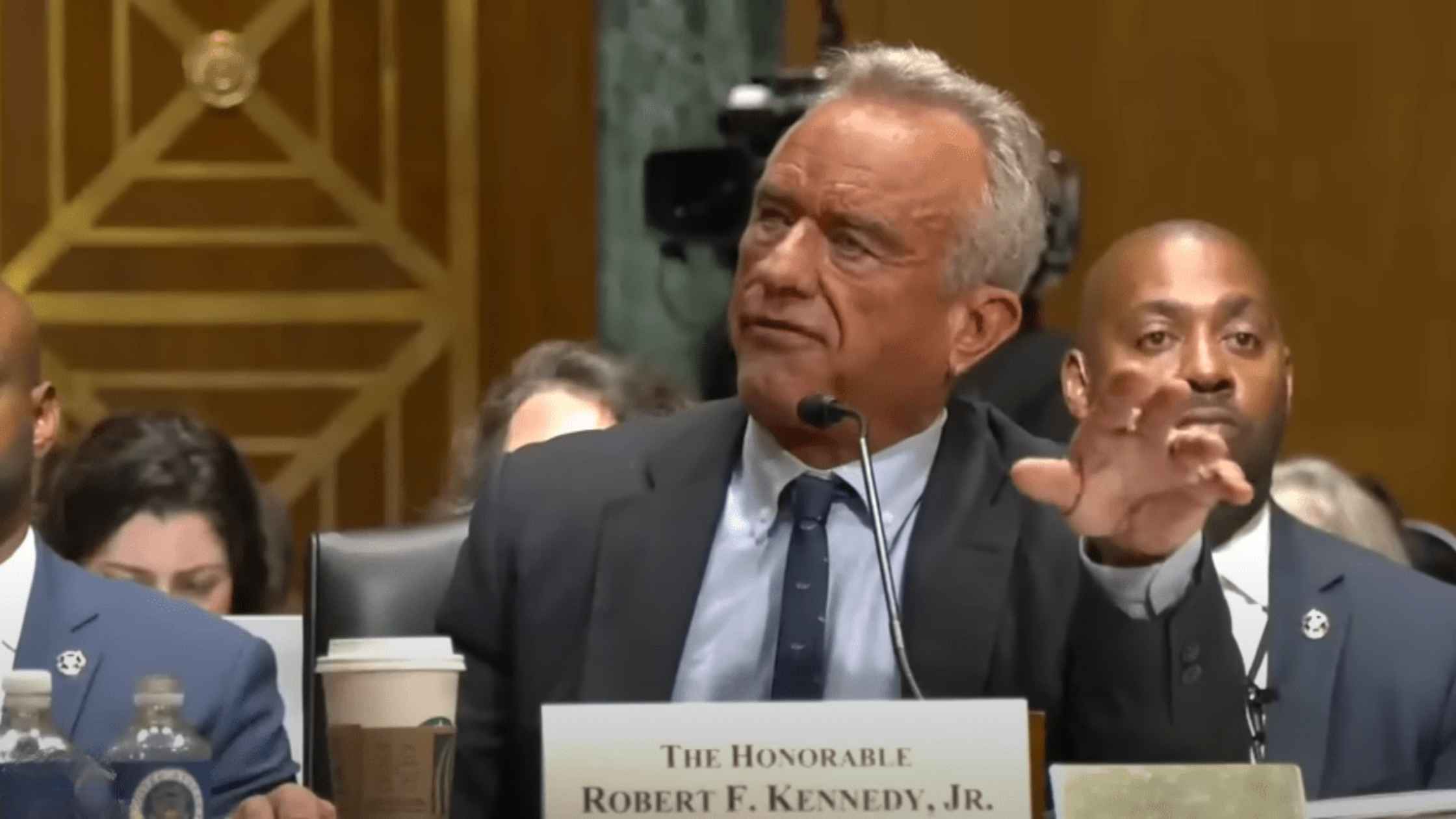
Senator Crapo (00:00):
… and we all probably are going to want to have our opportunity. At the end of the five-minute timeframe, I will gently tap the gavel if it appears that things are starting to lapse over, and encourage my colleagues and our witness to conclude their remarks at the conclusion of this time.
(00:18)
President Trump and Secretary Kennedy have made a steadfast commitment to make America healthy again. Under this administration, HHS has placed patients at the center of the healthcare system, empowering them with the tools and information they need to create a healthier future.
(00:36)
We know that chronic diseases such as heart disease and cancer and diabetes are some of the leading causes of death in America. Now, the department has a renewed focus on tackling the root causes of chronic disease and promoting prevention first. I look forward to exploring ways that the federal government can further align payment incentives to support healthy living and fight chronic disease.
(01:02)
The administration has also prioritized efforts to end waste, fraud and abuse in our federal healthcare programs, including through eligibility and enrollment verification. This critical work is not just about saving taxpayer dollars, it's about restoring trust and ensuring vital programs, like Medicare and Medicaid, are sustainable for generations to come.
(01:28)
In July, the Centers for Medicare and Medicaid Services, CMS, announced that the agency identified 2.8 million Americans who were simultaneously enrolled in multiple Medicaid or Affordable Care Act exchange plans. Stopping this duplicate enrollment, while working with states to ensure that individuals do not inappropriately lose coverage, has the potential to save taxpayers $14 billion annually.
(01:59)
CMS has also taken steps to provide states with additional immigration information to verify eligibility for federal healthcare programs. Preserving lifelines, like Medicaid, for those who are legally entitled under the law, will ensure long-term sustainability. Congress has bolstered these efforts by passing the One Big Beautiful Bill. This bill enacts common sense reforms to reduce improper payments and brings needed personal accountability to the Medicaid program. These reforms will protect Medicaid and refocus the program on the most vulnerable patients, those whom the program was intended to serve.
(02:44)
The OBBA also created the Rural Health Transformation Program, the single largest investment in rural healthcare in decades, to help stabilize and modernize the rural health delivery system throughout our country. These accomplishments reflect a vision for a healthcare system that is proactive, efficient, and patient-centered.
(03:08)
While many of the issues discussed today may be partisan in nature, this committee has a deep history of bipartisan healthcare accomplishments. I remain committed to partnering with this administration, and Ranking Member Wyden, to enact policies that realign incentives in the prescription drug supply chain, expand access to telehealth, and ensure long-term stability in our physician payment system.
(03:35)
Mr. Secretary, I look forward to hearing from you today about the administration's efforts to make America healthy again, and how we can continue to work together to achieve this shared goal. Thank you very much. Senator Wyden.
Senator Wyden (03:49):
Thank you, Mr. Chairman. As the committee gathers today, the United States is in the midst of a healthcare calamity. The largest cuts to American healthcare in the history of our nation, and they are approaching like an avalanche. Last week, most of the senior leadership at the Centers for Disease Control and Prevention were fired, or they resigned, after refusing to bow to Robert Kennedy's unceasing crusade against vaccines.
(04:24)
I traveled across Oregon last month and the message was the same from one end of the state to the other. Families are confused, they're scared about who to trust about their healthcare. Robert Kennedy and Donald Trump have done so much to feed that mistrust.
(04:43)
This morning, my staff, in partnership with Senator Alsobrooks' team, is releasing a report that shows the disaster of Robert Kennedy's 203 days in office. Every single day, there's been an action that endangers the health and wellness of American families. Robert Kennedy has elevated conspiracy theorists, crackpots, and grifters to make life or death decisions about the healthcare of the American people.
(05:12)
Robert Kennedy's tenure is so far marked by three calling cards: One is chaos at federal health agencies, leaving families, doctors, and the entire nation confused and frightened. Corruption that benefits Robert Kennedy, Donald Trump, and their friends at the expense of taxpayers. And higher health costs for families. I ask unanimous consent, Mr. Chairman, to enter this report into the record.
Senator Crapo (05:36):
Without objection.
Senator Wyden (05:38):
Then there's chaos. It's been obvious from the start that Robert Kennedy's primary interest is to take vaccines away from Americans. During his confirmation process, he claimed to be pro-safety and pro-science, but his actions reveal a steadfast commitment to elevating junk science and fringe conspiracies.
(05:59)
His agenda has not been about choices and information for families. Just last week, he threatened doctors that deviated from the new anti-science vaccine guidelines he released that make it harder for pregnant women and children to get the COVID vaccine.
(06:15)
And then there's corruption. Robert Kennedy's bizarre statements and actions beg the question: why? Democrats on this committee answered that question months ago. Robert Kennedy can enrich himself and his allies. His family still stands to gain from class action lawsuits against vaccine makers.
(06:35)
Now, Robert Kennedy fired every member, every single one of the group responsible for making vaccine recommendations to doctors across the country, under the false pretense of conflicts of interest. Meanwhile, many of the new members of the panel are outright vaccine deniers who've appeared as paid witnesses and lawsuits against vaccine makers. Their conflicts of interest and ethics disclosures remain hidden under lock and key.
(07:02)
On top of all this bedlam in American healthcare, just two months ago, Donald Trump signed into law the largest healthcare cuts in American history, to pay for tax breaks for the wealthiest people and massive corporations in our country. Republicans know these cuts are going to hit communities like a wrecking ball, that's why they pushed the most severe cuts until after the election. That's why their members already introduced bills to roll back some of the cuts.
(07:32)
Make no mistake though, those cuts are being felt right now. We're seeing hospitals in Idaho cutting payments, hospitals and nursing homes. Providence Seaside Hospital in Oregon announced they're shutting down their labor and delivery unit. Every family is going to feel the burden of Trumpcare in America. Premiums are going to spike next year, especially for those who buy health insurance on their own, but the effects will be felt by those who get insurance also through an employer.
(08:01)
Congress has an opportunity to extend the Affordable Care Act tax credits that lower the cost to premiums. But Democrats are ready to pass an extension that stops a dramatic premium spike that would force many families to pay double what they do today. Instead of finding ways to help American families pay less for healthcare, Robert Kennedy is focused on his anti-vaccine mission, fueled by some kind of complex that the consequences be damned. Amid this litany of corruption and chaos, the one point I have to underline is Robert Kennedy puts children in harm's way every single day in America. To my Republican colleagues, I must ask what line must Robert Kennedy cross before some of you will also join this alarm?
(08:51)
This weekend, under the cover of darkness, Robert Kennedy attempted to disappear hundreds of children under his care at Office of Refugee Resettlement facilities. These children here, without parents or family, were rounded up in the middle of the night and put on planes to Guatemala. Lawyers on the ground described unthinkable scenes. Our staff, some who are here today, were party to this in the middle of the night and one child said to their lawyer, "Why do they want to send me back? My mom is dead and my dad abuses me. Why do they want to hurt me?" This was an actual conversation. These actions were illegal. Documents show that many of these children were in the country to escape trafficking in their homeland.
(09:35)
Mr. Kennedy calls himself a protector of children, some kind of rich claim claiming from somebody who's flown on Jeffrey Epstein's private jet on multiple occasions.
(09:46)
I don't think Robert Kennedy should be within a million miles of this job. Republicans on the committee had a chance to prevent the public health train wreck that Mr. Kennedy has engineered. Everyone voted for him.
(09:59)
It is in the country's best interest that Robert Kennedy stepped down, and if he doesn't, Donald Trump should fire him before more people are hurt by his reckless disregard for science and the truth. I also would like to note Senator Cantwell has joined us in this effort. I hope at the very least, Robert Kennedy has the decency to tell the truth this morning.
(10:22)
Mr. Chairman, I have a procedural request I'd like to make at this time. It's a short one.
Senator Crapo (10:30):
Proceed.
Senator Wyden (10:31):
Thank you, Mr. Chairman. Mr. Chairman, it's unfortunate that I have to say this, but this is a witness who has lied to members of the Senate Finance Committee. In response to over 35 written questions, including from me, he said, and I quote that he "would do nothing as HHS secretary that makes it difficult or discourages people from taking vaccines." That was clearly not true.
(10:59)
His unprecedented unilateral actions to restrict access to COVID vaccines, that alone proves it. He tried to fire the Senate-approved CDC director after she chose the truth over what I consider his illusions. His prepared testimony even today includes the debunked lie that half a million children disappeared under the Biden administration's watch, a lie that the Trump administration is using as a pretext to hunt immigrant children and their families.
(11:27)
So, my request, Mr. Chairman, and I think it is unfortunate that I have to do this, but given the unprecedented nature of the witness' behavior, I would ask now that the committee formally swear in Robert Kennedy as a witness.
Senator Crapo (11:45):
Look, Senator Wyden, I will personally object and will reject your request. We will treat this witness as we treat all of the other administration witnesses who come before us. And let me just say again, as I said in my opening remarks, we will have some partisan disagreements today. We're having partisan disagreements right now, and I am having partisan disagreements with you on your characterization of the facts. The bottom line is we will let the secretary make his own case in his opening statement.
Senator Wyden (12:14):
I'll only say, Mr. Chairman, that this committee's unwillingness to swear this witness is basically a message that it is acceptable to lie to the Senate Finance Committee about hugely important questions like vaccines. I think it's a great mistake and that's why I've made the request. I understand that you're not going to grant it and we can move on.
Senator Crapo (12:39):
We'll get to the bottom of your accusations, but at this point I'm going to turn to our witness, the Secretary of Health and Human Services, Robert F. Kennedy Jr. And Mr. Kennedy, Mr. Secretary, you may make your opening statement at this time.
Secretary Robert F. Kennedy Jr. (12:56):
Thank you, Chairman Crapo, and thank you Ranking Member Wyden, for the invitation to appear before the committee today. Before I summarize what we've accomplished this year at HHS, I want to express my deepest condolence to the family of DeKalb County police officer, David Rose, who gave his life to stop the gunfire attack on the CDC on August 8th. Officer Rose was a veteran. He was a husband and the father of two children. Officer Rose's widow, whom I visited, is expecting their third child. I'd like Officer Rose's family to know that he remains in our prayers and that he will continue to be in our thoughts.
(13:42)
Let me start with the big picture. Under President Trump's leadership, we at HHS are enacting a once-in-a-generation shift from a sick care system to a true healthcare system that tackles the root causes of chronic disease. Chronic disease has reached crisis proportions in our country. And finally, we have an administration that is taking action.
(14:04)
The MAHA Report assessment, which the White House released in May, was the first government analysis for the key drivers of childhood chronic disease: ultra-processed foods, chemical exposures, physical inactivity, and over-medicalization. This month we will follow with the MAHA Report strategy, the Trump administration's solution for addressing each cause.
(14:29)
At HHS, we haven't just been writing reports. We have been the busiest, most proactive administration in HHS history. In just half a year we've taken on food dyes, baby formula contamination, the GRAS loophole, fluoride in our drinking water, gas station heroin, electronic cigarettes, drug prices, prior authorization, information blocking-
Audience (15:00):
Senator Kennedy, those [inaudible 00:15:01]. It takes over three months to get a four-month authorization. Senator Kennedy, do you know something?
Senator Crapo (15:09):
The committee will come to order.
Audience (15:20):
[inaudible 00:15:11] pre-authorization. You're killing [inaudible 00:15:21].
Senator Crapo (15:21):
I apologize to you for that outburst, Secretary Kennedy. I would notify everyone else in the audience, comments from the audience are inappropriate. If there are any further disruptions, the committee will recess until the police can restore order. Mr. Secretary, please proceed.
Secretary Robert F. Kennedy Jr. (15:40):
As I was saying, prior authorization, information blocking, and healthcare interoperability, we are ending gain-of-function research, child mutilation, and reducing animal testing. We are addressing cell phone use in schools, excessive screen time for youth, the lack of nutrition education in our medical schools, sickle cell anemia, hepatitis C, the East Palestine chemical spill, and many, many others.
(16:11)
At FDA, we are now on track to approve more drugs this year than at any time in history. I'm also proud to say that HHS under President Trump is doing more with less. We have taken measures to fight waste, fraud and abuse. Just by eliminating duplicative enrollments in CMS, we are saving taxpayers $14 billion a year. Meanwhile, we are expanding access for people who need it.
(16:41)
We are ending racist diversity, equity and inclusion practices, and instead focusing on aiding low-income and vulnerable families regardless of their race, which was the original intent of Title X. We're also pouring a billion dollars into Head Start and the Administration for Children and Families. Compassion need not be the casualty of efficiency.
(17:07)
I'd like to highlight some issues that have not gotten media attention. First, we are doing our part to fulfill the president's commitment to stop human trafficking, especially of children. We inherited a terrible humanitarian crisis from the previous administration with its open border policies, which allowed the appalling loss of 476,000 unaccompanied children. We have implemented policies now to ensure that that appalling tragedy can never happen again. We have knocked on 82,000 doors and located 22,000 of those children. I promise you that we will do more in the next three years.
(17:51)
We are also addressing the disastrous health conditions in tribal communities on Native American reservations. I've met face- to-face with tribal leaders in dozens of communities and tribes in Alaska, Arizona, Idaho, New Mexico, and elsewhere. And I look forward to making HHS resources more available to those communities.
(18:15)
One of the most significant initiatives under President Trump is the Rural Health Transformation Fund, part of the president's Big Beautiful Bill, which will provide the greatest investment of federal money into rural healthcare in history. Finally, I would like to address the recent shake-ups at CDC. These changes were absolutely necessary adjustments to restore the agency to its role as the world's gold-standard public health agency with the central mission of protecting Americans from infectious disease. CDC failed that responsibility miserably during COVID, when its disastrous and nonsensical policies destroyed small businesses, violated civil liberties, closed our schools, caused generational damage in doing so, masked infants with no science, and heightened economic inequality. And yet all those oppressive and unscientific interventions failed to do anything about the disease itself.
(19:20)
America is home to 4.2% of the world's population, yet we had nearly 20% of the COVID deaths. We literally did worse than any country in the world. And the people at CDC who oversaw that process, who put masks on our children, who closed our schools, are the people who will be leaving. And that's why we need bold, competent, and creative new leadership at CDC.
(19:49)
People are able and willing to chart a new course. As my father once said, "Progress is a nice word but change is its motivator and change has its enemies." That's why we need new blood at CDC. That's also why it's imperative that we remove officials with conflicts of interest and catastrophically bad judgment, and political agendas. We need unbiased politics-free, transparent, evidence-based science in the public interest. Those are the guiding principles behind the changes at the CDC, and that is what you can expect all across our agency for the next three years.
Senator Crapo (20:36):
Thank you very much, Mr. Secretary. I'll begin with the questioning. And one of the first things I'd like to talk to you about is actually something that is under the auspices of CMS. And I spoke with Dr. Oz last night about this, I'm sure you're very familiar with it though, and that is that in the One Big Beautiful Bill, there's a lot of attacks right now going on publicly about hospitals are in trouble, and the blame for that is placed on the bill even though the bill hasn't even been implemented yet.
(21:07)
The fact is this committee held hearings on the troubles that rural hospitals are facing in the United States before the passage of the One Big Beautiful Bill. They've been facing difficulties in rural America for a number of years now. And the bill, the One Big Beautiful Bill, contained a rural health transformation program, which I would just like to ask you to comment on. This is the program which allocated $50 billion over the next five years to our rural community hospitals in the United States to help them deal with some of the financial crises that they are facing, and transition to more stability. Could you comment on that program that is in the One Big Beautiful Bill?
Secretary Robert F. Kennedy Jr. (21:53):
Yeah, Senator. One of President Trump's campaign promises and one of the principal preoccupations, not only of Republican senators when I did my confirmation hearing, but also almost equally among Democratic senators, with this crisis in rural health.
(22:10)
We have had 120 rural hospitals close over the past 10 years. These institutions are not just delivering health access to rural Americans, but they're economic centers, they are cultural centers for those communities. They are often the largest employer. They are the highest paying jobs, and they are the centerpiece for those communities, so when they die, the communities collapse. And President Trump promised to do something about that and he has delivered on that promise.
(22:46)
Right now, we spend about 6% of Medicaid funding is sent to rural hospitals, a very, very tiny slice, and that's one of the reasons they're in trouble. President Trump has now allocated, through the One Big Beautiful Bill, $50 billion, so $10 billion a year over the next five years. What we give to rural hospitals, that 6% represents 19 billion a year, so we're increasing that by $10 billion. So we're infusing more than 50% increase in the amount of money that is going to rural communities over the next five years. There's never been anything like that in history. It is the biggest investment and it should stem this hemorrhage.
Senator Crapo (23:29):
Well, thank you. And I appreciate your giving clarity to that because it is frustrating to see these continuous allegations that the difficulties that our rural hospitals are facing all were created in the last few months when we passed a bill, when we've been holding hearings in this committee about these problems. And in the bill that we passed, we gave a $50 billion boost to, as you indicated, increase by 50% the federal support for our community rural hospitals in the United States.
(24:01)
And, I think, that the hospital owners understand that. They recognize this support. In fact, they're coming together very carefully with Dr. Oz to work on the rollout of this program so that we can see this boost and this support that is coming. Just another one of the disagreements we have about what really was in the One Big Beautiful Bill, so I appreciate you commenting on that.
(24:29)
In the last minute and 10 seconds that I have with you, could you just quickly talk, once again, about the broad issue of making America healthy again in terms of our aim to change the healthcare system's focus from a reactive symptom management model to one that focuses on lifestyle choices and the root causes of chronic disease?
Secretary Robert F. Kennedy Jr. (24:50):
Yeah, Senator. This morning I got the latest numbers from CDC, that 76.4% of Americans now have a chronic disease. This is stunning. When my uncle was president, it was 11%. 1950, it was 3%. Today it's 76.4%. 8 out of 10 of our kids cannot qualify for military service. This is a national security issue. When my uncle was president, we spent zero on chronic disease. Today, we spend $1.3 trillion. It's the biggest cause and it's increasing. And all of the arguments that Republicans and Democrats have about single-payer, Obamacare or the various ways of allocate the health dollars, they're all like rearranging deck chairs on the Titanic.
(25:44)
If we don't end this chronic disease… We are the sickest country in the world. That's why we have to fire people at the CDC. They did not do their job. This was their job to keep us healthy.
Senator Crapo (25:57):
Thank you, Mr…
Secretary Robert F. Kennedy Jr. (25:58):
And I need to fire some of those people to make sure this doesn't happen again.
Senator Crapo (26:02):
Thank you, Mr. Secretary. I have to cut myself off to make sure I keep to this timeframe too. Senator Wyden.
Senator Wyden (26:07):
Thank you very much, Mr. Chairman. I've made it clear I think that Secretary Kennedy is dead set on making it harder for children to get vaccines and that kids are going to die because of it. And Mr. Chairman, I'd like to put in the record today an op-ed written by Susan Monarez, who was fired by Mr. Kennedy.
Senator Crapo (26:27):
Without objection.
Senator Wyden (26:29):
So what we know, and Dr. Monarez was approved by Republicans, she wrote an op-ed today in the Wall Street Journal, which I've just put in the record and I quote her. She said, "I was told to pre-approve the recommendations of a vaccine advisory panel newly filled with people who have publicly expressed anti-vaccine rhetoric." So this is not some liberal philosopher or something. This is the CDC director who tells the Wall Street Journal, which is not exactly interested in progressive theories and the like, that she was told to pre-approve the recommendations of a vaccine advisory panel filled with people who've publicly expressed anti-vaccine rhetoric.
(27:19)
So my first question, Mr. Secretary, is did you in fact do what Director Monarez said you did, which is tell her to just go along with vaccine recommendations even if she didn't think such recommendations aligned with scientific evidence?
Secretary Robert F. Kennedy Jr. (27:36):
No, I did not.
Senator Wyden (27:37):
That's a yes or no. So you have an opportunity to call her a liar if you say that you didn't do it, but I'd like to see you respond to this.
Secretary Robert F. Kennedy Jr. (27:46):
No, I did not say that to her. And I never had a private meeting with her. Other witnesses to every meeting that we have and all of those witnesses will say I never said that.
Senator Wyden (27:58):
So she's lying today to the American people in the Wall Street Journal?
Secretary Robert F. Kennedy Jr. (28:02):
Yes, sir.
Senator Wyden (28:03):
Okay. Let's talk now about what's coming up, because I've made it clear what I thought about the 203 days with my colleague, Senator Alsobrooks. In two weeks, CDC's Advisory Committee on Immunization Practices will meet to make decisions about critical vaccines that protect us against hepatitis B, measles and more. The committee's got a profound impact on vaccine access, but these aren't ordinary meetings. You've stacked the deck to ensure the panel bends to your views.
(28:36)
In June, you fired all 17 committee members who were respected scientists and doctors. You replaced them with non-experts, vaccine skeptics and conspiracy theorists. As a result, this critical advisory panel has lost scientific credibility. After years, colleagues, we spend so much time, not looking at this as Democrats and Republicans, but as good science and scientific credibility. And now the American Academy of Pediatrics has warned that the committee is being politicized at the expense of children's health. American Academy of Pediatrics, you think they're lying too?
Secretary Robert F. Kennedy Jr. (29:17):
I think the American Academy of Pediatrics is gravely conflicted. They get… Their biggest contributors are the four largest vaccine makers. They run a journal, Pediatrics, which they make a lot of money on, that is completely dependent on pharmaceutical companies. So I don't think… I wouldn't put a big stake in what they say that benefits pharmaceutical interests. Senator, I didn't politicize ACIP, I de-politicized it. This Congress has been investigating ACIP-
Senator Wyden (29:50):
But all over the country, Mr. Secretary, scientists and doctors are saying otherwise. They're all wrong too. They're all lying, according to you.
Secretary Robert F. Kennedy Jr. (29:59):
There's scientists
Secretary Robert F. Kennedy Jr. (30:00):
Just doctors are supporting me all over the country, though there is division on opinion.
Senator Wyden (30:05):
I don't get letters from thousands of people who are not political, saying that this set of changes is going to damage American healthcare, and particularly these healthcare agencies, for decades to come. I don't get any letters from people saying, "Hey, this is going to make a big difference forever."
Secretary Robert F. Kennedy Jr. (30:24):
Maybe you're listening to a selective group of people.
Senator Wyden (30:27):
You get me some [inaudible 00:30:28].
Secretary Robert F. Kennedy Jr. (30:28):
And I will-
Senator Wyden (30:29):
Fine, okay. I got 30 seconds.
Secretary Robert F. Kennedy Jr. (30:29):
I will tell you what, Senator, I will put my mailbag against your mailbag any day.
Senator Wyden (30:35):
I got 30 seconds. Dangerous respiratory viruses, like RSV, are on the agenda for the next advisory meeting. Countless parents have been awakened in the dead of night by a wheezing kid, gasping for air, forced to rush their little one to the ER. There's no worse heart-wrenching fear. The RSV vaccine offers these kids protection against the worst effects of the virus, but now it looks like you're on a crusade to make infants and babies more vulnerable to the terrible illness. That's what we're doing with the COVID changes.
Speaker 1 (31:11):
And please make your answer brief, Mr. secretary.
Secretary Robert F. Kennedy Jr. (31:15):
I've said that--.
Senator Wyden (31:15):
The position is indefensible. I think it's possible [inaudible 00:31:19].
Secretary Robert F. Kennedy Jr. (31:18):
Congress has been investigating that committee for 23 years, because it is pervaded with conflicts of interest. What we did, is we got rid of the conflicts of interest when we de-politicized and put great scientists on it, from a very diverse group, by the way, some very, very pro-vaccine.
Senator Wyden (31:38):
Let me close with this, because like Senator Crapo, I'm a few seconds over. I don't think, Mr. Secretary, this is about you and me. This is about kids being pushed in harm's way by reckless and repeated decisions to get scientists and doctors out of the way, and allow conspiracy theories to dictate this country's health policy. I don't see any evidence that you have any regrets about anything you've done, or plans to change it. And my last comment is I hope that you will tell the American people how many preventable child deaths are an acceptable sacrifice for enacting an agenda that I think is fundamentally cruel and defies common sense. Thank you, Mr. Chairman.
Secretary Robert F. Kennedy Jr. (32:22):
Do I get a reply? Senator, you've sat in that chair for how long, 20, 25 years, while the chronic disease in our children went up to 76%, and you said nothing. You never asked the question why it's happening, why is this happening? Today, for the first time in 20 years, we learned that infant mortality has increased in our country. It's not because I came in here, it's because of what happened during the Biden Administration, that we're going to end.
Speaker 1 (32:52):
I'm going to let Senator Wyden respond briefly to that, and then we're not going to go over it like we just did.
Senator Wyden (32:58):
Only to defend this committee on a bipartisan basis. Colleagues, my cabinet secretary says that we have no interest in chronic care. Mr. Secretary, we are in the process-
Speaker 2 (33:09):
Mr. Chairman, could we have regular order please?
Senator Wyden (33:11):
We are in the process of turning around the Medicare program with the Chronic Care bill that Chairman Hatch, when he was chairman in this committee, put together on a bipartisan basis.
Speaker 1 (33:19):
All right, we're going to proceed. And I just want the rest of the members to know I gave Senator Widen, as ranking member, some leeway there, but we're going to stick to the five minutes. Senator Grassley?
Senator Grassley (33:31):
First of all, thank you. I have asked HH secretaries in the past to fully utilize the Rural Community Hospital Demonstration Program under Medicare. The program has been underutilized. In May, this CMS filled the open slots. Thanks to your agency's work, there's been 10 more rural hospitals in the program. It's important that the federal government uses every tool possible to help rural hospitals, and thank you for making that possible. Now, to my questions, back in January, during your confirmation hearing, you told me that you agreed to leave farming regulations to the Department of Agriculture and EPA. Do you think that any comments you have made since your confirmation on topics dealing with agriculture are consistent with what you said in January, that USDA and EPA ought to be regulating farming, and that the Department of Health and Human Services should not seek to regulate farms, the tools they use, or the markets that they sell into?
Secretary Robert F. Kennedy Jr. (34:47):
Yes, Senator. We are working very, very closely with Brooke Rollins and with the agricultural community. We've met with over 140 farm interests over the past three months, to incorporate them, to make sure that the MAHA agenda is consistent with their agenda, that we are producing the best food in America, that we're protecting our soils and our soil microbiome, and that we're protecting all kinds of farmers, including those who want to transition to regenerative agriculture. We're consulting every stakeholder in the farm community in everything that we do.
Senator Grassley (35:35):
I just raised the question because farmers in my state have been concerned about some of the things you're saying.
Secretary Robert F. Kennedy Jr. (35:43):
Senator, I can't hear you.
Senator Grassley (35:45):
I'm sorry. Some of the farmers in my state have been raising questions about some of the things that they think you said. Whether it was out of context or not, I just thought I'd raise this question so that you would keep by what you told us back in January at your confirmation hearing. Now, Senator Durbin and I have a bipartisan bill that requires price disclosures on TV ads. Price transparency is important in drug advertisement. I know that President Trump, Vice President Vance, and you, are all supportive of this effort. When can I expect action from this administration on requiring drug companies to publish the price of drugs in their TV ads? And just in case you would tell me that you don't think you have that authority, can you help Senator Durbin and I on our bill, so that we can ensure that you have legal authority to require price disclosure?
Secretary Robert F. Kennedy Jr. (36:50):
Senator, I think it would be good for us to talk about this offline. We are working on this in our agency, and I'm happy to tell you, give you the details of what we're doing.
Senator Grassley (37:13):
Okay. I've got a question here, on transplants. Senator Kennedy and I have been working, or Senator-
Speaker 3 (37:21):
You might want to move the microphone over.
Senator Grassley (37:23):
Senator Wyden and I have been working on this. For nearly two decades, I've engaged in the bipartisan oversight of the organ transplant system. HRSA has developed a tool to combat transplant line skipping. I hope that you can take steps to make sure that these steps are being taken by HHS and HRSA to curb transplant line skipping. On July the 2nd, Senator Wyden and I wrote you a letter highlighting cases of OPOs in Mississippi and Kentucky. In each of these cases, an OPO allegedly tried to harvest organs from patients still showing signs of life. I expect you to take steps through these organizations, to ensure that this doesn't happen again.
Secretary Robert F. Kennedy Jr. (38:25):
We have mounted a major investigation of misconduct, of illegal behavior, of organ harvesting of living people, of line skipping, of favoritism, of all kinds of scandalous behavior inside the organ procurement organizations. We have already ended the contract, terminated the contract to this old source provider. We are reorganizing the entire industry so that this can never happen again. I'm happy to go into the details with you, if I had more time.
Speaker 1 (39:00):
Thank you. Senator Cornyn?
Senator Cornyn (39:04):
Mr. Secretary, the United States spends approximately 18% of our GDP on health care, and yet, by most accounts, we rank roughly 10th in the world in terms of a healthcare outcome. Our Democratic colleagues seem to think the more money you spend, you necessarily are going to improve those outcomes. But at the same time, we have the two major drivers of our national debt, social security and Medicare, while we spend more money on interest on the national debt than we do on defense of the nation, which is an unsustainable trajectory. What is it that you're doing to address the effectiveness and the outcomes of our healthcare expenditures, as opposed to just throwing more money at the problem?
Secretary Robert F. Kennedy Jr. (39:59):
Yeah. I mean, throwing money at the problem has not worked. We spend two to three times per capita what European nations spend on healthcare, and we have the worst health outcome. We're 79th in healthcare outcomes globally. Over the past 20 years, or 30 years, we've lost six years to Europe, in terms of longevity. So our lifespan was even with Europe's, now it's six years behind. As I remarked to Chairman Wyden this morning, or Minority Leader Wyden, today, we got new data that showed that infant mortality has increased in this country, in 2024, for the first time in 20 years. Diabetes has gone up 98% in 20 years. Nobody's doing anything about it. CDC's job was to make sure that this didn't happen. And what we're going to do is reorganize CDC, but also we've already righted the ship at NIH, at FDA, at CMS, and we are going to end the chronic disease epidemic.
(41:08)
We are devoting thousands of studies. We're going to devote to identifying the causes, and we're eliminating them. And we're already starting. We're not waiting for everything to come in, we are starting now. We're doing this with food dyes, with [inaudible 00:41:25], with dietary guidelines. We're going to get better food and better health in the American public, because it's chronic disease that is bankrupting us and destroying our national security.
Senator Cornyn (41:38):
Seems to be one of the biggest problems that we have in America today, is the trustworthiness of the information that we actually receive from the news media, and from any other source. And obviously, the easiest thing for our Democratic colleagues to do is to scare people, because that is a powerful emotion, no matter what the facts may be. Do you believe COVID-19 as was politicized?
Secretary Robert F. Kennedy Jr. (42:12):
The whole process was politicized. Senator, I mean, we relied to about everything. We were lied to about natural immunity. We were lied to about… We were told again and again, the vaccines would prevent transmission, they'd prevent infection. It wasn't true. They knew it from the start it wasn't true, because that's what the animal studies and the clinical trial showed. We were told that there was science behind cloth masks. The CDC allowed the teacher's union to write the order closing our schools, which hurt working people all over the country, and then pretend it was science-based.
(42:54)
All of these issues… And then I can show you, for example, Chairman Wyden was talking about me politicizing ACIP. During COVID, probably the most famous scientist on ACIP was Martin Kulldorff from Harvard, the great world-renowned epidemiologist and vaccinologist, and he criticized the COVID booster mandates. They ejected him from COVID because he wasn't in the orthodoxy. The two biggest health officials at FDA during COVID, Dr. Gruber and Dr. Kraus, criticized the Biden mandates, the vaccine mandates. President Biden said in August, "I would never take that vaccine, the Trump vaccine." And he came in, he mandated it, and then he fired the two top health officials at FDA, who said, "Hey, this thing has not been properly tested." So the whole process was politicized, even today.
Senator Cornyn (43:51):
So let me… I have 15 seconds. So I think you answered yes, it was politicized.
Secretary Robert F. Kennedy Jr. (43:56):
Yes.
Senator Cornyn (43:59):
And I have concerns that when you look at some of the conflicts of interest in peer-reviewed articles and professional journals, and when you point out that even some of the physician associations are conflicted because of the money they get from the pharmaceutical industry. Are you committed to trying to make sure that we use the best science, and separate and eliminate politics as much as possible?
Secretary Robert F. Kennedy Jr. (44:26):
That is what my job is. That's what my mission is, eliminate the politics from science.
Speaker 2 (44:32):
Senator Bennett?
Senator Bennett (44:33):
Thank you, Mr. Chairman. Mr. Secretary, in June, you fired every member… Mr. Secretary… May I have my time back, Mr. Chairman? Thank you.
(44:47)
Mr. Secretary, thank you for your attention. In June, you fired every member of the well-qualified panel that was charged with recommending vaccines to the CDC. No one in your job has ever fired every committee member all at once. That month, you told the American people that you were, quote, "Going to bring great people onto the ACIP panel, not anti-vaxxers." Are you aware that one of the people you put on the panel, Dr. Robert Malone, claimed that the commonly used mRNA, the vaccine, quote, "Causes a form of AIDS," and can damage children's, quote, "Brains, their heart, their immune system, and their ability to have children in the future?" Yes or no, Mr. Kennedy
Secretary Robert F. Kennedy Jr. (45:36):
And Dr. Malone is one of the inventors of the-
Senator Bennett (45:38):
Yes or no? Yes or no? Were you aware that he had that view when you appointed him to this panel?
Secretary Robert F. Kennedy Jr. (45:43):
Dr. Malone is one of the inventors… As I said, Dr. is one of the inventors of the mRNA vaccine. He knows a lot more about it than
Senator Bennett (45:53):
Mr. Chairman, that statement is not true, that Dr. Malone made, just as it wasn't true when you wrote that, quote, "African AIDS is entirely different from Western AIDS." Are you aware that another one of these new members, Dr. Levy, wrote that, quote, "Evidence is mounting and indisputable that mRNA vaccines cause serious harm, including death, especially among young people?" Yes or no, are you aware that he said that?
Secretary Robert F. Kennedy Jr. (46:26):
I wasn't aware he said it, but I think I agree with it.
Senator Bennett (46:29):
You agree with it? It's not true. It wasn't true when he said it, and it's not true when you said it. Secretary Kennedy, later this month, your new panel will meet to consider changing vaccine recommendations for American children. In addition to the COVID-19 vaccines, they are set to review recommendations for the Hepatitis B vaccine, for measles, for mumps, for rubella, and varicella vaccine, and the RSV vaccine. These are common back-to-school vaccinations for children all over the industrialized world. If you change that, you owe parents in Colorado, and across the country, the benefit of some transparency, I think. If your panel recommends changing the vaccine schedule for children, do you anticipate that fewer children will receive these common vaccinations, yes or no?
Secretary Robert F. Kennedy Jr. (47:30):
What I would say, Senator-
Senator Bennett (47:32):
The obvious answer is yes. Should parents and schools of Colorado be prepared for more measles outbreaks as a result of that, Mr. Secretary?
Secretary Robert F. Kennedy Jr. (47:43):
Senator-
Senator Bennett (47:44):
How about more mumps outbreaks?
Secretary Robert F. Kennedy Jr. (47:47):
I do not anticipate a change in the MMR vaccine. ACIP is an independent panel.
Senator Bennett (47:55):
Well, it's a panel you just put those folks on. Far from what you said, there are people with ideas that are completely outside the mainstream.
Secretary Robert F. Kennedy Jr. (48:06):
You mean out of the pharmaceutical paradigm?
Senator Bennett (48:08):
Let me just say, Mr. Secretary, all these vaccines that we're talking about today are free and accessible to parents today, in America, who have the freedom to be able to make that choice for their children. Will that be true after your hand-picked panel makes their judgments about these vaccines?
Secretary Robert F. Kennedy Jr. (48:26):
I think that parents should be free to-
Senator Bennett (48:31):
I know, you've said that before. I do too.
Secretary Robert F. Kennedy Jr. (48:33):
To make their own choices.
Senator Bennett (48:35):
So will they be just as free after these-
Secretary Robert F. Kennedy Jr. (48:37):
I assume they will be.
Senator Bennett (48:40):
I will hold you to that, Secretary Kennedy, because this is not a podcast, it is the American people's health that's on the line here. This is the last thing, by the way, our parents need when their kids are going back to school, is to have the kind of confusion and expense and scarcity that you're creating as a result of your ideology. I think it's critical for you to share the evidence that this panel will rely on. Will you give the American people six months or six weeks in advance, the record that they're going to rely on to make these decisions? Will you make it transparent for the American people?
Secretary Robert F. Kennedy Jr. (49:23):
All the evidence is transparent.
Senator Bennett (49:25):
Will you make it in advance, transparent for the American people so they can comment on it?
Secretary Robert F. Kennedy Jr. (49:30):
All the evidence is transparent for the first time in history. And you were never there complaining when the pharmaceutical companies were picking those people, and then running their products through with no safety testing.
Senator Bennett (49:40):
You can characterize it any way you want. I quoted them today. What I said was accurate. What you said were lies. You described-
Secretary Robert F. Kennedy Jr. (49:48):
Are you saying, Senator-
Senator Bennett (49:50):
Moving the chairs of the Titanic-
Secretary Robert F. Kennedy Jr. (49:54):
Are you saying that the mRNA vaccine has never been associated with myocarditis or pericarditis in teenagers?Is that what you're trying to tell us?
Senator Bennett (50:00):
I am simply trying to say that the people that you have put on that panel, after firing the entire--.
Secretary Robert F. Kennedy Jr. (50:11):
You're evading the question.
Senator Bennett (50:12):
No, I'm asking the questions here, Mr. Kennedy.
Secretary Robert F. Kennedy Jr. (50:14):
You're evading that question.
Senator Bennett (50:15):
I'm asking the questions, Mr. Kennedy.
Secretary Robert F. Kennedy Jr. (50:16):
Well, I asked you a question.
Senator Bennett (50:18):
I'm asking the questions, Mr. Kennedy, on behalf of parents and schools and teachers all over the United States of America, who deserve so much better than your leadership. That's what this conversation is about. Mr. Chairman.
Secretary Robert F. Kennedy Jr. (50:35):
Senator, they deserve the truth, and that's what we're going to give them for the first time in the history of that agency.
Speaker 2 (50:46):
Senator Cassidy.
Senator Cassidy (50:48):
Thank you. I'll try and restore a little calm here. And I'm approaching this as a doctor, not as a senator. I am concerned about children's health, seniors health, all of our health, and I applaud you for joining the President in a call for radical transparency. Thank you for that. I said yesterday, I believe it, that President Trump deserves a Nobel Prize for Operation Warp Speed. If he had been President Obama, he would've gotten it. But because of Operation Warp Speed forcing the federal government to come to a vaccine development within 10 months, when others said it couldn't be done, we saved millions of lives globally, trillions of dollars. We reopened economies. An incredible accomplishment. Mr. Secretary, do you agree with me that the president deserves a Nobel Prize for Operation Warp Speed?
Secretary Robert F. Kennedy Jr. (51:35):
Absolutely, Senator. It was a phenomenal-
Senator Cassidy (51:37):
Let me ask you, but you just told Senator Bennett that the COVID vaccine killed more people than COVID. That was a statement.
Secretary Robert F. Kennedy Jr. (51:48):
I did not say that.
Senator Cassidy (51:50):
Okay, then let me ask, because you also were-
Secretary Robert F. Kennedy Jr. (51:52):
Senator, I just want to make clear, I did not say that.
Senator Cassidy (51:55):
Okay. Well, we'll check the record. That's a question of fact. You also said that you were also, as lead attorney for the Children's Health Defense, you engaged in multiple lawsuits attempting to restrict access to the COVID vaccine. Again, it surprises me that you think so highly of Operation Warp Speed, when as an attorney, you attempted to restrict access. Let me ask-
Secretary Robert F. Kennedy Jr. (52:18):
I'm I'm happy to explain why.
Senator Cassidy (52:22):
I have three minutes and 30 seconds left.
Secretary Robert F. Kennedy Jr. (52:24):
All right.
Senator Cassidy (52:25):
It also surprises me, because you've canceled, or HHS did, but apparently under your direction, $500 million in contracts using the mRNA vaccine platform that was critical to Operation Warp Speed, again, an accomplishment that I think President Trump should get a Nobel Prize for. You canceled $500 million in contracts. Now, I grew up in a middle-class family, so $500 million seems, this is canceled, seems like an incredible waste of money. But it also seems like a commentary upon what the President was attempting, what the President did in Operation Warp Speed, which is to create a platform by which to create vaccines. So this just seems inconsistent that you would agree with me, the President deserves a tremendous amount of credit for this.
Secretary Robert F. Kennedy Jr. (53:15):
Is this a question, Senator Cassidy, or is this the speech you don't want me to answer?
Senator Cassidy (53:20):
No, I'm asking the question.
Secretary Robert F. Kennedy Jr. (53:21):
Because I want to answer that question, if it's a question.
Senator Cassidy (53:23):
Please, please. But be tight please, I got [inaudible 00:53:26].
Secretary Robert F. Kennedy Jr. (53:26):
First of all, the reason that Operation Warp Speed was genius, is it did something nobody had ever been done. I don't think any president but President Trump could do it. It got the vaccine to market that was perfectly matched to the virus at that time, when it was badly needed, because there was low natural immunity, or people getting very badly injured by COVID. But he was also brought in therapeutics, like hydroxychloroquine and ivermectin, and all, and protocols for treatments, and there were no mandates. And then-
Senator Cassidy (54:01):
Okay, I add another question, so please, about 15 seconds.
Secretary Robert F. Kennedy Jr. (54:03):
That's when I began litigating against President Biden's mandates. Now-
Senator Cassidy (54:09):
I'm sorry, let me go on because you've covered the mandates before.
Secretary Robert F. Kennedy Jr. (54:11):
In terms of me canceling those contracts-
Senator Cassidy (54:13):
I have limited time, Mr. Secretary, I'm sorry. You've called for, and rightly so, that we should restrict participation in agencies for those with conflict of interest. I would like to submit for the record, a evaluation of the conflict of interest of those who are on the ACIP and the vaccines and related biologic products advisory board. It was not 97%, as alleged. Rather, it was 6.9%, and it was 1.2%, I think, for the other panel.
Speaker 1 (54:42):
Without objection.
Senator Cassidy (54:43):
Now, I am concerned though, because many of those whom you have nominated for the ACIP board-
Secretary Robert F. Kennedy Jr. (54:47):
Senator, you have the facts in there.
Senator Cassidy (54:49):
Excuse me. Excuse me. Can I have my time back?
Speaker 1 (54:53):
Yes.
Senator Cassidy (54:55):
What I am concerned about is that many of those whom you've nominated for ACIP have received revenue as serving as expert witnesses for plaintiff's attorneys suing vaccine makers. Now, one of my colleagues in another setting, alleged that you seem more interested in settlements than science. If we put people who are paid witnesses for people suing vaccines, that actually seems like a conflict of interest. Real quickly, do you agree with that?
Secretary Robert F. Kennedy Jr. (55:29):
No, I don't. It may be a bias, and that bias, if disclosed, is okay, but it's not a financial conflict of interest.
Senator Cassidy (55:41):
So the bias is disclose that they are expert witnesses? Let me finish up. Let me finish up. You also told Senator Wyden, at the outset, that you didn't want to take vaccines away from people. And as conclude, I would like to say this, because of the conflicting recommendations made about COVID, this is from Eric Erickson, good conservative out of Atlanta, Georgia, occasionally gives me help. My wife has stage-four lung cancer. She's one of the people that COVID vaccine actually helps. Thanks to the current mess at HHS, CVS is unable to get her a vaccine. Secondly, an email from a physician friend of mine. "Hey Bill, I'm not even sure what I'm asking you, but we're all confused and concerned about who could get the COVID vaccine. We are having our attorney try and render an opinion, but there's no firm guidance, and concerned about liability if vaccines are given to a patient requested, but not on the current CDC list. Pharmacists are requiring a prescription now, even for patients over 65, creating a huge headache." I submit these for the record.
Speaker 1 (56:44):
Without objection.
Senator Cassidy (56:45):
I would say effectively, we're denying people vaccine.
Speaker 1 (56:47):
Senator Cantwell.
Secretary Robert F. Kennedy Jr. (56:49):
I think you're wrong.
Senator Cantwell (56:51):
Thank you, Mr. Chairman. Following up on that same line as Senator Cassidy, because that's exactly… I represent one of the most science-based states in the country, that is percentage of scientists per capita. And at your confirmation hearing, we asked about this, whether you would follow science. You've made a statement here today, in your testimony, that you would follow science, and yet you're not following science, and that's what Senator Cassidy's question was. It's a simple yes or no answer, do you think the president deserves to get a prize for Warp Speed in the mRNA technology that saved so many lives? And you won't answer that question.
Secretary Robert F. Kennedy Jr. (57:30):
I answered it.
Senator Cantwell (57:32):
No, you're saying that there are problems with what was interpreted. You could say "Yes." [inaudible 00:57:37].
Secretary Robert F. Kennedy Jr. (57:37):
I said the president deserves a Nobel Prize, but our mRNA vaccines that we're working on, the ones that we canceled, which are for upper respiratory infections alone, are those-
Senator Cantwell (57:49):
You canceled $500 million of research, because the mRNA technology is about continuing the research to be ready for the next flu, influenza, the next pandemic, and you have to do the research.
Secretary Robert F. Kennedy Jr. (58:06):
I'm happy have a detailed discussion with you about it. You're so wrong on your facts.
Senator Cantwell (58:12):
You're interrupting me. And sir, you're a charlatan, that's what you are. You're the ones who conflate chronic disease with the need for vaccines. The history on vaccines is very clear. This is the 20th century, that's how many people had vaccines and had illnesses. This is the 21st century. This is the decrease, 99% down to 100%. This is what was delivered with vaccines, and you don't want to support that. You don't want to support that evidence. So yes, the governors of the West, Washington, Oregon, and California, will take up the efficacy of science. Yes, the University of Washington will deliver the science that America will depend on, because you don't want to depend on it.
(58:58)
And his own surgeon general of the Trump Administration said over 2 million lives were saved because the mRNA technology, and you don't want to continue that. You don't want to continue that technology. So what country is going to now take up that technology lead? What country is going to do that? Leaving us more vulnerable to some other country, keeping the advantage on having the best technology. So I'm telling you, I represent a state that's about technology. I have two other quick questions for you. One-
Secretary Robert F. Kennedy Jr. (59:31):
Are these questions or statements, because I can answer that question if it's actually a question.
Senator Cantwell (59:35):
Do you believe in having the ACA, and the support for the ACA that is about to expire, do you believe in doing something about that?
Secretary Robert F. Kennedy Jr. (59:45):
In terms of the enhanced premium tax credits?
Senator Cantwell (59:50):
Yes.
Secretary Robert F. Kennedy Jr. (59:50):
Well, the Democrats had two chances to make them permanent, and they didn't. And they didn't for a reason.
Senator Cantwell (59:58):
We're the ones who delivered it. So I've just asked you, yes or no,
Secretary Robert F. Kennedy Jr. (01:00:00):
… for a reason.
Senator Cantwell (01:00:00):
Yes or no, do you want to do something about this, yes or no?
Secretary Robert F. Kennedy Jr. (01:00:02):
I want to fix the system. And that's what we're doing. Fixing systematically to make premiums lower. That's what President Trump wants to do.
Senator Cantwell (01:00:09):
Do you think the women on the steps of the Capitol were a hoax yesterday?
Secretary Robert F. Kennedy Jr. (01:00:13):
I don't know about any women on the steps of the Capitol.
Senator Cantwell (01:00:16):
The women who were talking about Epstein, do you think they were a hoax yesterday?
Secretary Robert F. Kennedy Jr. (01:00:19):
Do I think they were?
Senator Cantwell (01:00:21):
Do you think they were perpetrating a hoax yesterday?
Secretary Robert F. Kennedy Jr. (01:00:24):
Perpetuating a hoax?
Senator Cantwell (01:00:25):
Yeah.
Secretary Robert F. Kennedy Jr. (01:00:25):
I have no idea what they were saying. This is the first time I'm hearing about it.
Senator Cantwell (01:00:30):
Your first that you're hearing about the women on the Capitol steps saying that they believe that the Epstein information should be made public, that's the first you're hearing about it?
(01:00:39)
What I'm saying is you are perpetrating hoaxes, you as the Secretary of Health. So you're undermining the whole healthcare delivery system and you keep trying to point to chronic disease. But you're not putting solutions on the table to cover more Americans. And you're taking away the science and technology that has made us the leader. That has saved, according to the first Trump administration Surgeon General, millions of lives. And you don't want to keep that going.
(01:01:07)
So no, I don't support your continued efforts as secretary. And I definitely think that our colleagues need to rally around science. If you want the northwest just to continue to lead on all innovation and all healthy people, okay, we'll do that. But it's a sad statement for the rest of America and America's leadership on technology. Thank you, Mr. Chairman.
Chairman Crapo (01:01:26):
Thank you. Senator Warner.
Mr. Warner (01:01:32):
Mr. Secretary, I agree with a lot of my colleague's statement. I actually had hoped, I didn't support you, I thought taking on chronic illnesses was going to be important. I've got two kids, as we discussed when we met, that have chronic illnesses. I'm not sure that the focus on red dye and seed oils are going to fully solve that problem.
Secretary Robert F. Kennedy Jr. (01:01:55):
Of course they won't.
Mr. Warner (01:01:57):
I would say this. That seems where your emphasis is. I want to go back to just again some basic facts. Do you accept the fact that a million Americans died from COVID?
Secretary Robert F. Kennedy Jr. (01:02:07):
I don't know how many died.
Mr. Warner (01:02:10):
You're the Secretary of Health and Human Services, you don't have any idea how many Americans died from COVID?
Secretary Robert F. Kennedy Jr. (01:02:17):
I don't think anybody knows that because there was so much data chaos coming out of the CDC and there were so many perverse incentives and these are models-
Mr. Warner (01:02:29):
I'll take that … Sir, sir, you don't know the answer of how many Americans died from COVID, this is the Secretary of Health and Human Services. Do you think the vaccine did anything to prevent additional deaths?
Secretary Robert F. Kennedy Jr. (01:02:39):
Again, I would like to see the data and talk about the data. I'm not-
Mr. Warner (01:02:44):
You have had this job for eight months and you don't know the data about whether the vaccine saved lives?
Secretary Robert F. Kennedy Jr. (01:02:50):
No, and that's the problem is that they didn't have the data. The data by the Biden administration, absolutely dismal, it was data chaos.
Mr. Warner (01:02:58):
Sir, who was politicizing? You're saying the Biden administration politicized all the data? Go back to what Senator Cantwell just said, go to Trump's Surgeon General.
Secretary Robert F. Kennedy Jr. (01:03:07):
They fired Dr. Krause. They fired Dr. Krause. They fired all the people who questioned the orthodoxy. They fired Dr. Gruber, Dr. Kause, [inaudible 01:03:14].
Mr. Warner (01:03:14):
Mr. Chairman, the Secretary of Health and Human Services doesn't know how many Americans died from COVID. Doesn't know if the vaccine helped prevent any deaths. And you are sitting as Secretary of Health and Human Services? How can you be that ignorant? I remember when we went through the hearing with you, I asked you about community health centers. You didn't know what role they play. I've been visiting community. I'm glad you've got to one, think in April. I tell you what I hear on community health centers, they are terrified. With all due respect to my good friend, the Chairman, of the big awful bill because they are going to lose healthcare across the board. They already live in food deserts. They can't get to a nutritionist because Medicaid doesn't do enough reimbursement.
(01:04:02)
If you're going to want Americans to get healthier, should they have access to nutritionists? Should they have access to good science about healthy food?
Secretary Robert F. Kennedy Jr. (01:04:11):
Absolutely.
Mr. Warner (01:04:12):
Well, then how is that going to happen with the Medicaid cuts that are taking place?
Secretary Robert F. Kennedy Jr. (01:04:16):
There are no cuts to Medicaid.
Mr. Warner (01:04:18):
Sir, that is absurd. There is not a single, some of my Republican colleagues, but there is not a single study that does not … And I can tell you, I was in Franklin, Virginia a couple of days ago. The rural hospital is going to close. The hospital system was so afraid they wouldn't even let me have the meeting there. But that rural hospital is going to close. And they are looking for where those folks are going to go. I mean, you're supposed to be doing healthcare policy not being the doctor in residence for all of America. I hope, can I just say, I'm still going to trust my doctor rather than your health advice. And obviously Tom Cotton's going to … who knows who he's going to trust.
(01:05:02)
But let go back to policy for a couple of … So maybe we'll lower the temperature a little bit. I got a bipartisan bill that would be a systemic fix, not a vote-bind mechanism. When Medicaid is getting cut, what was put in on the rural hospitals. One of the things we could do, Mr. Secretary, is make sure that the folks who work in rural hospitals get an 80% reimbursement of what folks get in more urban centers. Would you support that legislation?
Secretary Robert F. Kennedy Jr. (01:05:33):
Are you talking about the area wage index?
Mr. Warner (01:05:35):
I'm talking about the area wage index, and moving that up to 80%, so there is actually ability to get rural providers-
Secretary Robert F. Kennedy Jr. (01:05:44):
President Trump supports that and we support that.
Mr. Warner (01:05:47):
You support. Good. So you will work with us to get that passed?
Secretary Robert F. Kennedy Jr. (01:05:50):
Yes.
Mr. Warner (01:05:52):
That will increase costs on both Medicaid and Medicare. So you are committed to that. I appreciate that. What about, Senator Wyden and I have got a bill because across America-
Secretary Robert F. Kennedy Jr. (01:06:01):
What about what?
Mr. Warner (01:06:02):
… hospitals are shutting down on their OB-GYN services. Try to have a baby. I don't know about all of my friend's states, but in south side Virginia you can't find a hospital. Will you work with us to make sure that before OB-GYN services are taken out of a rural hospital, there has to be a process and procedure?
Secretary Robert F. Kennedy Jr. (01:06:20):
I'm happy to work with you on that, Senator, meet with you and see if we can work with you on it. I don't know exactly what the issue is.
Mr. Warner (01:06:28):
Well, again, Secretary of Health and Human Services, who has said he doesn't know how many people died from COVID, doesn't know if the vaccine saved lives, doesn't understand the issue with OB-GYN.
Secretary Robert F. Kennedy Jr. (01:06:40):
I didn't know if it saved a million lives.
Mr. Warner (01:06:43):
OB-GYN doctors are fleeing rural America because they can't afford it. And the cuts that are coming up it's going to be exponentially worse. I would invite you, sir, to come with me to a community health center in Virginia and hear what is on people's mind. They want to get healthier. Absolutely. Count me in. But they also don't want their basic healthcare removed. Thank you, Mr. Chairman.
Chairman Crapo (01:07:05):
Senator Lankford.
Mr. Lankford (01:07:06):
Mr. Chairman, thank you. Mr. Secretary, good to see you again. As I traveled around Oklahoma during August, it was great to be able to be home, I had several folks that contacted me. We had some great meetings with some rural hospitals as well. They're looking forward to the $50 billion for the One Big Beautiful Bill that is targeting towards rural hospitals. Starting with $10 billion next year. I know you're quickly getting all the instructions out on that. We know that's in process. It was good to be able to visit with them and be able to talk about that. They're very pleased. Thanks for the work you're doing on that.
(01:07:36)
I also met with some of our groups that do incredible medical research on this. I know the NIH grants were held for a while and being studied. Those have been released. And grateful to be able to see that because there's some amazing medical research is happening including some longitudinal studies. And they need those dollars released. So I appreciate y'all getting those released out there.
(01:07:55)
I did hear from a lot of our folks, and I want to talk about one of these issues, from a lot of our hospitals, they immediately raised the issue of Medicare Advantage plans and how they're withholding payments, they're delaying payments back to hospitals. And a problem that that's been for rural hospitals. I know y'all are working on that as well. We want to work with you on that.
(01:08:13)
But you and I have spoken on the second issue on that and it's the pharmacy benefit managers. During the confirmation process, it was interesting when you and I met in my office, you said every single senator brought up PBMs to you. And you made the statement during the confirmation process, this isn't an area that President Trump wants to take on is the pharmacy benefit managers. This is unfinished business in this committee.
(01:08:36)
But I wanted to just know what is HHS doing at this point on the PBM issue in particular to make sure we're not driving out rural pharmacies? And what we can do to be able to make sure that's fair?
Secretary Robert F. Kennedy Jr. (01:08:47):
I mean, it's a priority for the president. He talks to me about it I would say at least once a week, sometimes at 11 o'clock at night. And we've met with the PBMs and we are in talks with them. We're also in MFN talks with the pharmaceutical companies who are also very interested in reducing the cut and getting transparency among the PBMs. And the PBMs have committed to us to transparency, to some protocol that will guarantee transparency. And part of the MFN negotiations would include direct-to-consumer marketing, which would eliminate the middleman. So I think we're doing a lot on PBMs.
Mr. Lankford (01:09:41):
Okay, that'd be very helpful to be able to see. It'd be very helpful for consumers across the country on this. You and I spoke as well, and you've made public statements on this, and the FDA Commissioner's made public statements, on the issue of reviewing the safety issues of Mifepristone. Your comments early on were, every drug needs to be treated the same, needs to look at the same and not have political biases in how things are actually examined. There were a lot of changes on the allocation of Mifepristone for elective abortions under the Biden administration. It's now open to anyone without a prescription on it. You don't have to go through a doctor on it. There's all kinds of issues that are happening now on it. So the question was, you had said that there would be a review on that just to be able to look at it, make sure we're following all safety protocols. Do you know a timing on that review?
Secretary Robert F. Kennedy Jr. (01:10:29):
I can't give you the exact timing. I talked to Marty Makary about it yesterday. And he said it is progressing at pace. We're getting data in all the time, new data that we're reviewing. And we know that during the Biden administration, they actually twisted the data to bury one of the safety signals, it was a very high safety signal around 11%. So we're going to make sure that that doesn't happen anymore, we're producing honest science and gold standard science on that. I'll keep you abreast of where we are.
Mr. Lankford (01:11:07):
Thank you. Just go where the science leads on that. During the Biden administration, the Title X regulation that requires Title X family planning programs recipients to physically and financially separate from abortion activities, their Title X activities, and eliminate them promoting or providing abortion with those funds. That was flipped from the original Trump rule that was done under the first presidency. During your confirmation you had committed to go back and look at that again and to be able to see. My question is, do you know the timeline for agency action for when that rule on Title X and the separation payments rule will be either reviewed or will actually be reinstated to the original Trump rule under his first presidency?
Secretary Robert F. Kennedy Jr. (01:11:52):
I don't know if they're … I just don't know the answer to your question, why they're actually reviewing the rule right now. I can tell you that the NGOs that have that issue, that refuse to separate their payment streams and separate their operations, are not getting funded.
Mr. Lankford (01:12:13):
Okay, well, that was an issue under the law when it first came out to be able to keep those things separate on it. So look forward to that. Thank you, Mr. Chairman.
Chairman Crapo (01:12:19):
Thank you. Senator Hassan.
Ms. Hassan (01:12:23):
Thank you, Mr. Chairman. And good morning Secretary Kennedy. Just before I ask a question, I did want to note, in response to the Secretary's statement that the Trump administration wants to lower the cost of health insurance, that across the country right now the median increase from commercial insurers that we're seeing this fall is 18%. Just as families are struggling to make ends meet.
(01:12:46)
Now, I want to follow up on a line of questioning that Senator Cassidy began. Mr. Secretary, President Trump said that the COVID-19 vaccine produced by Operation Warp Speed was, and these are the President's words, a monumental national achievement. Although I have strongly opposed many of President Trump's actions, I agree with him that Operation Warp Speed in 2020 was a monumental achievement.
(01:13:11)
Unfortunately, you are undermining one of the President's biggest achievements, which, as the President said, saved millions of American lives. You even went as far as to call President Trump weak for this life-saving accomplishment. Last year you tweeted that President Trump has a weakness for swamp creatures and that Operation Warp Speed was among, here's your quote again, the most devastating impact of President Trump's weakness.
(01:13:40)
So, Mr. Secretary, was Operation Warp Speed, a monumental national achievement as President Trump said?
Secretary Robert F. Kennedy Jr. (01:13:47):
For the reason that I already said, and I assume you won't let me repeat, but I'm happy to if you want, yes, it was.
Ms. Hassan (01:13:55):
Good. Assuming it is a monumental achievement, you've said it was, is it true that, as President Trump has said, he saved millions of American lives with the COVID-19 vaccine? Because you've just expressed great confusion about that to Senator Warner.
Secretary Robert F. Kennedy Jr. (01:14:15):
The only confusion I expressed is exactly how many lives were saved. I don't think anybody knows that because of the data chaos.
Ms. Hassan (01:14:21):
So multiple studies have shown that the vaccine reduced infections and severe diseases and saved at least 3 million lives in the United States and millions more abroad in the first two years of the pandemic.
Secretary Robert F. Kennedy Jr. (01:14:34):
It's possible, those are modeling studies-
Ms. Hassan (01:14:37):
I will also note, just as you've been talking about data and concern about it, the process for COVID vaccine approval was public, it was live-streamed and it was out in the open. Manufacturers and experts have publicly submitted data analysis. And when the FDA has asked for more, they've submitted more. They've done that for years. And the evidence is clear and supports what President Trump has said. The vaccine works and it has saved millions of lives.
(01:15:06)
Your own process on the other hand has not been transparent. You repeatedly choose to ignore data because it doesn't match your preconceived notions and lies. So you have said that the vaccine did save lives. You've said it was a monumental achievement. And given that, if you agree with President Trump that the vaccine saved millions of lives, why have you acted behind closed doors to overrule scientists and limit the freedom of parents to choose the COVID vaccine for their children? Why have you done that?
Secretary Robert F. Kennedy Jr. (01:15:43):
For the COVID vaccine? That was removed by FDA because the industry-
Ms. Hassan (01:15:49):
No, it was behind closed doors. And scientists who said they wanted to brief you on the science, scientists who wanted to understand why the FDA, why you unilaterally changed the parameters for giving vaccines, making it possible now, to Senator Cassidy's colleagues' points, that they're going to have to go off-label-
Secretary Robert F. Kennedy Jr. (01:16:13):
This is crazy talk. You're just making stuff up.
Ms. Hassan (01:16:16):
… to prescribe a vaccine for children. I'm not making things up. Do you know how the FDA approval process works?
Secretary Robert F. Kennedy Jr. (01:16:21):
Yeah, I know exactly.
Ms. Hassan (01:16:22):
Do you know what an off-label perspective is?
Secretary Robert F. Kennedy Jr. (01:16:26):
I know exactly how it works. I know exactly how it works.
Ms. Hassan (01:16:29):
So why behind closed doors, did you-
Secretary Robert F. Kennedy Jr. (01:16:31):
It's not behind closed doors. The industry makes the studies and they could not provide a study that said that it is effective for healthy kids.
Ms. Hassan (01:16:39):
So, when have you produced the data that you relied on and that this FDA relied on to change those parameters? You did it behind closed doors.
Secretary Robert F. Kennedy Jr. (01:16:48):
No, the data is all public.
Ms. Hassan (01:16:49):
Now parents who decide that they do want their children to have the COVID vaccine-
Secretary Robert F. Kennedy Jr. (01:16:52):
You're just making stuff up, Senator.
Ms. Hassan (01:16:55):
I'm not making stuff up.
Secretary Robert F. Kennedy Jr. (01:16:55):
You're just making stuff up.
Ms. Hassan (01:16:57):
Sometimes when you make an accusation it's kind of a confession, Mr. Kennedy.
Secretary Robert F. Kennedy Jr. (01:17:02):
I'm happy-
Ms. Hassan (01:17:02):
So let's just settle with this. Here's what's going to happen, to Senator Warner's point, to the parents who are concerned all around the country, to people who want to get the COVID vaccine this fall, even if they're under 65 … Because the boosters have worked, there's been much less serious disease, people do not have the same level of threat and risk from COVID that they used to because of these vaccines. People who want to exercise their freedom of choice are being denied that-
Secretary Robert F. Kennedy Jr. (01:17:31):
They aren't, everybody can get the vaccine.
Ms. Hassan (01:17:33):
Because you are citing data that you won't produce to the public.
Secretary Robert F. Kennedy Jr. (01:17:36):
You're just making things up.
Ms. Hassan (01:17:38):
And you are rejecting science.
Secretary Robert F. Kennedy Jr. (01:17:39):
You're making things up to scare people, and it's a lie. Anybody can get that.
Ms. Hassan (01:17:44):
With respect, I do not think I'm the one making things up. Thank you, Mr. Chairman.
Secretary Robert F. Kennedy Jr. (01:17:48):
You are lying right now, Senator.
Chairman Crapo (01:17:50):
Senator Barrasso.
Mr. Barrasso (01:17:52):
Thanks, Mr. Chairman. Mr. Secretary, thanks for being with us today. I believe one of President Trump's greatest achievements was his bold and successful actions on COVID. When faced with a global pandemic, he didn't back down, he was determined to find a cure. And through Operation Warp Speed, a vaccine was developed and distributed quickly, safely, effectively. And I believe it saved many, many lives. I think it's a model of American ingenuity and public-private partnership.
(01:18:19)
But this wasn't the first time an American president acted boldly to address disease and vaccines. There's a great book that's out, it's a prize-winning book, called The Fate of the Day by Rick Atkinson. And he talks about the courageous efforts by George Washington. During the Revolutionary War, George Washington reversed his opposition to the smallpox vaccine and he ordered that all the soldiers be vaccinated. It was among the most consequential decisions Washington would ever make. By protecting his troops from smallpox Washington preserved the Continental Army, which allowed our nation to continue to fight for our independence. And like President Trump, I believe President Washington acted decisively to protect Americans' lives at a time of great national peril.
(01:19:02)
So over the last 50 years, vaccines are estimated to have saved 154 million lives worldwide. I support vaccines, I'm a doctor, vaccines work. Secretary Kennedy, in your confirmation hearings you promised to uphold the highest standards for vaccines. Since then, I've grown deeply concerned, the public has seen measles outbreaks, leadership in the National Institute of Health questioning the use of mRNA vaccines, the recently confirmed director of Centers for Disease Control and Prevention fired. Americans don't know who to rely on. Recent polls said 89% of voters, 81% of Trump voters agree vaccine recommendations should come from trained physicians, scientists, public health experts. So they believe, Senator Marshall, Senator Cassidy, they believe me when it comes to vaccines. If we're going to make America healthy again we can't allow public health to be undermined.
(01:19:57)
So could you explain what steps you're going to be taking to ensure vaccine guidance is clear, evidence-based and trustworthy?
Secretary Robert F. Kennedy Jr. (01:20:05):
We're going to make it clear, evidence-based and trustworthy for the first time in history. When I was a kid, I got three vaccines, I was fully compliant. Today's children have to get between 69 and 92 vaccines in order to be fully compliant between maternity and 18 years. Only one of, it's 19 vaccines, 92 doses, only one of those vaccines has ever been tested against an inert placebo.
(01:20:37)
And what we're doing now is any new vaccine that, before it's approved and licensed, will have to show, demonstrate safety against an inert placebo. And we're going to go back and do observational studies on the existing vaccines to see if they're linked to any of these chronic disease epidemics. So that people can understand the risk profile of those products and make good assessments for their own health.
Mr. Barrasso (01:21:04):
So in two weeks vaccine experts at the CDC are going to meet to discuss childhood vaccine recommendations. Parents and physicians depend upon this guidance to make decisions and to keep kids safe. And as I said, I support vaccines. I've been hearing from many of my medical colleagues, people I've known from medical school, residency and when I practiced medicine in Wyoming, and there are real concerns that safe, proven vaccines like measles, like Hepatitis B and others could be in jeopardy. And that would put Americans at risk and reverse decades of progress. As we've seen over the last four years, the previous administration four years, when recommendations became politicized or were swayed by bias that the public trust can be lost. So what safeguards are in place to ensure decisions are based solely on science and not politics? And how are you going to make sure doctors and parents can count on CDC guidance?
Secretary Robert F. Kennedy Jr. (01:21:57):
I mean, Senator, I would point this out. Right now there's only 10% of children are complying with the CDC's recommendation on COVID boosters, only 15% of healthcare workers. So Americans have lost faith in CDC. And we need to restore that faith. And we're going to do that by telling the truth and not through propaganda. I'm making them understand that everything that we say is true. That we're going to tell them what we know, we're going to tell them what we don't know, and we're going to tell them what we're researching and how we're doing it. And we're going to be transparent. It's the only way to restore trust in the agency by making it trustworthy.
Mr. Barrasso (01:22:39):
Finally, with chronic diseases. Like you, I'm committed to addressing our nation's growing rate of chronic diseases. I think if we're going to make America healthy again we need to support rural primary care providers that play a role. As a rural physician, I want to make sure we can prevent and manage chronic diseases in their communities. And I ask for you to continue to work with us specifically with regard to rural health.
Secretary Robert F. Kennedy Jr. (01:23:00):
Thank you, Congressman.
Chairman Crapo (01:23:02):
Senator Daines.
Mr. Daines (01:23:07):
Chairman Crapo, thank you. Senator Kennedy, welcome, it's good to see you here again. I want to begin my time by talking about the issue of federal deregulation of chemical abortion drugs. Since Mifepristone was approved in 2000 25 years ago, the FDA has steadily stripped away safeguards related to this drug. No longer requiring a doctor's prescription, no follow-up visits, no adverse event reporting, and now allowing it to be sent through the mail.
(01:23:51)
Earlier this year, there was a new study that analyzed 865,000 real world insurance claims. And it found that nearly 11% of women experienced a serious adverse event within 45 days of taking Mifepristone. To put that in perspective, that is 22 times higher than the FDA's long-standing estimate of less than 0.5%. While these findings alone are shocking, my conversations with those in the medical profession, credible medical professionals, lead me to believe that even this study may indeed under represent the scale of the problem.
(01:24:48)
For years, we've heard the misleading and frankly very harmful lie that's being sold to women that this drug is, and I quote, 'as safe as Tylenol'. These lies sadly have real-world consequences. Just last year, two women died as a result of taking chemical abortion pills because they were able to access them without appropriate medical oversight. And by the way, that's all allowed by the FDA.
(01:25:23)
Mr. Secretary, I am grateful that you and FDA Commissioner Makary have already begun the process of reviewing this new data on the safety of Mifepristone. We talked about this during your confirmation hearing. My question is, could you provide any update on the status and the scope of that review? And whether the FDA intends to replicate studies like the one that I referenced?
Secretary Robert F. Kennedy Jr. (01:25:53):
I think those are … I don't know if they're going to do an insurance claim study, that's one way to do it. I don't know exactly whether they're doing epidemiological studies or observational studies. I don't know exactly what they're doing. But I know, I talked to Marty Makary about it yesterday, and he said those studies are progressing and that they're ongoing. So I will keep your office informed at every stage.
Mr. Daines (01:26:24):
Thank you. And I've had a really constructive conversation with the FDA Commissioner as well, Makary. And I mean, here's a very smart, data focused, sincere type of leader. And we had a really good conversation. I want to encourage those conversations with you, Mr. Secretary. And there's a follow-up here to make sure that the data that we now have exposed will be studied by the FDA and the appropriate actions considered.
(01:26:58)
Given the legitimate safety concerns surrounding Mifepristone and your actions to roll back other COVID emergency measures, will you repeal the COVID-era telemedicine allowance, given that we're repealing these COVID-era regulations and emergency measures, would you repeal the COVID-era telemedicine allowance for chemical abortion drugs and restore the requirement for an in-person doctor visit?
Secretary Robert F. Kennedy Jr. (01:27:34):
Senator, I need to get back to you on that, I don't know if the White House has yet taken a position on that, but we will get back to you this week about that.
Mr. Daines (01:27:46):
Okay. All right. Thank you. I want to close with a Montana question. Earlier this week, the state of Montana submitted a Medicaid demonstration waiver application to CMS to strengthen the state's Medicaid expansion program. This waiver seeks to require community engagement and enhance cost sharing for working-age, able-bodied adults enrolled in the program. I applaud our Governor, Gianforte, and Director Brereton for their proactive leadership in this space.
(01:28:16)
My question is, Mr. Secretary, could you commit that CMS will work quickly in its consideration of Montana's waiver application?
Secretary Robert F. Kennedy Jr. (01:28:24):
Absolutely. It sounds like the kind of waiver that we're looking for.
Mr. Daines (01:28:30):
Okay. Thank you, Mr. Secretary.
Chairman Crapo (01:28:30):
Thank you. Senator Johnson.
Mr Johnson (01:28:32):
Hey, Mr. Chairman. Secretary Kennedy, first of all, thanks you for your willingness to serve and for putting up with this abuse. Five minutes isn't even close to refute all the falsehoods that have been confidently spewed during this hearing. We'll talk about real data here. Okay. Well, first of all, thank you for breaking the logjam of information of HHS. My committee's got now over 8 million pages of information, just in the first tranche by the way. What we discovered is somebody in the federal health agencies, this is inter-agency communication, hid the signal. They admitted there was a signal on myocarditis and they hid it. They didn't warn the public, they didn't warn doctors. So that's just one instance of corruption and lies told by the CDC. We've got a lot of others we will be rolling out. Okay.
(01:29:26)
So we held our first hearing in Permanent Subcommittee investigation on that hiding of the signal of myocarditis. We've heard a lot of studies. Okay. As I've looked into science, it's been thoroughly corrupted. Here's data. And I'd like to enter this sheet into the record. I've been publishing this chart since really early 2021 when I'm on, for example, talk radio shows. And they talk about this, they get de-platformed, or they were, because of all the censorship during the Biden administration.
(01:29:58)
Here's the facts.
Mr Johnson (01:30:01):
The VAERS system that was touted in October of 2020, this great safety surveillance system on COVID. A few months later, when they didn't like the results, they started denigrating their own system. But VAERS shows that there had been 38,742 deaths reported on VAERS worldwide associated with COVID vaccine, 38,742.
(01:30:26)
9,252 of those deaths occurred on the day of vaccination within one or two days. Again, I agree with you. Nobody knows how many COVID deaths were because the information was completely corrupted. Nobody knows how many lives were saved by the… Again, I think most people… Okay. If you're vulnerable, raise your antibodies, reverse severity, fine. There's not any good study on that. There's just information out there, just claims being made. This is hard evidence. And certainly what I've been advocating for are the injection injured, the childhood vaccine injured. We're going to be holding a hearing next Tuesday on a study done by a high integrity healthcare facility that actually looked at vaccinated versus unvaccinated, very high quality study.
(01:31:24)
I'm not going to steal the thunder of Aaron Sear who's going to be testifying on this. I think you're aware of this study, that shows the vaccinated population far more prone to chronic illness than people completely unexposed to vaccines. That is just one example of how science has been corrupted by…
(01:31:46)
By the way, the study was conducted and when they conducted, they said, "Oh no. No matter what the results are, we're going to release this." They got the results in 2000. It has yet to be released. We're going to enter that in the record on Tuesday.
(01:31:56)
Do you want to just talk about what you've witnessed in terms of the capture of the agencies that you're now in charge of, the corruption of science, which I believe you just said? That is almost your number one goal, is try to bring integrity and credibility back to science which has been corrupted by the people who pay for it, by federal health agencies being captured by pharmaceutical industries, by big pharma, by big food. I want to give you, I'm sorry, just the last minute to, first of all, defend yourself, but talk about the corruption of science that you're having to deal with and trying to correct.
Secretary Robert F. Kennedy Jr. (01:32:32):
Yeah. I'll just tell you one example, and I could sit here and give you thousands. But in 2002, CDC did an internal study in Fulton County, Georgia children and looked at children who got the MMR vaccine on time and compared those to kids who got them later.
(01:32:56)
So in other words, kids who got them before 36 months and kids who got them afterward. The data from that study showed that Black boys who got the vaccine on time had a 260% greater chance of getting an autism diagnosis than children who waited.
(01:33:17)
The chief scientist on that, Dr. William Thompson, the senior say vaccine safety science at CDC was ordered to come into a room with four other co-offers, by his boss, Frank DeStefano, who's the head of the immunization safety press and ordered to destroy that data. And then they published it without that fact. So you know that story. I know that story, and you know of hundreds of stories like that. It happens all the time. We are being lied to by these agencies, and we're going to change that right now.
Mr Johnson (01:33:54):
[inaudible 01:33:55] also asked the letter I received from [inaudible 01:33:59] to be out of business because of the 50 employee mandates, which is going to be out of business. I just want to enter that in [inaudible 01:34:07] as well.
Lankford (01:34:07):
Without objection. The committee will take a five-minute quick break here just to allow just a moment of reset here, and then we'll start right back up again in about five minutes.
Speaker 4 (01:34:15):
So somebody's going to [inaudible 01:38:09]
Lankford (01:38:16):
Thank you to everyone. Committee is returning back from recess on this. Senator Whitehouse is recognized for questions.
Whitehouse (01:38:22):
Thank you, Chairman. Mr. Secretary, I want to talk to you about Rhode Island. When you were last sitting there, here's what I said to you. I want to read it back to you because I want it to sink in. CMS has, for years, maintained a reimbursement system that the bureaucracy could never explain, never justify that persistently pays Rhode Island providers less than neighboring Massachusetts and Connecticut providers a difference of 23 and 26% in our regional healthcare market.
(01:38:59)
Rhode Island's healthcare system is bleeding out because we aren't paid what neighboring hospitals and doctors are paid. And the one act that CMS took on this issue years ago was to make it worse. I raised that with you then. I've raised it since with Dr. Oz. I've raised it with CMMI director, Sutton. I would like to get action from CMS on that. One partial avenue of relief for Rhode Island is the AHEAD program.
(01:39:34)
Rhode Island is a willing voluntary participant in the AHEAD program. Coming behind Rhode Island is Connecticut. What remains to be seen is whether the payment rates agreed to for Rhode Island will suffer the same discriminatory discount with respect to the AHEAD rates for Connecticut as Connecticut comes through. I've been able to get no assurances from CMS that they care one whit about this payment differential or that they see ahead as a means of resolving this injustice.
(01:40:13)
Mr. Kennedy, our healthcare system is teetering as a result of this. This is not a casual matter, and I would really like to see you and Dr. Oz and Mr. Dutton put your attention onto this Rhode Island problem. There is no conceivable justification for paying a hospital in Fall River 23% more than Rhode Island Hospital when Rhode Island Hospital provides more and better services as recognized by the Secret Service which will take an injured president from Martha's Vineyard to the Rhode Island Hospital trauma center flying right over Saint Anne's Hospital in Fall River. Yet Fall River gets paid more. It makes no sense, and it has to be resolved.
(01:40:56)
The other problem that I mentioned to you is that I'm now in my fourth round of CMMI directors. It's bloody Groundhog Day trying to get something done about how end-of-life patients are treated. I'm offering Rhode Island as a willing example of how we can do it better. It is idiotic and cruel to force a family to put their dying loved one through three days and two nights of a hospital before they can put them in a nursing home.
(01:41:26)
It is equally ridiculous to not allow palliative and curative care to happen together. Providing home care when someone is dying, even if they can still get out of the house or into the yard, is a basic thing to ask. And to have respite care be that somebody comes to the house instead of taking a dying family member to a hospital, that's not even respite.
(01:41:51)
Every single one, Mr. Kennedy, of these waivers has been granted in the past by CMMS and other circumstances. All I want is for somebody to come and work out how we do this in Rhode Island. What is our patient base that we'll do this in? How we put the waivers together? To quote your CMS director, Mr. Oz, he said, "As we discussed in your office, we must reexamine how end-of-life care is addressed in this country."
(01:42:24)
I'm offering Rhode Island as an example of how to make it better. I hope you will concede that right now, it is not good.
Secretary Robert F. Kennedy Jr. (01:42:33):
Senator, everything you said-
Whitehouse (01:42:34):
So I need you to respond to me. You guys know where to find me. I'm up in the Hart building. We've reached out. We've tried for meetings. And the progress in all three of those areas fixing the payment gap, getting ahead balanced regionally and following through on our desire to do good things, improving end-of-life care with waivers you guys have already granted has gotten me so far no place. And forgive my impatience, a lot of it predates you. I put a hold on Biden nominees because I was getting jerked around by your bureaucracy. I'd like it to end and get some progress.
Secretary Robert F. Kennedy Jr. (01:43:13):
Yeah. Senator, you raised this during my confirmation hearing, and I said to you then, and you were very civil. You raised something that makes a lot of sense to the extent that we have the power to fix it at CMS, I'd like to do it. We've had the same kind of complaints from Vermont. But I said to you at that time, call me, and let's come talk about this.
(01:43:39)
You have my cell phone. You can call me anytime. I've never heard from you in seven months. Call me up. I'd love to meet with you. I'll get Oz in the meeting. And what you're saying, particularly about at the end of life, it may be something we can do something about. I want to help. And let me know.
Whitehouse (01:44:02):
We'll try. Forgive my frustration. You've got 30,000 employees. They could have reached out to me. They know where I live.
Lankford (01:44:08):
Yes. Senator Cortez Masto.
Cortez Masto (01:44:13):
Secretary Kennedy, thank you for being here. In May, you said, and I quote, "I stand with President Trump to say, 'No more middlemen, no more foreign freeloaders, no more skyrocketing drug prices.' We're putting American patients first and taking on big pharma to make America healthy again."
(01:44:31)
Yet your record tells a different story. In July, Republicans handed big pharma a massive win. Their big beautiful bill that they just passed shields, billion-dollar drugs like KEYTRUDA, the world's top-selling cancer drug from Medicare negotiation.
(01:44:49)
KEYTRUDA has been on the market since 2014. It pulled in nearly $18 billion last year in the United States alone. It costs patients up to $175, 000 a year draining Medicare of billions and forcing families into crushing debt or to forego life-saving care.
(01:45:10)
And yet, you support the big beautiful bill. So despite the hype with executive orders and Washington Republicans only drug pricing law days relief for Medicare patients relying on high cost cancer drugs, meanwhile, Democrats finally have allowed Medicare to negotiate drug prices. I will say that KEYTRUDA, along with OPDIVO, and DARZALEX, the three top-selling cancer drugs, were widely expected to be selected for part B negotiation in 2026 for 2028 implementation.
(01:45:45)
They are now because of the actions of this administration exempt from negotiation for at least several additional years if not permanently. So my question to you, Mr. Secretaries, how do you justify claiming to take on big pharma while supporting a bill that shields drugs like KEYTRUDA and other cancer drugs from Medicare negotiation costing seniors and taxpayers billions and risking the lives of cancer patients who cannot afford their necessary medication?
Secretary Robert F. Kennedy Jr. (01:46:13):
Senator, I appreciate the question. The Medicare drug negotiations in the IRA were very well-intentioned. But they were poorly structured. And what we found is that the negotiations that have occurred actually have ended up raising the costs for Medicare. We are right now in negotiations-
Cortez Masto (01:46:37):
The CBO has not agreed to that. The CBO doesn't say that.
Secretary Robert F. Kennedy Jr. (01:46:39):
That's the CMS data.
Cortez Masto (01:46:41):
So you're saying the CBO and independent agencies that validate the costs are wrong?
Secretary Robert F. Kennedy Jr. (01:46:47):
That is CMS data.
Cortez Masto (01:46:49):
Okay. So let's just focus on the cancer drugs. Why aren't we negotiating those bring those down for families. Why does the bill exempt those?
Secretary Robert F. Kennedy Jr. (01:46:57):
It's part of the MFN negotiations. I'm not sure that provision in the bill of one beautiful bill, by the-
Cortez Masto (01:47:03):
You're not sure of the provision, the negotiation provision that have exempted [inaudible 01:47:06].
Secretary Robert F. Kennedy Jr. (01:47:06):
For KEYTRUDA.
Cortez Masto (01:47:07):
Your agency is responsible for that negotiation, and you don't know about it?
Secretary Robert F. Kennedy Jr. (01:47:13):
I know that we're negotiating in the MFN negotiations on-
Cortez Masto (01:47:17):
Let me ask you, Mr. Secretary. Let me ask you another question. How much are Medicare Part D enrollees expected to pay for prescription drug coverage next year?
Secretary Robert F. Kennedy Jr. (01:47:34):
I think that that is in debate right now.
Cortez Masto (01:47:37):
Let me tell you-
Secretary Robert F. Kennedy Jr. (01:47:38):
Are you talking about the rate-
Cortez Masto (01:47:39):
They're going to pay $15 more than last year up to $50 a month. Now, let me have a question for you on part B. How much are Medicare Part B premiums expected to increase next year?
Secretary Robert F. Kennedy Jr. (01:47:54):
I don't know. I talked to Dr. Oz. So it gets 16%.
Cortez Masto (01:48:00):
It's supposed to increase about 11.6% or $21.50 more each month. And again, last time, we were before me, you couldn't answer the questions of the very agency and the authority that you have to address these issues.
(01:48:14)
Next year, seniors and families are facing higher healthcare costs across the board. 23 million people on Medicare with a standalone part D drug plan could see their premiums rise to $50 a month up from 35 because the Trump administration is cutting the federal subsidy that has been keeping costs down. Part B premiums will jump 11.6% to $206 a month in 2026, one of the largest single year increases in decades.
(01:48:42)
And so for an administration that claims it is lowering costs, my question to you is what are you going to do to keep costs down for seniors?
Secretary Robert F. Kennedy Jr. (01:48:53):
I'm already keeping costs down.
Cortez Masto (01:48:55):
What are you doing to keep costs down for seniors knowing that these costs are going to be increasing?
Secretary Robert F. Kennedy Jr. (01:49:00):
The Program Integrity Bill, that is the first action that I did when I got in. It's one of the earliest actions in history of a complex regulation by an HHS secretary. A congressional budget office has said that that's brought premiums down by 5% as the Congressional Budget office, which does not like to acknowledge anything that we do.
Cortez Masto (01:49:25):
And does that impact seniors?
Secretary Robert F. Kennedy Jr. (01:49:27):
Excuse me?
Cortez Masto (01:49:27):
Does that impact seniors? And I know my time is running out. Does that impact seniors? What you just talked about, you're lowering costs. I'm asking you specifically-
Secretary Robert F. Kennedy Jr. (01:49:34):
We're lowering costs.
Cortez Masto (01:49:35):
… [inaudible 01:49:35] seniors? Does it impact seniors?
Secretary Robert F. Kennedy Jr. (01:49:38):
Does it impact-
Blackburn (01:49:38):
Come on.
Cortez Masto (01:49:40):
Let me just stop you.
Secretary Robert F. Kennedy Jr. (01:49:41):
I didn't hear what you said.
Cortez Masto (01:49:42):
My time is running out, so I appreciate the chairman's indulgence here. My concern is you can't answer the questions, but the very agency has oversight over these issues and controls the levers to lower costs for seniors. And you can't answer that simple question.
Secretary Robert F. Kennedy Jr. (01:49:55):
I didn't hear your question.
Blackburn (01:49:57):
Okay. Let's go.
Lankford (01:49:59):
We'll just proceed. And Senator Tillis has yielded his position to Senator Blackburn. So she'll take it.
Blackburn (01:50:05):
Thank you, Mr. Chairman. And Mr. secretary, thank you for joining us today. I appreciate the comments you've made about the Rural Health transformation program. That is something many of us worked on, and we were pleased to push that out of this committee, and I know Dr. Oz is moving forward with implementing that.
(01:50:26)
I appreciate your comments to Senator Warner on the Area Wage Index. He and I have worked on fixing that, and we appreciate your attention. I am delighted to know that you're going to end the revolving door in the conflicts of interest. I have found it so unseemly that people who work with a pharmaceutical or with a big food company then go back over into CDC or NIH or FDA, and then they're signing off on regulation for their former employer and many times their future employer. So we appreciate that.
(01:51:09)
Senator Lankford went to you on the PBMs. And as you are aware, my PBM Act that Senator Wyden worked with me on that made it out of this committee last cycle and making certain that we keep these rural pharmacies open, making certain that PBMs do not profit above what is their standard service fee and that they have to disclose all their pricing. That is going to be an imperative. So will you work with us to get that PBM legislation across the finish line and to the President's desk?
Secretary Robert F. Kennedy Jr. (01:51:51):
Yes, Senator. Absolutely.
Blackburn (01:51:54):
Thank you. Interoperability is something that you have announced a new interoperability framework to better align data sharing principles. And this is important to digital health. And as you're aware, when we passed 21st Century Cures in 2018, the Software Act and that health IT definition is something that I worked tirelessly on to get implemented.
(01:52:27)
So what I want to hear from you is how does CMS plan to align this new framework with the existing federal framework and how are we going to be able to move forward with one national policy on interoperability?
Secretary Robert F. Kennedy Jr. (01:52:53):
What we have right now is concrete commitments from the 60 top tech companies who we were able to convene to do data sharing, to do patient accessibility, and to do interoperability. I can't tell you how that's going to mesh with its-
Blackburn (01:53:14):
Then if you will have someone submit to me in writing what that pathway is, this is something that is essential if we're going to be able to benefit from that data. So having some specificity on the pathway will be helpful.
(01:53:30)
I did want to talk with you. Last time you were here, I talked about the concerns on over prescribing prescription stimulant drugs for children, and there are ways that HHS can work collaboratively with state agencies on this and to actually promote more community-based intervention to combat over-prescribing.
(01:53:57)
And we all have seen the harmful side effects, and there's a lot of reporting out there on this and tremendous concern for grandmamas like me who see children and friends of our grandchildren who suffer with this. So I know your team is working on solutions. So you're going to have your Make Our Children Healthy Again strategy that you're going to release. But talk for a moment. We've got 30 seconds left. Talk for a moment on how you can better arm parents with information on the harmful side effects of over-prescribing these stimulant drugs.
Secretary Robert F. Kennedy Jr. (01:54:43):
One of the problems, Senator, is that we now have one out of every five kids on these drugs and the antidepressants even more. And we know very little about long-term impacts because NIH and CDC have been asleep at the wheel. Right now, we are doing those studies. We're doing extensive studies so that we can warn parents and so that we can force the companies to put labels on their products, and we'll do whatever we can to show that just to get data out to the public. That's really what our function is, and to show what the long-term impact of some of these drugs is.
(01:55:30)
Are we actually preventing suicide or are we creating more suicide? And that's something that we don't know the answer to, which is how did these drugs become so common in our society without us even knowing the answer to those questions? That is malpractice at these agencies, and that is the malpractice that I am going to fix.
Blackburn (01:55:54):
Thank you.
Lankford (01:55:55):
Thank you.. Senator Warren.
Warren (01:55:58):
Thank you, Mr. Chairman. So last November while you were under consideration to become Secretary of Health and Human Services, Mr. Kennedy, you said quote, "If vaccines are working for somebody, I'm not going to take them away." No exceptions, no ifs, ands, or buts. You would not take away vaccines from anyone who wanted them.
(01:56:21)
Then last week you announced the COVID-19 vaccine is no longer approved for healthy people under the age of 65. In announcing the change, you said the vaccine will be available for anyone who wants it. Now, obviously, both things cannot be true at the same moment. So let's clear this up right now, Secretary Kennedy. Will you tell America all adults and all children over six months of age are eligible to get a COVID booster at their local pharmacy today?
Secretary Robert F. Kennedy Jr. (01:56:56):
Anybody can get the booster.
Warren (01:56:57):
I'm sorry?
Secretary Robert F. Kennedy Jr. (01:56:58):
Anybody can get it.
Warren (01:56:58):
Anybody. So you're saying that is now the official rule of HHS? Anybody is eligible to get a booster by just walking into the pharmacy?
Secretary Robert F. Kennedy Jr. (01:57:07):
It's not recommended for healthy people.
Warren (01:57:10):
No. No. If you don't recommend, then the consequence of that, in many states, is that you can't walk into a pharmacy and get one. It means insurance companies don't have to cover the $200 or so costs. As Senator Dr. Cassidy said, you are effectively denying people vaccines.
Secretary Robert F. Kennedy Jr. (01:57:30):
We're not going to recommend a product for which there's no clinical data for that indication, which…. Is that what I should be doing?
Warren (01:57:37):
What you should be doing is honoring your promise that you made when you were looking to get confirmed in this job.
Secretary Robert F. Kennedy Jr. (01:57:43):
You're going like this-
Warren (01:57:45):
And that is you promised that you would not take away vaccines from anyone who wanted them. You just changed the classification of the COVID vaccine.
Secretary Robert F. Kennedy Jr. (01:57:56):
I'm not taking them away from people, Senator.
Warren (01:57:58):
It takes it away if you can't get it from your pharmacist.
Secretary Robert F. Kennedy Jr. (01:58:02):
Well, most Americans are going to be able to get it from their pharmacy for free.
Warren (01:58:06):
It takes it away if you have to pay $200.
Secretary Robert F. Kennedy Jr. (01:58:07):
Most Americans will be able to get it from their pharmacy for free.
Warren (01:58:10):
No. The question is everyone who wants it. That was your promise, Mr. Kennedy.
Secretary Robert F. Kennedy Jr. (01:58:15):
No. I never promised that I was going to recommend products-
Warren (01:58:18):
Oh, you didn't-
Secretary Robert F. Kennedy Jr. (01:58:18):
… for which there is no indication.
Warren (01:58:18):
Oh, I'm sorry. When you said-
Secretary Robert F. Kennedy Jr. (01:58:21):
And I know you've taken $855,000 from pharmaceutical companies, Senator.
Warren (01:58:27):
… if vaccines are working for someone, I'm not going to take them away. Did you hold up a big sign saying that you were lying when you said that because you are the one who said you would not take them away. Now, Senator Kennedy-
Secretary Robert F. Kennedy Jr. (01:58:37):
I'm not taking them away from anybody.
Warren (01:58:38):
Secretary-
Secretary Robert F. Kennedy Jr. (01:58:40):
You want me to indicate a product for which there is no clinical data?
Warren (01:58:45):
Senator-
Secretary Robert F. Kennedy Jr. (01:58:45):
Is that what you want?
Warren (01:58:46):
Secretary Kennedy, you said you wouldn't. And now, you did. So, obviously-
Secretary Robert F. Kennedy Jr. (01:58:50):
I'm not taking them away. Everybody can get access to them.
Warren (01:58:53):
No. They can't walk into a pharmacy the way they could last month and get access to a COVID vaccine.
Secretary Robert F. Kennedy Jr. (01:59:00):
It depends on the state. It depends on the states.
Warren (01:59:02):
It depends. A year ago, it did not depend.
Secretary Robert F. Kennedy Jr. (01:59:06):
But they can still get it. Everybody can get it.
Warren (01:59:08):
A month ago, it did not depend.
Secretary Robert F. Kennedy Jr. (01:59:09):
Everybody can get it, Senator.
Warren (01:59:09):
So look, let's move on. You clearly are taking away vaccines. I've seen the list for what's coming up next. And that is the agenda for the next CDC vaccine panel. And first up is ratifying your COVID actions. Second is hepatitis B is on the agenda. So should Americans expect you to take away hepatitis vaccine access as well, even though you promised not to?
Secretary Robert F. Kennedy Jr. (01:59:38):
As I said, I'm not taking vaccines away from anybody.
Warren (01:59:42):
Okay. Same answer, right? You're just going to deny that when people can't get access that you're not taking it away. Then let me ask you. Is that the same game you're going to play with me [inaudible 01:59:53].
Secretary Robert F. Kennedy Jr. (01:59:53):
So you want me to recommend every product in the world-
Warren (01:59:58):
No.
Secretary Robert F. Kennedy Jr. (01:59:58):
… without any clinical
Secretary Robert F. Kennedy Jr. (02:00:00):
… trial data.
Warren (02:00:00):
Follow through on your promises.
Secretary Robert F. Kennedy Jr. (02:00:03):
My promise was to give-
Warren (02:00:04):
A month ago we could get COVID vaccines by just walking into a pharmacy.
Secretary Robert F. Kennedy Jr. (02:00:08):
You can still get COVID vaccines, Senator.
Warren (02:00:10):
You are taking that away. Let me ask you one more question Senator Kennedy.
Secretary Robert F. Kennedy Jr. (02:00:13):
No, you can still get the COVID vaccines and Medicare will still pay for them and Medicaid will still pay-
Warren (02:00:18):
Did you tell ahead of the CDC that if she refused to sign off on your changes to the childhood vaccine schedule that she had to resign?
Secretary Robert F. Kennedy Jr. (02:00:27):
No, I told her that she had to resign because I asked her, "Are you a trustworthy person?" And she said, "No." If you had an employee who told you they weren't trustworthy, would you ask them to resign, Senator?
Warren (02:00:45):
I'm sorry, but this is not what she has said publicly. She has said she was going to pre-approve-
Secretary Robert F. Kennedy Jr. (02:00:52):
Well, I'm not surprised about that.
Warren (02:00:52):
You're saying she's lying?
Secretary Robert F. Kennedy Jr. (02:00:54):
Yes, every conversation I had with her. There were witnesses.
Warren (02:00:58):
And let me get this straight. This is the same person that less than a month earlier, you stood next to her and described her as unimpeachable and you had full confidence in her and that you had full confidence in her scientific credentials. And in a month she became a liar, is that what you're saying?
Secretary Robert F. Kennedy Jr. (02:01:18):
You should ask her what changed. And by the way, a month ago you were voting against her because you thought she was either incompetent, ineligible or unsuited to the task and now I agree with you.
Warren (02:01:32):
I voted against her because I was afraid she was going to bend the knee to you and Donald Trump and it looks like she didn't bend the knee so you fired her. Look, you are putting America's babies' health at risk, America's seniors' health at risk, all American's health at risk and you should resign.
Speaker 5 (02:01:48):
Senator Sanders.
Mr. Sanders (02:01:49):
I just wanted to pick up on Senator Warren's point. Are you telling us that the former head of CDC went to you, you asked her, "Are you a trustworthy person?" And she said, "No, I am not a trustworthy person?"
Secretary Robert F. Kennedy Jr. (02:02:07):
She didn't say, "No, I'm not a trustworthy person." She said, "No."
Mr. Sanders (02:02:11):
Wow.
Secretary Robert F. Kennedy Jr. (02:02:12):
I'm giving a quote and I asked her twice.
Mr. Sanders (02:02:13):
No, one second. And you are also repeating now that she is a liar, correct? What she wrote in the Wall Street Journal-
Secretary Robert F. Kennedy Jr. (02:02:19):
If she wrote that I fired her because she refused to sign on in advance for the ACIP committee, no, that's not accurate.
Mr. Sanders (02:02:29):
All right, so you're calling her a liar. And I look forward to her coming before the health committee, maybe this committee as well. All right, Mr. Secretary, I've got a bunch of questions, appreciate brevity in answering it. The so-called Beautiful Bill through 15 million Americans off of healthcare, substantially raise premiums and is going to have a terrible impact on nursing homes, community health centers, rural hospitals, all over America. Very briefly, is that really making America healthy again.
Secretary Robert F. Kennedy Jr. (02:03:05):
It's going to be the biggest infusion of federal dollars into rural healthcare in American history.
Mr. Sanders (02:03:12):
You know why? Because you're cutting $150 billion for rural hospitals, you're bring 50 billion back. That's not an infusion. That's a loss of $100 billion dollars. All right, next question. President Trump, who I don't usually agree with called COVID vaccines quote, "One of the greatest miracles in the history of modern day medicine that saved tens of millions of lives worldwide." Scientific community agrees with Trump. Lancet study found that it prevented almost 20 million deaths during their first year of use. Secretary Kennedy, are President Trump and the medical community right? Or do you still believe that the COVID vaccine was quote, "the deadliest vaccine ever made"?
Secretary Robert F. Kennedy Jr. (02:03:56):
First of all, I didn't say that. Oh, I said that in terms of affairs reports a while ago. I said today I think that President Trump should get the Nobel Prize.
Mr. Sanders (02:04:07):
Who's right? Is Trump and the medical community right or are you right?
Secretary Robert F. Kennedy Jr. (02:04:11):
President Trump did an extraordinary piece of leadership.
Mr. Sanders (02:04:15):
Is he right or wrong? Did COVID save millions of lives?
Secretary Robert F. Kennedy Jr. (02:04:19):
As I said, he got Americans back to work at that time, that particular vaccine, which perfectly matched the virus that was circulating then. And I have no idea how many lives it saved, but it saved quite a few.
Mr. Sanders (02:04:31):
What I find a little bit weird in this discussion, I'm hearing it over and over again this morning, Mr. Chairman, is we've got the entire medical community on one side. You've got the AMA representing hundreds of thousands of doctors, the American Academy of Pediatrics, the American Public Health Association. All of these organizations are telling us that COVID vaccine and vaccines in general are safe and effective. You are casting doubt on that. Who are your scientific… Who are the organizations that are agreeing with you and casting aspersions on vaccines?
Secretary Robert F. Kennedy Jr. (02:05:18):
The primary advisors are Marty Makary, Jay Bhattacharya, Dr. Oz, Vinay Prasad.
Mr. Sanders (02:05:27):
You've got a few doctors who agree with you, but I'm giving you the name.
Secretary Robert F. Kennedy Jr. (02:05:29):
Not a few doctors. What you're talking about there's a big difference, Senator, between established science and the scientific establishment, which has been co-opted by the pharmaceutical-
Mr. Sanders (02:05:42):
You're telling me, you telling the American people that the American Medical Association representing hundreds of thousands of people have been co-opted and that they should not trust their doctors.
Secretary Robert F. Kennedy Jr. (02:05:52):
And I'm telling you-
Mr. Sanders (02:05:53):
The American Academy of Pediatrics… And by the way, just for the record, every single Republican, I don't mean to be political here, Mr. Chairman, has received PAC money from the pharmaceutical industry. Are they all corrupt as well?
Secretary Robert F. Kennedy Jr. (02:06:06):
And I'm telling you, the American Heart Association has been co-opted by the food industry.
Mr. Sanders (02:06:10):
Everybody but you, Senator, but you know what? When you ran for president, we have a corrupt campaign finance system. Maybe you'll agree with me on that. You ran for president, you got a billionaire behind it, you received $300,000 from people, not from the industry, people in it as I did from individuals. You're corrupt. President Trump got $ 3 million. Every Republican got corporate PAC money for the pharmaceutical industry. Democrats as well. Everybody is corrupt but you, is that what we're looking at? I don't think so. And I think the issue now-
Secretary Robert F. Kennedy Jr. (02:06:42):
I don't even know what you're talking about.
Mr. Sanders (02:06:46):
Well, I think you do know what we're talking about.
Secretary Robert F. Kennedy Jr. (02:06:46):
I don't know what you're talking about.
Mr. Sanders (02:06:48):
The issue is every time anyone disagrees with you-
Secretary Robert F. Kennedy Jr. (02:06:51):
Are you saying the pharmaceutical industry was supporting my presidential campaign?
Mr. Sanders (02:06:55):
No.
Secretary Robert F. Kennedy Jr. (02:06:55):
I don't think so.
Mr. Sanders (02:06:56):
No, I'm not saying that. I'm saying that the pharmaceutical industry is a greedy institution which is charging us the highest prices in the world. They are pervasive. But to suggest that every institution, the AMA, the pediatrics people is corrupt because they disagree with you is an insult to the American people.
Secretary Robert F. Kennedy Jr. (02:07:14):
Listen, people disagree with me all the time. I have arguments in my agency, heated arguments every day with Jay Bhattacharya, with Marty Makary, with Dr. Oz.
Mr. Sanders (02:07:23):
You have given the names of a few people. I have given you the names of organizations representing hundreds of thousands of doctors and scientists. I yield Mr. Chairman.
Speaker 5 (02:07:32):
Senator Tillis.
Mr. Tillis (02:07:34):
Thank you Mr. Chair. Secretary Kennedy, thank you for being here. A couple of times you asked people if they were making a statement or a question. What I think I may do just to give you a breather, is to make a statement with a lot of questions. And just for the record, I'd like for you to have the opportunity to have your staff respond. I can't conclude from the discussion today where you are on Warp Speed, so I would like a definitive statement on exactly where you are. Was it good, was it bad? Were there things that worked were there things that didn't work? I can't discern that from what you said here. I, for one, think that it was a signature accomplishment of President Trump and the mRNA platform is something-
Secretary Robert F. Kennedy Jr. (02:08:18):
I agree with that.
Mr. Tillis (02:08:20):
I look forward to you giving us a detailed statement on exactly where you're with Warp Speed. I'm not a doctor, I'm not a trial lawyer. I'm a boring management consultant. Another question that we'll submit in the record, I'll give you directionally where we're going. I don't see how you go over four weeks from a public health expert with unimpeachable scientific credentials, a longtime champion of MAHA values, caring and compassionate and brilliant microbiologist, and four weeks later fire her because at least the public reports say because refused to fire people that worked for her. As somebody who advised executives on hiring strategies, number one, I would suggest in the interview you ask them if they're truthful rather than four weeks after we took the time of the U.S. Senate to confirm the person, just for the future nominee that we're going to have to consider. But I do also believe that some of your statements seem to contradict what you said in the prior hearing.
(02:09:20)
You said you're going to empower the scientists at HHS to do their job. I'd just like to see evidence where you've done that and I'm sure that you will have some. You will do nothing that makes it difficult or discourages people from taking vaccines. There seem to be several reports that would seem to refute that, but I'd rather you just respond to it. "I'm not going to come here and impose my belief over any of yours," that again seems to be contradictory to the firing of a CDC director, the canceling of mRNA research contracts, firing advisory board members, attempting to stall NIH funding, eliminating funding for, I think, a half a billion dollars for further vaccine, I'm sorry, mRNA research. And just want an answer for it. On H.R.1, I believe you know my concerns about H.R.1. I've had several meetings with and… H.R.1 is the Big Beautiful Bill OB3, whatever the brand is. I've got an office with 60 staff, including half of them in state office.
(02:10:32)
I've had three different estimates of the economic impact on the state of North Carolina. Can I get your… And I have been looking for somebody that has far more resource than an office of 30 people up here in DC to disprove my estimates with respect to the impact on North Carolina, period. And I've yet have anybody… I would love to be embarrassed and be wrong, but I would like to get your commitment for people to tease through the numbers that I provided before the vote on H.R.1 that says that if you normalize three independent estimates across the broad spectrum, $25 billion over 10 years. I don't need your response now. I want somebody to destroy my estimates because to this point, the most resourced health agency in the world has only given me word salad responses and I need that so that we can prepare for the… $25 billion over 10 years is half of the rural relief fund over five years. And so we just need to have that fact as a matter of policy so that we can go in North Carolina and absorb it.
(02:11:35)
And I know every state's different and I'm assuming every one of my colleagues here have done the math for their states, not focused on that. But I want you to destroy my estimates, if they're in fact wrong and I want you to acknowledge them, if in fact they're right, that will come into question as well. Mr. Kennedy you've stated multiple times in response to other members' questions that scientists were lying. We'll go back to the record in cases where you've said that. I'd just like to see the scientific evidence to substantiate that. I'm going to stipulate that you were honest and you had research behind it. We'll go back and figure out what scientific studies you believe are founded on lies and not scientifically viable. And then finally, I just want to give you an opportunity. Apparently in the exchange with Senator Bennett, you said you agreed with Dr. Levy's statements who said that the mRNA vaccine caused serious harm including death, particularly in young people. They said you agreed with that comment. Did you agree with that comment or not?
Secretary Robert F. Kennedy Jr. (02:12:41):
I think that's true, yes.
Mr. Tillis (02:12:43):
Okay, thank you. Thank you Mr. Chair.
Speaker 5 (02:12:48):
Thank you Mr. Tillis. We now have Senator Smith. You're recognized.
Ms. Smith (02:12:53):
Thank you Mr. Chair. Mr. Kennedy, I have sat here for the last many minutes and listened carefully to your testimony and I think actually Senator Tillis laid out so many of the ways that what you have said has contradicted yourself and others, I don't even know where to start so I'm going to start here. Over the last eight months, you have claimed to make America healthy again. But in actual fact, you have led the charge in the Trump administration to destroy what is best in our healthcare system and your denials and your evasion and your lies here do not change that.
(02:13:34)
You are the Secretary of the Health and Human Services, yet you're trafficking in these fringe idea and discredited theories that are completely out of step with a scientific consensus. And you seem to be willing to say anything in the moment, even if it's untrue. Last time you were before Congress, Secretary Kennedy, you claimed, and I quote, "I have never been anti-vax, I never told the public to avoid a vaccination." But in a podcast you said the opposite. You said there's no vaccine that is safe and effective, so that sure sounds anti-vax to me, Secretary Kennedy. Let me ask you, when were you lying, sir, when you told this committee that you were not anti-vax or when you told Americans that there's no safe and effective vaccine?
Secretary Robert F. Kennedy Jr. (02:14:16):
Both things are true.
Ms. Smith (02:14:17):
Oh, so more of denial, more back and forth. Here's what I know. Here's what I know.
Secretary Robert F. Kennedy Jr. (02:14:23):
Do you want me to explain why, Senator? Or you just want to-
Ms. Smith (02:14:26):
No, actually I want you to listen to me.
Secretary Robert F. Kennedy Jr. (02:14:28):
Okay, go ahead.
Ms. Smith (02:14:30):
I want you to listen to me because I've been listening to you. You said that ACIP is an independent panel after you stocked it with your picks. You said that you want evidence-based science, but it seems that what you mean is evidence that supports your view, not the scientific consensus. You dared to sit there and call my colleague from New Hampshire a liar when she presented you with facts that don't support your view of the world. It's incredible. But let me move on. Just last week in the days after the tragic shooting at Annunciation Catholic School in my home state of Minnesota, you went on Fox News blaming school shootings on antidepressants. You have no-
Secretary Robert F. Kennedy Jr. (02:15:11):
No.
Ms. Smith (02:15:11):
… evidence of that because you have no evidence of a connection and you want to talk about-
Secretary Robert F. Kennedy Jr. (02:15:17):
You're just saying something. You're just making stuff up.
Ms. Smith (02:15:19):
This is what you say, Secretary Kennedy, when someone presents you with information that does not fit your world view-
Secretary Robert F. Kennedy Jr. (02:15:24):
I did not blame that shooting… I have no idea, whether… I have no idea and I never said that. You're making it up, you're twisting-
Ms. Smith (02:15:33):
I am not making-
Secretary Robert F. Kennedy Jr. (02:15:34):
Yeah, you are. You are being dishonest right now.
Ms. Smith (02:15:36):
Secretary Kennedy, if you want to talk about mental health and gun violence in this country-
Secretary Robert F. Kennedy Jr. (02:15:39):
You are being dishonest.
Ms. Smith (02:15:40):
If you want to talk about mental health and gun violence in this country, we should be talking about that because that's what the parents of-
Secretary Robert F. Kennedy Jr. (02:15:45):
Let's talk then, Senator.
Ms. Smith (02:15:45):
… Annunciation School-
Secretary Robert F. Kennedy Jr. (02:15:47):
You don't want to talk-
Ms. Smith (02:15:47):
… want to talk about it.
Secretary Robert F. Kennedy Jr. (02:15:48):
… you want to harangue and you want to politically… You want have partisan politics. I want to actually solve these problems.
Ms. Smith (02:15:55):
Secretary Kennedy, what the Trump administration is doing right now is making it harder for people in this country to get access to mental healthcare, so don't talk to me about solving the mental healthcare crisis when you are making it harder. You cut Medicaid, which is the number one payer for mental healthcare services in this country. You decimated the agency of Health and Human Services that focuses on mental health and substance abuse. That's what states count on. They're cutting their services to schools as a result of that. Several years ago in a bipartisan way, Congress came together and passed the Safer Communities Act, which made important investments in mental health care and did some important, though small things to reduce access to guns. What do you do? You propose cutting that funding. This is what we're talking about in your leadership in the Department of Health and Human Services. If you want radical transparency as you talk about, take a look at what you are doing. And I've heard a lot about MAHA today while we've been here.
(02:17:02)
There's a lot of Americans, Secretary Kennedy, who trust you, who believe what you say, especially when you say you're standing up to corruption. And I think that they need to know… You apparently have a lot of influence with President Trump. Did you ask him not to roll back these regulations that are stopping the big corporations from dumping heavy metals and endocrine disruptors into our soil and water? There's no evidence that you have been even opposing that. Did you do anything to stop the Trump administration from rolling back this handout to big pharma that makes it easier for the big drug companies to charge more for cancer drugs? No. You presided over that. It's stunning really what's happened over the last 18 months. It's stunning to me and I just hope that in this moment our colleagues, there's hardly anybody left in this room, are going to think about what it is that you've done, what your legacy is going to be at the Health and Human Services Agency and pay attention to the damage that is being done here.
Speaker 5 (02:18:12):
Senator Marshall.
Mr. Marshall (02:18:13):
All right, thank you Chairman and welcome Mr. Secretary. One of your themes for the CDC is transparency, and I think when I hear you talk about transparency, I think part of that is sharing what you know, what the CDC knows with parents so that they can make decisions. Behind me, I know it's going to be hard to see from there, I can barely read it, this is the current CDC recommendations for vaccines for children. On day number one, they get their first jab, a hepatitis vaccine. By the time they're 18 months, they've had 18 jabs. By the time they get to be old enough to vote, they have 76 jabs. Now, when we talk, when I listen, what I hear you say is that, look, vaccines are drugs. We need a measured response and a measured… When do we use this? It's interesting that the United States has put age 65 and older for a COVID vaccine, UK has chosen 75 and France 80.
(02:19:08)
Obviously sciences disagree exactly when that should or shouldn't be. Hepatitis B vaccine, it makes no sense to me. I've only delivered 5,000 babies, but we do a hepatitis test on every mom. By the time she delivers that baby, I know her pretty well. And if she doesn't have any risk factors, if she's not an IV drug abuser, if she's in a stable monogamous relationship, nobody at homes has hepatitis, I don't see the benefit myself in that hepatitis vaccine. Everyone's eligible for it, everyone can get it. And my pediatricians don't always agree with me. And no, I'm not saying if you don't know the hepatitis status of that patient, they shouldn't get it. And I'm not saying if this person's had no prenatal care… That puts them at risk for hepatitis. Can you just speak a little bit, when you talk about transparency and trying to empower and make vaccines available, these should be treated just like a medication?
Secretary Robert F. Kennedy Jr. (02:20:04):
I say I'm not anti-vaccine. Saying I'm anti-vaccine is like saying I'm anti-medicine. I'm pro medicine but I understand some medicines harm people, some of them have risks, some of them have benefits that outweigh those risks for certain populations. And the same is true with vaccines. And we don't understand the risk profile because vaccines are the only medical intervention, medical device or pharmaceutical drug that are exempt from pre-licensing safety studies. And so there are two hepatitis vaccines and one of them had a safety study that lasted for four days on 143 kids for a product that's going to be given to the 76 million kids. The risk profile prior to the introduction of the vaccine, the risk of a baby dying from Hepatitis B was one in seven million. That means you need to give seven million hepatitis B vaccines to prevent one death. If you're going to give seven million-
Mr. Marshall (02:21:12):
And before the press labels me wrong, I'm not anti-vaccine either. I think MMR has been a great vaccine. The DPT has been a great vaccine. Polio has been a great vaccine, small… They are great, but it's the measured approach that we're after, the transparency. You're trying to empower parents here. What I feel the difference is, sometimes my friends across the aisle feel like there's a one-size-fits-all that they should be telling parents what to do and what you and I are fighting for is we want to empower parents to make these decisions. I want to talk about morbidity-
Secretary Robert F. Kennedy Jr. (02:21:39):
Exactly.
Mr. Marshall (02:21:40):
… and mortality of COVID for just a second. It is so true that two things can be true and I don't understand just the rabbit hole some of my colleagues are going down. There's a big difference. When I was out there practicing doing volunteer work, I was so confused myself on the numbers. People dying with COVID versus from COVID and we still don't have that message. And I think that's what I hear you saying as well. How many people died from COVID versus with COVID is a different, different answer. The situation today is so different. When this monster virus was made at a laboratory move on China and none of us had ever seen this virus and we had no immunity to it, but today every American's had COVID a dozen times probably and we built up immunity.
(02:22:23)
I think that's why that both things are true. It was a miracle. Warp Speed was a miracle what President Trump and his team did, and it saved millions of lives most likely. But it's also true that it probably killed some people. Like most vaccines, there is a death rate associated, so both things are true. Anything else you want to clear up on the morbidity and mortality of COVID and COVID vaccines?
Secretary Robert F. Kennedy Jr. (02:22:43):
Well, I think you just cleared it up. The COVID vaccine was critical. President Trump's leadership got it to us when our society was locked down and allowed us to open up. It was, as I said, perfectly matched to a virus that was new in the experience of humanity. And so it was a miracle. Right now we're dealing with completely different circumstances where the virus has mutated, where it's much less dangerous, where there's a lot of natural immunity and herd immunity. And so the calculus is different and it's complicated. And if you just want to turn everything into a sound bite, it makes it, you can't have a grown-up conversation.
(02:23:33)
But there were more reports to VAERS, which is the only surveillance system that we have of injuries and deaths from that vaccine than all vaccines put together in history. We have to acknowledge that there was a cause. We acknowledge that there was a benefit. We can't quantify either one because of the data chaos at CDC and that's all I'm saying. And they think I'm being evasive because I won't make a statement that's almost religious in nature. Did it save a million lives? Well, there's no data to support that. There's no study that there's modeling studies, there's faulty data. I'm not going to sign on to something if I can't do it to a scientific certainty. It doesn't mean that I'm anti-vax. It just means I'm pro-science.
Mr. Marshall (02:24:30):
Thank you. Yield back.
Speaker 5 (02:24:31):
Thank you. Senator Lujan.
Mr. Lujan (02:24:34):
Thank you Mr. Chairman. Secretary Kennedy, Dr. Daskalakis who recently resigned as director of the National Center for Immunization and Respiratory Diseases. His resignation letter stated he and his team were never allowed to brief you. I'm curious who you're listening to since it's clear you're not listening to qualified experts like Dr. Daskalakis, can you give the committee the name of the person?
Secretary Robert F. Kennedy Jr. (02:24:58):
I don't consider Dr. Daskalakis-
Mr. Lujan (02:25:01):
Mr. Secretary, the question that I have for you is can you give the committee a name of who you're getting briefed by?
Secretary Robert F. Kennedy Jr. (02:25:08):
I'm getting briefed, all the time, by CDC.
Mr. Lujan (02:25:10):
Just a name.
Secretary Robert F. Kennedy Jr. (02:25:12):
Dr. William Thompson's one name.
Mr. Lujan (02:25:14):
Thank you very much sir.
Secretary Robert F. Kennedy Jr. (02:25:15):
But I can get you a whole list of others that's on my schedule.
Mr. Lujan (02:25:19):
Mr. Secretary. That's not a hard question. You know a lot of answers.
Secretary Robert F. Kennedy Jr. (02:25:22):
I'm not being evasive.
Mr. Lujan (02:25:24):
Then you answered it. Let's go on. Now, you said that you're soon going to release a study claiming to reveal the cause of autism timed unsurprisingly with the upcoming ACIP meeting to justify taking vaccines from Americans. Now, as you know, autism affects millions of children, so I guess you'd have the nation's top medical experts working on this. Mr. Kennedy, you hired a man named David Geier to conduct this study. Is that correct?
Secretary Robert F. Kennedy Jr. (02:25:51):
No.
Mr. Lujan (02:25:53):
Is Mr. David Geier working for HHS?
Secretary Robert F. Kennedy Jr. (02:25:57):
He's a contractor, but he's not conducting a study.
Mr. Lujan (02:26:00):
He's a contractor?
Secretary Robert F. Kennedy Jr. (02:26:01):
He's a contractor.
Mr. Lujan (02:26:02):
Do you know who works for you Mr. Kennedy?
Secretary Robert F. Kennedy Jr. (02:26:04):
Yeah.
Mr. Lujan (02:26:05):
Do you know that Mr. Geier is listed as a HHS on the employee directory as a senior data analyst, not a contractor?
Secretary Robert F. Kennedy Jr. (02:26:13):
He's a contractor. He's not an SGE.
Mr. Lujan (02:26:16):
Is your website wrong?
Secretary Robert F. Kennedy Jr. (02:26:17):
He's not an SGE. I don't know what the-
Mr. Lujan (02:26:20):
Do you want me to pull up the website for you?
Secretary Robert F. Kennedy Jr. (02:26:22):
He's a contractor.
Mr. Lujan (02:26:24):
If the website says he is a senior data analyst, will you at least admit to the committee that you were wrong?
Secretary Robert F. Kennedy Jr. (02:26:29):
I don't know if a contractor can be classified as a senior data analyst or not.
Mr. Lujan (02:26:34):
Is Mr. Geier a doctor?
Secretary Robert F. Kennedy Jr. (02:26:37):
No.
Mr. Lujan (02:26:38):
Did you know he never went to medical school?
Secretary Robert F. Kennedy Jr. (02:26:40):
He's not practicing medicine.
Mr. Lujan (02:26:44):
Did you know that he got caught in Maryland and was charged for practicing medicine without a medical license?
Secretary Robert F. Kennedy Jr. (02:26:51):
He was charged by a medical board, he sued the medical board, and the medical board was found to have acted in actual malice and was fined $ 2.6 million by a judge in Maryland for doing that.
Mr. Lujan (02:27:04):
See, so you choose to know a lot when you want to know a lot. It's incredible, Mr. Kennedy.
Secretary Robert F. Kennedy Jr. (02:27:11):
Senator you're ridiculous.
Mr. Lujan (02:27:13):
Here's the question I have. You brought him in to do this study. I think there's no question about it.
Secretary Robert F. Kennedy Jr. (02:27:18):
I told you he's not doing a study.
Mr. Lujan (02:27:20):
Is he participating in the study?
Secretary Robert F. Kennedy Jr. (02:27:22):
No. What he's doing-
Mr. Lujan (02:27:23):
Is he doing any analysis in regards to this study?
Secretary Robert F. Kennedy Jr. (02:27:26):
No. What he's doing is getting access to the Vaccine Safety Data link, which is the biggest repository for vaccine information that your friend would not give us for seven months. For seven months-
Mr. Lujan (02:27:38):
Mr. Secretary, let me ask you this question just because you know the answer. What is Mr. Geier doing?
Secretary Robert F. Kennedy Jr. (02:27:45):
He is the only one, because Congress ordered CDC to open up the VSD to him in 2002, he's the only outsider who's ever seen it, so because CDC will not give us the-
Mr. Lujan (02:27:58):
Mr. Secretary, I appreciate that. Mr. Secretary, is he participating in this then?
Secretary Robert F. Kennedy Jr. (02:28:01):
No, he isn't.
Mr. Lujan (02:28:03):
You just said he's the only dude that knows what's going on here.
Secretary Robert F. Kennedy Jr. (02:28:06):
Do you want me to explain it to you, Senator-
Mr. Lujan (02:28:07):
No, you're confusing me.
Secretary Robert F. Kennedy Jr. (02:28:08):
… or do you just want to… You just want to showboat.
Mr. Lujan (02:28:12):
I'll submit this-
Secretary Robert F. Kennedy Jr. (02:28:13):
Do you just want to showboat for your ads or do you want to hear a real answer to your question?
Mr. Lujan (02:28:17):
Mr. Secretary, you choose to know answers to questions with some colleagues-
Secretary Robert F. Kennedy Jr. (02:28:23):
I'm willing to give you the answer. I'm willing to give you the answer.
Mr. Lujan (02:28:26):
Mr. Secretary, someone should have asked you, maybe President Trump should have asked you, are you a trustworthy person? And we should have waited for an answer then. Let's move on.
Secretary Robert F. Kennedy Jr. (02:28:35):
I don't even know what you're talking about. You're talking gibberish.
Mr. Lujan (02:28:38):
Mr. Secretary, let me speak slowly and clearly so that you can understand me through my New Mexico accent.
Secretary Robert F. Kennedy Jr. (02:28:45):
And then give me a chance to answer.
Mr. Lujan (02:28:45):
Does this help? Can you understand me?
Secretary Robert F. Kennedy Jr. (02:28:48):
Yes.
Mr. Lujan (02:28:49):
Appreciate that. Mr. Secretary, yes or no? Did you hire Mr. Geier to do this study?
Secretary Robert F. Kennedy Jr. (02:28:56):
No.
Mr. Lujan (02:28:58):
Mr. Chairman… Well, let me ask, maybe we'll just get a good answer here, Mr. Secretary, will you commit to sharing the protocols used for the autism study with Congress and to the public?
Secretary Robert F. Kennedy Jr. (02:29:14):
They're public.
Mr. Lujan (02:29:16):
Will you commit to giving it to this committee by the end of the week?
Secretary Robert F. Kennedy Jr. (02:29:18):
No, because that's not the way it works.
Mr. Lujan (02:29:22):
Will, you commit-
Secretary Robert F. Kennedy Jr. (02:29:22):
You don't even know what you're talking about.
Mr. Lujan (02:29:24):
Mr. Secretary, will you commit to sharing the protocols for this study by the end of the month?
Secretary Robert F. Kennedy Jr. (02:29:29):
We already have put out-
Mr. Lujan (02:29:31):
You just said it's public.
Secretary Robert F. Kennedy Jr. (02:29:32):
We put out the notice of funding opportunities and then the scientists from all over the world-
Mr. Lujan (02:29:37):
You're not understanding me, let me speak clearly again.
Secretary Robert F. Kennedy Jr. (02:29:39):
No, you're not understanding how the world works.
Mr. Lujan (02:29:41):
Do you understand what the protocols are?
Secretary Robert F. Kennedy Jr. (02:29:43):
Senator-
Mr. Lujan (02:29:43):
Do you understand what they are?
Secretary Robert F. Kennedy Jr. (02:29:45):
The scientists who are doing the study submit the protocol.
Mr. Lujan (02:29:49):
Okay, so you know what they are.
Secretary Robert F. Kennedy Jr. (02:29:50):
That's not coming from us.
Mr. Lujan (02:29:51):
Will you commit to sharing those protocols with this committee?
Secretary Robert F. Kennedy Jr. (02:29:54):
Well, anybody can get a hold of the protocol. It's published with the study.
Mr. Lujan (02:29:58):
Mr. Chairman, what
Mr. Lujan (02:30:00):
What I'd like to ask is for your commitment here of I'll send a letter to the secretary. I'll ask for support from the leadership of this committee to ask for those protocols. If those protocols are not given to this committee-
Secretary Robert F. Kennedy Jr. (02:30:11):
Anybody can get the protocols.
Mr. Lujan (02:30:13):
… Mr. Secretary, I'm not talking to you.
(02:30:15)
Mr. Chairman. What I'm asking-
Senator Crapo (02:30:16):
If the protocols are public, we can work with you to get-
Mr. Lujan (02:30:19):
… What I'm asking Mr. Chairman, is that if those protocols are not given to this committee, I'm asking for your agreement that we follow through with the subpoena to get them.
Senator Crapo (02:30:28):
… No, I will not agree to the subpoena anything. Let's see what happens.
Mr. Lujan (02:30:32):
But Mr. Chairman, you'll help me get them if they're available publicly?
Senator Crapo (02:30:34):
Yes.
Mr. Lujan (02:30:35):
I appreciate that. Mr. Chairman.
(02:30:37)
Mr. Kennedy with all the questions here today, people just want to know the truth. When-
Secretary Robert F. Kennedy Jr. (02:30:44):
I don't think so.
Mr. Lujan (02:30:45):
… Mr. Secretary … You don't think so? Thank you.
Secretary Robert F. Kennedy Jr. (02:30:47):
I don't think so.
Mr. Lujan (02:30:48):
I hope everyone recording that got that because there explains the Secretary's tenure here.
(02:30:54)
Look, two young ladies in Las Cruces, New Mexico to town Hall recently gave me this starfish pin. I was going to give it to you today, but after your questioning today, I don't think you deserve it.
(02:31:05)
Because what this represents is to remember that every one of us can make a difference, sir. To something as small as a starfish on a beach that maybe got washed up. You throw it back in the ocean. You might not save them all, but you can save one.
(02:31:18)
I'm sorry that you're not worthy of this nice little pin, sir. It's a nice reminder. I'm going to pray for you, Secretary Kennedy. I hope we do better. I want you to do better. But today was a failure for you, man.
(02:31:29)
I yield back.
Senator Crapo (02:31:30):
Senator Warnock.
Senator Warnock (02:31:33):
Thank you, brother Chair.
(02:31:37)
Less than a month ago, we received the heartbreaking news that a gunman opened fire at the CDC campus in Atlanta, Georgia. This obviously is my neck of the woods, as it's heart-wrenching for all Americans, but for those of us especially who live in that area.
(02:31:54)
A DeKalb County police officer, David Rose, was killed. The shots hit buildings on campus. And at least 180 places narrowly missing the CDC's daycare center. Law enforcement recovered nearly 500 shell casings. Clearly, he came to do a lot of damage.
(02:32:17)
It's a miracle, and thanks to the quick action of Metro Atlanta and state law enforcement, more people were not killed. The Georgia Bureau of Investigation announced that prior to the attack, the gunman expressed discontent with the COVID vaccine and quote, "Wanted to make the public aware of his distrust of the vaccines."
(02:32:44)
Secretary Kennedy, I assume you are aware of these disturbing reports of the gunman's motives?
Secretary Robert F. Kennedy Jr. (02:32:53):
Yes.
Senator Warnock (02:32:55):
And I understand that some people may have concerns about new medical breakthroughs, but those people don't have the world's top medical experts working under them. You've been over HHS for seven months now. Have you ever been briefed by CDC's career immunization officials to discuss your concerns?
Secretary Robert F. Kennedy Jr. (02:33:20):
And by the way, every member of this panel has criticized President Trump and demonized him.
Senator Warnock (02:33:27):
Have you ever been briefed-
Secretary Robert F. Kennedy Jr. (02:33:30):
Are you complicit in the assassination attempt on President Trump?
Senator Warnock (02:33:33):
… Sir, I'm asking the questions. You are the witness. It's a simple yes or no question. Have you ever been briefed by CDC's career immunization officials to discuss their concerns?
Secretary Robert F. Kennedy Jr. (02:33:42):
Yes, I have.
Senator Warnock (02:33:44):
What was the answer?
Secretary Robert F. Kennedy Jr. (02:33:45):
Yes.
Senator Warnock (02:33:46):
You have been briefed by CDC officials, the career immunization officials to express-
Secretary Robert F. Kennedy Jr. (02:33:51):
The senior vaccine safety scientists, for example.
Senator Warnock (02:33:55):
… Have you ever been to the CDC as secretary before the shooting on August 8th?
Secretary Robert F. Kennedy Jr. (02:33:59):
Have I ever been there as secretary?
Senator Warnock (02:34:02):
Have you been there as secretary before the shooting?
Secretary Robert F. Kennedy Jr. (02:34:04):
No.
Senator Warnock (02:34:04):
Okay. Let's return to the shooting and aftermath.
(02:34:07)
Secretary Kennedy, I'm about to ask you a series of yes or no questions about the events of the past month. And I would appreciate just a yes or no response.
(02:34:18)
You called Dr. Monarez to your office on August 25th for a meeting. Is that correct? Yes or no?
Secretary Robert F. Kennedy Jr. (02:34:25):
It could be. I just don't know the date. I'd have to check my calendar.
Senator Warnock (02:34:29):
Was Jim O'Neill, the man you just appointed as acting director of CDC, in the room on whatever date you met with him since you can't recall, when you met with Dr. Monarez?
Secretary Robert F. Kennedy Jr. (02:34:40):
Yes.
Senator Warnock (02:34:41):
In that meeting, did you criticize Dr. Monarez for her statements to CDC following the shooting where she said quote, "Misinformation can be dangerous?"
Secretary Robert F. Kennedy Jr. (02:34:54):
I don't believe so. I have no recollection of that.
Senator Warnock (02:34:57):
You don't believe you criticized her?
Secretary Robert F. Kennedy Jr. (02:35:00):
Oh, I criticized her.
Senator Warnock (02:35:01):
Did you criticize her?
Secretary Robert F. Kennedy Jr. (02:35:02):
Not that.
Senator Warnock (02:35:02):
Did you criticize her?
Secretary Robert F. Kennedy Jr. (02:35:04):
I don't even-
Senator Warnock (02:35:05):
Did you criticize her state statement to CDC workers following the shooting? Did you demand that she fire career scientists or public experts at the CDC?
Secretary Robert F. Kennedy Jr. (02:35:18):
… Yes.
Senator Warnock (02:35:19):
Did you demand that she accept the recommendations of your hand-picked vaccine advisory panel without further review by career CDC scientists?
Secretary Robert F. Kennedy Jr. (02:35:30):
No, I did not.
Senator Warnock (02:35:31):
You didn't ask for her commitment ahead of time that she would accept the recommendations from the advisory panel panel?
Secretary Robert F. Kennedy Jr. (02:35:39):
What I asked her about is she had made a statement that she was going to not sign on. And I wanted clarification about that.
Senator Warnock (02:35:52):
Did you tell her to accept the advisory panel's recommendations?
Secretary Robert F. Kennedy Jr. (02:35:57):
I told her I didn't want her to have a role that she's not going to sign on to it.
Senator Warnock (02:36:01):
Did you say that the CDC was quote, "The most corrupt federal agency in the history of the world?"
Secretary Robert F. Kennedy Jr. (02:36:07):
Not the history of the world, but definitely within HHS.
Senator Warnock (02:36:10):
Did you say that?
Secretary Robert F. Kennedy Jr. (02:36:11):
I did not say that, but I did say it's the most corrupt agency at HHS and maybe the government.
Senator Warnock (02:36:17):
So you called the CDC corrupt. Did you say that CDC staff are, quote, "Horrible people?"
Secretary Robert F. Kennedy Jr. (02:36:24):
Horrible people.
Senator Warnock (02:36:25):
Did you say that they're killing children and they don't care?
Secretary Robert F. Kennedy Jr. (02:36:28):
No.
Senator Warnock (02:36:29):
Okay. I think that we all have a history of listening to you and these answers, but you're on the record for a number of these statements.
(02:36:40)
Despite your lack of credentials and expertise, clearly you have an agenda. It is a threat to the public health of the American people. It's clear that you are carrying out your extremist beliefs, which is why you attempted to fire Dr. Monarez.
Secretary Robert F. Kennedy Jr. (02:37:00):
Senator, you're the sickest people in the world.
Senator Warnock (02:37:00):
Sir, I'm not-
Secretary Robert F. Kennedy Jr. (02:37:01):
You're the sickest people on the Earth.
Senator Warnock (02:37:01):
… I'm speaking.
Secretary Robert F. Kennedy Jr. (02:37:02):
How am I a threat?
Senator Warnock (02:37:03):
Secretary Kennedy, for the first time, we're seeing deaths from children from measles. We haven't seen that in two decades. We're seeing that under your watch. You are a hazard to the health of the American people.
Secretary Robert F. Kennedy Jr. (02:37:15):
Can I respond?
Senator Warnock (02:37:17):
No. I claim back my time.
Senator Crapo (02:37:20):
We need to wrap up.
Senator Warnock (02:37:21):
You are a hazard to the health of the American people. I think that you ought to resign. And if you don't resign, the President of the United States who put forward Operation Warp Speed, which worked, should fire you. Thank you so much.
Senator Crapo (02:37:38):
Senator Welch.
Senator Welch (02:37:41):
Mr. Chairman, thank you.
(02:37:44)
I want to sum up and I want to make three points.
(02:37:49)
First, we have a healthcare affordability crisis in this country.
(02:37:57)
And second, Secretary Kennedy's policies is making that affordability crisis worse, not better.
(02:38:06)
And third, Mr. Chairman, the United States Senate is not doing its job.
(02:38:13)
Healthcare. Citizens of the United States, our employers, our taxpayers, and our families pay the most and get the least. That has been persistent and chronic. And it's not being addressed, it's being aggravated.
(02:38:29)
Let me be specific. In Vermont, a family of four that makes $82,000 in income with premium support on Obamacare now pays $6,970 for their healthcare premium. That is going to increase $23,000 to $30,000. That is unaffordable. It's shocking and it's cruel.
(02:38:57)
The Big Beautiful Bill that we're talking about, Vermonters are going to lose. 45,000 families lose healthcare. That is going to be a hammer blow to our hospitals because those folks who lose healthcare don't get a guarantee they won't get sick. And they're going to show up at our community hospitals, our community hospitals are going to treat them, and they aren't going to be compensated.
(02:39:18)
And it's why Vermont Community Hospitals are on a financial thin ice. And that's true that about 338 hospitals around our country are in danger of closing.
(02:39:32)
Second. Mr. Chairman, I believe the secretary made assurances to this committee and he has not kept the promises he made. Prices have not come down. They've gone up.
(02:39:47)
He assured Senator Cassidy that he would not change the standards for vaccine review. Yet since his confirmation, all 17 members of the Vaccine Advisory Board have been fired by him. He has limited the use of COVID-19 vaccine and he is inexplicably, inexplicably canceled $500 million in vaccine research and funding.
(02:40:16)
So I'm not surprised Stephen Miller credited you with being the crown jewel of the cabinet. In my observation about the crown jewel of the cabinet and the policies of the folks who get rewarded, are the ones who fire those in service that speak truth to power.
(02:40:36)
Susan Monarez, we've gone over that. Fired because she refused to fire herself, staff without cause, and refused to rubber stamp changes to the vaccine schedule without data.
(02:40:47)
The head of the Bureau of Labor Statistics was fired because she gave a report with honest numbers about the job report.
(02:40:58)
CIA Russia expert who'd been there for 30 years fired after the meeting with Putin.
(02:41:07)
So Mr. President, that is serious and worrisome.
(02:41:14)
But I want to finally end by challenging us in the United States Senate to do our job. We have a constitutional responsibility to be a check and balance. And the fear of our founders was that there would be a concentration of power in one branch and that would lead to catastrophic consequences for our country.
(02:41:33)
And what has Congress done on oversight and advice and consent? We have confirmed a vaccine denier. On tariffs, we've given up our constitutional responsibility. On appropriations, we're bending the knee to an administration that is rescinding and decided what to spend and what not to spend despite what our law in a bipartisan way was passed.
(02:41:54)
We cannot cede power and there are consequences. A crumbling healthcare system. A deficit exploding. And our allies losing faith in us.
(02:42:05)
Mr. Secretary, in the past you have accused some of my colleagues of being in the pocket of pharma, pharma shills. You did that with Senator Warren today. You've done it in the past with Senator Bennett and Sanders. You are not a pharma shill, but I believe we have to fight pharma and bring down the prices. And Senator Cortez Masto spoke about the legislation that we now have that would reverse the $5 billion handout to big pharma in the One Big Beautiful Bill. And when I leave today with Senator Wyden, we are going to go to the floor and seek unanimous consent to pass our legislation that would reverse that giveaway.
(02:42:53)
And I ask you to put your policy in your body where your mouth is and join us in supporting that bill to restore price negotiation power. So those pharma prices can come down from being the highest in the world to something within range of reason.
(02:43:14)
Mr. Chairman, I yield back.
Senator Crapo (02:43:17):
Thank you very much. Senator Young.
Senator Young (02:43:21):
Welcome to the committee, Mr. Secretary. It's my intention not to raise my voice and to give you an opportunity to respond to an inquiry.
(02:43:32)
I'm going to begin with Long COVID. You shouldn't be surprised to hear during each of our meetings, we've discussed my interest in making sure our government does its part to address this challenge, which afflicts by most recent estimates, over 20 million Americans. They have been diagnosed. There are a number of others we know that go undiagnosed.
(02:43:55)
Over 400 million people worldwide suffer from this at a cost of $1 trillion a year, which is roughly 1% of global GDP. This we know has had impacts on participation in the workforce, therefore our own GDP. It's serious on a number of fronts.
(02:44:20)
It's my hope we can come up with some therapeutics for this condition. One of the real barriers to that is seeing that we are able to launch more clinical trials. And I want to get your update on how the clinical trials are going. What plans you might have in the works to increase the number of clinical trials as it pertains to Long COVID.
Secretary Robert F. Kennedy Jr. (02:44:45):
Yeah, Senator, there was a project fund, a Long COVID project that NIH, there was a huge amount of money spent on it. It yielded nothing.
Senator Young (02:44:58):
I agree with that.
Secretary Robert F. Kennedy Jr. (02:44:59):
Right. And I think you know that we are doing now a different approach. We're launching a Long COVID consortium. We're bringing together the best doctors in the country who have developed reputations for being able to treat Long COVID. And one of them is a doctor that I actually-
Senator Young (02:45:17):
Dr. Bruce Patterson.
Secretary Robert F. Kennedy Jr. (02:45:18):
… Bruce Patterson. And then Dr. Jordan Vaughn also from Florida. There's a number of them who are doing spectacular things where patients are reporting extraordinary progress. We want to get them all involved all in one room. We want to identify the protocols that are working.
(02:45:36)
This is something that did not happen during COVID. It was all ivory tower science and the doctors who were on the ground were ignored. The same thing happened during the HIV crisis.
Senator Young (02:45:48):
Yes.
Secretary Robert F. Kennedy Jr. (02:45:49):
And we're trying to do something different, which-
Senator Young (02:45:51):
My time's limited. You mentioned ivory tower. And so that's a segue into, let me, a statistic that I've become familiar with over the years. It takes roughly 18 years for proven interventions, pharmacological or other types of medical interventions, to make their way out into the field.
(02:46:11)
If we assume, I think a conservative estimate, 12 to 15 years until we have any really acceptable therapeutics for a Long COVID. That's a cheerful estimate. Plus the 18 years until it finds its way into clinical practice. People roughly my age, will pass, actuarially speaking. They will pass before there's any acceptable therapeutics. So we need to accelerate our current activities.
(02:46:41)
Can you give me a couple of things you're going to do to ensure that we accelerate our development of therapeutics?
Secretary Robert F. Kennedy Jr. (02:46:50):
… The best solution is the same kind of solutions that we should have been pursuing during COVID, which is off-the-shelf approved drugs that are there already.
Senator Young (02:47:03):
Yes.
Secretary Robert F. Kennedy Jr. (02:47:03):
So [inaudible 02:47:05]-
Senator Young (02:47:04):
Yes, it was recently reported that all the major pharma companies, I'm sorry if there's one good student exception, are serving as barriers to clinical trials.
Secretary Robert F. Kennedy Jr. (02:47:16):
… It's bizarre.
Senator Young (02:47:16):
How can they repurpose?
Secretary Robert F. Kennedy Jr. (02:47:18):
It is bizarre that that's happening. We are seeing that happen.
Senator Young (02:47:19):
Okay, you're the Secretary of HHS. Will you be cracking down on this lack of cooperation?
Secretary Robert F. Kennedy Jr. (02:47:25):
Yes.
Senator Young (02:47:25):
Thank you.
Secretary Robert F. Kennedy Jr. (02:47:25):
Yes.
Senator Young (02:47:26):
Thank you so much.
(02:47:27)
Will you also be exploring research partnerships with other countries seeing as I've established this as a global challenge?
Secretary Robert F. Kennedy Jr. (02:47:36):
Yes.
Senator Young (02:47:37):
Okay.
Secretary Robert F. Kennedy Jr. (02:47:37):
Well, we should have done during HIV. As well, we should have done during COVID.
Senator Young (02:47:41):
Yes.
(02:47:41)
Will you also be exploring whether ARPA-H, which has different research of protocols than NIH? NIH is very good at what they do, but it takes them a really long time to prove things because of their rigorous process. ARPA is more practical. Right? And so, one could imagine ARPA-H tackling this challenge. Will you be encouraging this?
Secretary Robert F. Kennedy Jr. (02:48:10):
We're absolutely open to that, Senator.
Senator Young (02:48:12):
Okay. Will you be working with me and other members of the committee on your aggressive strategy as it continues to be articulated?
Secretary Robert F. Kennedy Jr. (02:48:20):
Yeah, and looking for good ideas everywhere.
Senator Young (02:48:22):
Okay.
(02:48:22)
The last thing I'd like to briefly touch on with the Chairman's indulgence is just recognizing the President's leadership as it relates to the appropriate use of civil commitment to deal with homelessness challenges, mental health challenges, etc.
(02:48:39)
He's taking a look at these practices. This can be a difficult conversation for so many of us. But I think it is worth considering whether government can play a more assertive role in helping people off the streets, who have serious mental illness, get off the streets. Receive the treatment they really need to be healthy. Can you provide some very brief thoughts on this topic and maybe then I could follow up with a phone call?
Secretary Robert F. Kennedy Jr. (02:49:08):
On the topic of?
Senator Young (02:49:09):
Civil commitment.
Secretary Robert F. Kennedy Jr. (02:49:11):
Yeah.
Senator Young (02:49:14):
We can follow up Mr. Secretary.
Secretary Robert F. Kennedy Jr. (02:49:16):
It's mainly happening in the states, so I want to hear your ideas on it. If there's something that you think should happen.
Senator Young (02:49:22):
I think the president said we ought to take a look at it. If there's somebody in 20-degree below-zero temperatures consistently in Washington D.C. And they're believed to perhaps have mental health challenges. Might we consider how to offer them care and in a controlled setting rather than allowing them to freeze to death? It might that be humane as we consider application of our laws.
Senator Crapo (02:49:47):
Well, perhaps you can follow up on that with each other.
Secretary Robert F. Kennedy Jr. (02:49:49):
All right.
Senator Crapo (02:49:52):
And Mr. Secretary, you've been here just a minute or so under three hours. We appreciate that. We're not quite done yet. Senator Wyden has asked for one more round. So I said as the ranking member should have the right to have one more round of five minutes for himself. And so Senator Wyden, why don't you go ahead.
Senator Wyden (02:50:11):
Mr. Secretary, we'll keep this brief. I'm going to ask about mifepristone. I was the first member of Congress to hold a hearing on this drug, which now has served more than 7.5 million women. And of course, it is used for reproductive health and medication abortion. It has been documented again and again as safe and people say it's safer than Tylenol.
(02:50:43)
And the reason that I'm asking the question is that I'm getting reports that you've said you're going to conduct a complete review of mifepristone safety. And what we're hearing is it's not based on new clinical trials or data from the scientific community. But on one reviewed paper that's not a peer reviewed paper by a political organization, a Project 2025 sponsor whose stated mission is to advance an anti-abortion agenda.
(02:51:18)
So what I'd like to hear today is for you to say that you'll commit that your best scientists without bias will be permitted to conduct this entirely unnecessary safety review. I don't see any evidence for it. You've called for it. But what I'd like to do is make sure that it's done right and I'm very troubled by what I've heard about it. Your thoughts?
Secretary Robert F. Kennedy Jr. (02:51:42):
You have my commitment.
Senator Wyden (02:51:45):
Okay.
Secretary Robert F. Kennedy Jr. (02:51:46):
That'll be good science and good scientists.
Senator Wyden (02:51:49):
Okay. We'll get back to you to talk about specifically how that's going to play out, but I appreciate that.
(02:51:56)
Okay, one last point for you. Mr. Chairman, I'm going to ask unanimous consent to enter into the record declaration by these kids, some of them very young, who in the middle of the night we were told by whistleblowers are being whisked away and the like.
(02:52:16)
And what I'd like to enter into the record are statements by these kids that we have learned about. And also a memo, prepared by the Guatemalan government, outlining the deportation effort into the record. We've been able to obtain that and I think it's an important part of the debate.
(02:52:36)
And with that, I beat my time of five minutes.
Senator Crapo (02:52:40):
All right. Without objection.
(02:52:42)
Thank you very much, Senator Wyden. And we are now at the point where I'll just make a couple of very brief personal closing remarks. And then I've decided Mr. Secretary, I said at the outset of this hearing, it was going to be some partisan battling going on. That is something that's very obvious to anybody who's paid any attention to what's happened in the last three hours.
(02:53:06)
There were several times that you were cut off or I had to cut you off because we needed to keep moving along. And I'm not suggesting that you need to or should, but if there's anything that you felt you didn't have a chance to say, if you could briefly say it now. Or if you would like, you'll have the opportunity to submit written responses to questions, which I'm going to reference in a minute. And you could make any further statements that you would like to make at that point.
Secretary Robert F. Kennedy Jr. (02:53:30):
I think I'll have mercy on everybody here and let us adjourn.
Senator Crapo (02:53:35):
All right, wise choice.
(02:53:40)
Let me just say now that senators will be allowed to submit questions to you for the record by next Thursday, September 11th by 5:00 PM.
(02:53:50)
And I just want to say, Mr. Secretary, during former Secretary Becerra's tenure, responses to these kinds of questions for the record were not delivered in a timely manner.
(02:54:02)
And the example I'm going to give you is that on March 22nd, 2023, he got questions. He answered in February 22, 2024, 11 months later. A year seems excessive. And I'm going to ask you and your team to not follow the precedent set by Secretary Becerra. And instead to respond as promptly as you can to the questions for the record that you receive.
(02:54:29)
I ask that of every single nominee, and you may or may not recall, you've probably already told me you would do that in your nomination hearing.
(02:54:37)
But with that, once again to my colleagues, the deadline for submitting these questions for the record is September 11th at 5:00 PM. And hearing nothing further, this hearing is adjourned.