


François-Philippe Champagne (00:25):
Not yet. Later. Later.
Anita Vandenbeld (00:47):
Good morning.
Speaker 1 (00:47):
[inaudible 00:00:48].
Anita Vandenbeld (00:52):
Good morning everybody. [French 00:00:55]. Welcome to Ottawa West-Nepean to Produce Depot here in my riding. I'm Anita Vandenbeld, and I am joined here by several parliamentary colleagues. We have with us Bruce Fanjoy and Giovanna Mingarelli, Jenna Sudds, Yasir Naqvi, [French 00:01:13] the Premier Minister Canada. Very happy to be welcoming Prime Minister Mark Carney and Finance Minister François-Philippe Champagne. Welcome back to Ottawa West-Nepean.
François-Philippe Champagne (01:26):
Thank you very much. [French 00:01:31]. Good morning, everyone. [French 00:01:37]. As colleagues would know and Canadians watching, affordability is top of mind for millions of young Canadians, millions of seniors and families across our nation. I can assure you it's also top of mind for the Prime Minister for this government, and I would say for all my colleagues. So today we are taking additional measures to support Canadians in times of need. For many families, the cost of living is a real challenge. Affordability doesn't exist in isolation. It is a global phenomenon felt across G7 nations. Affordability is closely tied to how our economy performs and how well it works for people across our great country. That's why with the Prime Minister, we are building the strongest economy in the G7. You have heard me say that many times before, but with Budget 2025, we are making generational investments in infrastructure, in housing, in productivity and innovation, because it affects how Canadians live, work, and plan for their future.
(03:08)
Doubling overseas exports as the Prime Minister have challenged us and our nation, supercharging major project development, building one Canadian economy, and maintaining Canada's tax competitiveness all have a tangible impact on our standard of living. Taken together, these measures will enable more than one trillion in total investment in our economy by 2030. But we also recognize we are very well aware that these are medium and long-term efforts that we need to do together. Right now, many Canadians are facing immediate challenges at the end of the week, at the end of the month, and our responsibility is to help bridge peoples through this moment. We need to provide a bridge to people while our broader plans takes hold. [French 00:04:02]. As you all know, affordability is a central measure of our economic success. Raising our collective standard of living is the central objective of our government. Canadians need to feel the benefits of the economic growth in their wallets and at the kitchen table. That's why strengthening the economy and supporting Canadians must go hand in hand, and that's what we are committed as a government to do. Affordable housing helps workers live closer to their job. Accessible childcare helps parents fully participate in the workforce. Food security means Canadians can afford healthy meals without ever having to choose between eating well and without sacrificing other needs. With all these measures, we are building Canada strong. A Canada where life is more affordable, a Canada with strong communities, and a Canada, we can all be proud of. With that, ladies and gentlemen, I will invite the Prime Minister to address you. [French 00:06:20].
Mark Carney (06:24):
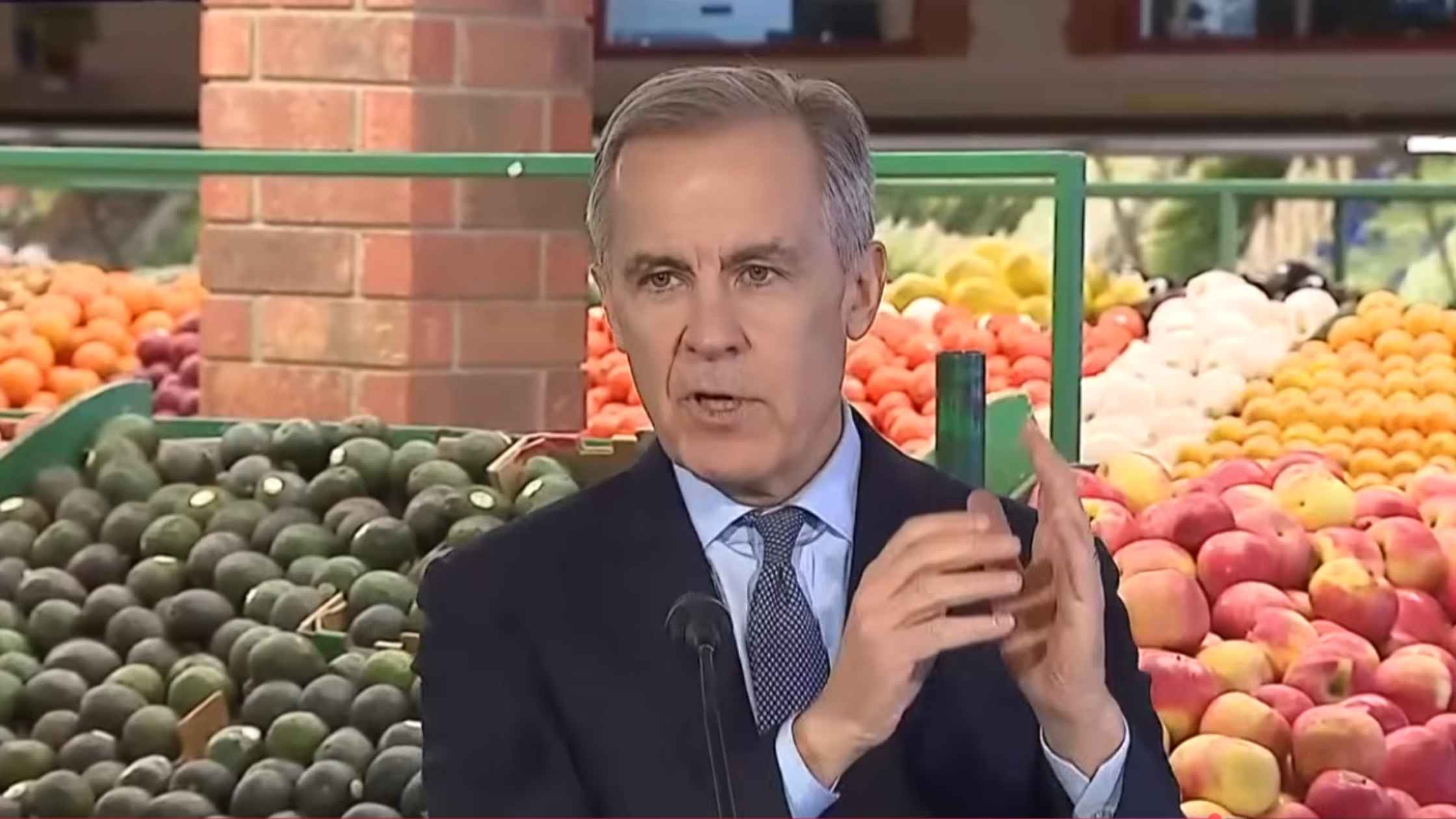
[French 00:06:22], Thank you, François-Philippe. Thank you colleagues for being here, Dave Donnelly. Thank you for welcoming us here to this remarkable establishment that has served the people of Nepean, of Ottawa for over 30 years, 34 years and counting. It is a pleasure to be here with my colleagues from the national capital region. Anita, again, Anita, where are you? There you are. Yep. Thank you for having us here and Dave and team again for welcoming us. Look, we're in a situation where, and Canadians know this, the world's rapidly changing, that's leaving a cloud of uncertainty and worry hanging over all of us, Canadian businesses, Canadian workers, Canadian families. Our government's focused on what we can control, and that starts with building a stronger, more resilient Canadian economy so Canada is less reliant on a single trading partner, and we are more resilient to global shocks, what happens outside of our country. [French 00:07:27].
(07:26)
So we're starting to fundamentally transform our economy, building a stronger, more resilient, more independent Canada. It's already getting results, dozens of new partnerships abroad, launching Build Canada Homes, fast tracking major nation building projects. Our economy, Canada's economy, has created 190,000 jobs on net since August. In absolute terms, that's more than the United States over the same period. We have the right plan. The world is knocking at our door, and momentum is building. But as the Minister of Finance just said, the biggest payoffs will take time, and many Canadians are feeling the pressures right now of everyday expenses. Canadians need a boost today and a bridge to tomorrow. And that's why Canada's new government has been relentlessly focused on making life more affordable for Canadians. On day 1, we canceled the consumer carbon tax, bringing down gas prices by 18 cents a liter. We then cut taxes for 22 middle-class Canadians saving a 2-income family up to $840 this year. We've cut taxes for first-time home buyers, saving them up to $50,000 on their first home purchase. Out East, we've reduced tolls for vehicles on the Confederation Bridge, cutting them from over $50 to $20 and cut fares by 50% on ferries in Atlantic Canada. As the minister just mentioned, we launched automatic federal benefits, which will help 5.5 million lower income Canadians get the benefits to which they are entitled, like the disability tax credit, and indeed the new measures that we're announcing today. We made the national school program permanent, feeding 400,000 children healthy meals while saving their parents $800 per year on groceries.
(10:42)
We also have a series of initiatives that will improve affordability by making structural changes to our economy. That's like building lots of affordable housing through Build Canada Homes. And last week's new strategic partnership with China will make available tens of thousands of affordable electric vehicles in Canada. [French 00:11:05].
(11:05)
Now, bigger picture, overall inflationary pressures are easing. The consumer
Mark Carney (12:00):
Our price inflation rate is back in the Bank of Canada's target range, and average wages in our country have consistently grown faster than the rate of inflation since this government took office. Fees for childcare across Canada have dropped by around 35% over the last three years, thanks to our childcare program. The average cost of cell services has fallen by more than 40% since 2020, that is if you're able to switch plans. Gas prices have dropped by 14% from where they were a year ago, helped by that elimination of the consumer carbon tax. That's all good news. And with our economic plan kicking into gear, there's more good news on the horizon. But at the same time, for many Canadians, the cost of groceries and everyday essentials has been too high for too long. They need more support now. The pandemic caused inflation to spike worldwide, pushing up those costs of groceries and essentials, including rent. Global supply chain shocks subsequently, shocks caused by tariffs, weather events from our changing climate and geopolitical disruptions have caused food prices to rise faster than overall inflation. So orange juice is up 12% year-on-year. Ground beef up 19%. Coffee and tea up by 24%. [foreign language 00:13:31]. So last week, just a few days ago in Quebec City, our cabinet convened, and we focused on how to make life more affordable for Canadians now and also how to tackle the root causes of food insecurity in Canada. Those deliberations, including a long conversation with Kirsten Beardsley, the CEO of Food Banks Canada, to talk about these critical issues and what different levels of government can do to address them. One of the best things, and there are many great things about our country, but one of the best things about our country is that we look out for each other, that we believe our economy is strongest when it serves every Canadian. So we're acting today, Canada's new government is acting today to provide a boost to those Canadian families who most need one, while creating a bridge to longer term food security and affordability.
(15:07)
Everyone pays the same GST on items that they buy no matter how much money they make. But since groceries and other essentials make up a larger share of the budget of lower income Canadians, the GST puts a higher burden on those less well off. The GST credit has helped to make our tax system fairer by returning a portion of the federal sales tax to Canadians with lower incomes, providing relief for people who feel the extra cost at the checkout most acutely. The rise in food prices means that a lot of these Canadians need more support right now. So today we're announcing that our government is launching the new Canada Groceries and Essentials Benefit. This will deliver hundreds of dollars more into the bank accounts of more than 12 million Canadians. Starting this year, we're taking the existing GST credit amount and raising it by 25% for five years.
(16:15)
And in addition, we're providing a one-time payment equivalent to 50% of the GST credit this year. So what does that mean? Well, right now, a family of four receives about $1, 100 a year with the existing GST credit. With the new Canada Groceries and Essentials Benefit, that same family will receive up to $1,890 this year and about $1,400 a year for each of the next four years. A single person receives about $540 a year with the existing credit. With the new benefit, that person will receive up to $950 this year and about $700 a year for the next four years. On average, these payments make up for the higher level of food prices since the pandemic.
(17:15)
In parallel, we're working to address the root causes of inflation and working on longer term solutions to bring down the cost of groceries in Canada. That starts by improving the resilience of our supply chains. Because when issues arise in supply chains, from transportation to process to distribution, costs rise at every step along the way, and these costs end up on grocery bills. Tariffs, for example, are part of that problem. In September, the government launched what we called a new strategic response fund to help sectors across our economy, those impacted by tariffs to adapt, to diversify and to grow. And today, we are committing $500 million from this fund to support capital investments to help food businesses expand capacity, increase productivity, and strengthen our food supply for the future.
(18:11)
In addition, our regional tariff response initiative will provide $150 million for small and medium-sized enterprises to do similar things. This will mean more resilient supply chains, more greenhouses, more abattoirs that are closer to customers, and most importantly, will help mean lower food prices and better food security for Canadians. [foreign language 00:18:35].
(18:34)
To address the root causes of food security, we're developing a new national food security strategy that strengthens domestic food production, improves access to affordable nutritious food. The strategy will include measures to implement unit label pricing, so Canadians can compare easily in this era of shrinkflation. We're also going to provide support for the Competition Bureau in monitoring and enforcing competition in our market across the supply chain. And we will include new measures to strengthen food security in the North, where food insecurity and affordability challenges are felt most intensely. To ease immediate pressures for food banks, we're providing $20 million in a top-up to the local food infrastructure fund. This will help boost community food programs and deliver more nutritious food for families in need.
(20:29)
Canadians are generous people. We take care of each other, particularly in times of need. We know we're stronger together. And during this time of global turmoil, Canadians are coming together to build Canada strong, to build a more independent, secure, and prosperous country, a country that works for all. And we know that getting there will be tough at times. We know that progress won't always move in a straight line. So we know that in times like these, we don't just have to look out for ourselves. We have to take care of each other.
(21:08)
And that starts with everyone being able to put good food on the table. That's why the government's working relentlessly to make life more affordable for everyone. That's why we're stepping up today to help people who need it the most because we can't control what other countries do, but we can control how we support each other during tough times. We can control what we build so that these times will be better in the future. We choose to build Canada strong for all Canadians. Thank you very much, merci, and I look forward to your questions.
Speaker 2 (21:48):
Thank you, Prime Minister. We'll now begin the question portion of the press conference. [foreign language 00:21:56], Tom.
Tom Perry (21:58):
Hi, Prime Minister. Tom Perry with CBC. Since your speech in Davos, we've had Donald Trump threaten fresh tariffs on Canada if we cut a deal with China. He's rescinded your invitation to the Board of Peace. He started calling you governor like you did your predecessor. I'd like to know what you think about all that, and what impact you think your speech had on Canada US relations.
Mark Carney (22:21):
Well, I think the first thing is that my comments in Davos laid out how we see the world, a recognition of how the world has changed, I think a point that Canadians understood months ago. In fact, I think Canada understood the scale of the change, the change in US trade policy, what it meant for our economy. We understood that well before other countries, and we started to react, controlling what we can control, building at home, and very importantly, diversifying our trade partners abroad. That second bit is a positive thing. It's finding new partners. I mentioned in my remarks, 12 new trade and security agreements in the past six months across four continents, more to come. For example, the commitment with India to work together is just one of many. And all of that builds our strength here at home, provides more opportunities, makes us less dependent on the United States.
(23:26)
Last point. We are entering soon in negotiation or review formally of CUSMA, our agreement, as you know, with the United States and Mexico. It'll be a robust review is the expectation. The president is a strong negotiator, and I think some of these comments and positioning should be viewed in the broader context of that.
Tom Perry (23:57):
Going back to Davos as well, the president
Tom (24:00):
... President was interviewed on Fox News and he talked about NATO troops, and NATO troops staying back from the front in Afghanistan. I'm wondering if you think the president should apologize for that. On a secondary topic, on Greenland, he backed down from threats on Greenland. Do you think that settled? Would Canada send troops to Greenland to support their European allies?
Prime Minister Carney (24:21):
So let me be absolutely clear. With respect to the contribution, what everyone should recognize, Canadians recognize, and we are fundamentally grateful for the extraordinary contributions of the men and women of the Canadian armed forces in a variety of theaters, including very much Afghanistan. We were the first to invoke Article 5. We were the first to send support after 9/11 to New York City. We sent 40,000 Canadian troops serving over 13 years on the front lines in Afghanistan. In Kandahar as one example, 158 of those soldiers paid the ultimate sacrifice. One of our diplomats paid the ultimate sacrifice. Thousands more were injured. 30 of our soldiers won the American Bronze Star for service in combat, for courage in combat. It's an extraordinary contribution for liberty, for freedom, for human rights, defending the United States, defending Canadian values. Everyone should recognize that. All Canadians are in their debt. Now, I think you had a second part, but I...
Tom (25:55):
On Greenland.
Prime Minister Carney (25:56):
On Greenland.
Tom (25:56):
Do you think that's settled or would you consider? Is Canada ready to send troops?
Prime Minister Carney (26:00):
I thought from the start the following, which is, and this is a point, by the way, I made at the NATO summit in June. The importance of reinforcing Arctic security across the entire Arctic theater, to use that term, which very much includes Greenland, Northern Arctic, the Nordic countries as well. It has been the view of this government that NATO has not put enough emphasis on that. Canada's putting emphasis since we've come into office, we put emphasis on that. And that the solution to the security needs of Greenland, but the entire Arctic region is coordinated through NATO. First and foremost, Canada will take responsibility for our Arctic, but working in conjunction with others, we have close and deepening cooperation with the Nordic Baltic Eight group of countries. I've met with the NATO secretary general on a couple of occasions, three occasions now about this issue. And I think by reinforcing that security umbrella, it addresses the fundamental needs of those countries, Denmark, addresses the fundamental needs of Greenland, helps support security in Canada. So that aspect is very much taken care of. Thank you.
Mike (27:19):
Morning, Prime Minister. Mike-
Prime Minister Carney (27:20):
Morning.
Mike (27:20):
... [inaudible 00:27:20] with CTV News. I just wanted to follow up on what Tom was asking. Are you offended by being called governor?
Prime Minister Carney (27:26):
I mean, I think in this role you get called a lot of things, a lot of time. And I'm not going to comment on every tweet or truth or comment from whoever, so I can handle it.
Mike (27:43):
As a follow-up-
Prime Minister Carney (27:44):
But I do think this point about our troops is fundamental and respecting our troops, and the contribution that they've made.
Mike (27:54):
I want to follow up on what you were saying yesterday outside of caucus. You said that Canada isn't pursuing a free trade agreement with China. What efforts are you or your ministers making with the Trump administration to communicate that to them, so that those threats of tariffs stop?
Prime Minister Carney (28:09):
Well, I interpreted the president's comments exactly that way, which is looking forward to a deeper, were we pursuing a deeper free trade agreement? We've made it clear. My fellow members of cabinet ministers have made it clear to their counterparts that that's the case. We've made the public point. And it's obvious. Look, Canada, when we sign an agreement, we sign a trade agreement, in this case, USMCA, as they call it, or CUSMA as we call it. There is a clause in that agreement, Article 32-10, I believe, which says that you have to give notice in effect if you're pursuing a free trade agreement with a "non-market economy."
(28:56)
That's in the eye of the beholder who defines it, but it's a definition of any of the other parties who see somebody as a non-market economy. China is one of 15 or 17 economies that the US views as non-market. I can understand why they say that. So we got an agreement. If we were even considering that, which we are not and never have, we would have given notice and then there's a very open and transparent process. Thank you.
Michel Saba (29:23):
[French 00:29:28].
Prime Minister Carney (29:23):
[French 00:29:44].
Michel Saba (29:23):
[French 00:31:36].
Prime Minister Carney (32:16):
[French 00:31:55]. In ways and means. [French 00:32:19]
Mackenzie Gray (32:18):
Good morning, Prime Minister. Mackenzie Gray with Global News. Are you considering calling a snap election this spring?
Prime Minister Carney (33:06):
I'm going to go back to the previous answer. What we're focused on is solutions for Canadians. So today's announcement, we'll be tabling legislations soon, very soon. We would love, and we think it's very important to have collaboration, so we can move that quickly through parliament, so particularly the one time bonus gets into people's bank accounts as quickly as possible. We still have elements of the Budget Implementation Act, which have not been formally passed by Parliament, not been passed by Parliament.
(33:44)
That's that tax cut for 22 million Canadians. That's the extension of the National School Food Program. That is a series of other measures that go directly to the issue that we're discussing today around affordability. We have the toughest tightening of crime legislation in living memory. It has been held up in committee, series of bills held up in committee. We need to move forward on that, and so there's an opportunity to do that. All of that is an opportunity for the collaboration that's referenced by the leader of the opposition, and this government is going to work hard, as we did in the fall, as we did last spring, in order to get legislation through the house.
Mackenzie Gray (34:33):
This feels like many days we spent on the campaign when I was covering the campaign, lots of grocery stores, lots of affordability, so you're not considering a spring election?
Prime Minister Carney (34:42):
You can't draw that conclusion at all. We-
Mackenzie Gray (34:45):
Well, tell me that.
Prime Minister Carney (34:47):
Well, of course we're not. We're not. We're focused on results for Canadians. We're working through parliaments to get results for Canadians. We are securing trade deals around the world for Canadians, for the future of Canadians. We are identifying major projects for the future of Canadians. We are executing through Build Canada homes for Canadians. We're going to continue to do all of that. We have the privilege of a mandate from Canadians. And I'll say one other thing if I may, Mr. Gray. We were very clear when we ran in the last election what we intended to do. Very clear, very detailed platform, and we are delivering on that, and we invite Parliament to support us in it.
Emily Haws (35:36):
Hi, Prime Minister. Emily Haws from the Globe & Mail. How much will this benefit, the GST credit, how much is this benefit actually going to cost overall, like these new initiatives? And as well, what's to stop grocery retailers from raising their prices to just absorb this benefit?
Prime Minister Carney (35:53):
Okay. So I'll answer both legs of that, obviously. The first, in terms of the numbers,
Prime Minister Carney (36:00):
... This is a test. You're testing me in front of my minister who knows it down to the cent. But the cost, the first year is a little over $3 billion, $3.1 billion. And the reason for that is this payment, the boost is the way I referred to it, which makes up for if you had overall levels of inflation and then food price inflation going like that since the pandemic, can you add a third hand? It makes up for the difference between those two lines. Okay, it makes up for this. So there's the bigger amount. Then in the subsequent four years, there's the 25% increase in the GST credit. And there's a bit of a timing thing, but in effect, it goes 3.1, 1.3 billion, and then about 1.8 billion for those last three years. Okay? There's a timing issue, we can provide you with all the background. Key point on your second part of the question. This is not a case of taking off GST at the checkout. Now it wouldn't happen here at Produce. Let's just be clear.
(37:12)
They're not happening here at Produce Depot, which passes on savings to their customers. But what you described as a case is if you took off GST and then, well, maybe the grocery store doesn't give ... This is money that goes to individuals. This is money that goes to individuals, directly to individuals. It's not based on what they spend. It's not tied here. And they can spend that money on anything they want, it's Canada, it's a free country. They spend it on anything they want as they should. Lower income Canadians, as you know, spend a higher share of their income on food and rent. So they're more likely to spend it on food, but there's no differentiation. I mean, there's no mechanism for what you're saying to happen to happen.
Speaker 3 (38:02):
I mean, my thinking was if you know that people are getting more money and therefore you can just raise your price.
Prime Minister Carney (38:08):
Well, you could say that about any aspect that grows the economy. And I'll say as well, if I may, I'm not accepting the premise of your question, but your general point, which is around competition in the industry. And one of the things we're doing is reinforcing the competition bureau's oversight of the industry as a whole, plus working. And we have to work with provinces, as the minister knows, to move towards unit label pricing so that you have a true and very visible comparator between two types of good. What is it per liter, per kilogram, per amount? And that's particularly in this time of where we see shrinkflation, packaging change, amounts change. It's a very important development. So it's something I will be raising with the provinces on later this week at First Ministers.
Speaker 3 (39:05):
And only a few pieces of your legislation that have been directly connected to your agenda have passed. I'm thinking the most significant is probably C5. You're doing many things via regulation instead. I was just curious, do you think that Parliament matters and what role do you think it plays in implementing your agenda?
Prime Minister Carney (39:21):
Parliament matters tremendously, which is I'll refer back to the previous question on the opportunity for cooperation in parliament. And it's very important. The crime legislation from tougher bail, tougher sentencing, protecting younger Canadians, protecting from online harms, protecting people who go to their place of worship or their community center, protecting them from harassment. All of that crime legislation is being held up. All of that is being held up in parliament. You can't regulate any of that. Parliament matters. And that's where the opportunity is with greater collaboration. And that's why we welcome it and we will work with all the parties in parliament to help get the right legislation through for Canadians.
Speaker 3 (40:07):
Thank you.
Speaker 4 (40:07):
[foreign language 00:40:10].
Speaker 5 (40:07):
[foreign language 00:40:12].
Prime Minister Carney (40:07):
[foreign language 00:40:29].
Speaker 5 (40:07):
[foreign language 00:41:23].
Prime Minister Carney (40:07):
[foreign language 00:41:33].
Speaker 5 (40:07):
[foreign language 00:42:33].
Prime Minister Carney (40:07):
[foreign language 00:42:43].
Speaker 7 (40:07):
Thank you. This concludes our press conference.
Prime Minister Carney (43:35):
Merci beaucoup. Did I get my numbers right?
Speaker 6 (43:36):
Yes. I double checked them. I double checked them.