
Digital Forensics Tools to Help Beat Evidence Overwhelm
Rev’s breakdown of tools for gathering and organizing digital evidence covers a wide range of cyber forensics software and free digital forensics tools.


Every crime leaves a digital footprint—even the ones that seem entirely offline.
From a suspect's deleted text messages to GPS coordinates buried in a smartphone's history, modern digital evidence is embedded in nearly every investigation imaginable.
For investigators, this creates both opportunity and overwhelm. The main issue? Digital evidence doesn't organize itself. Investigators need tools that can handle forensic imaging, data recovery, document analysis, and report generation without adding hours to an already packed caseload.
Whether you're investigating a cybersecurity breach, building a case with mobile device evidence, or analyzing computer-related crime, the right digital forensics tools make the difference between buried evidence and case-winning insights.
Here are 11 digital forensics tools that help investigators quickly surface what matters.
Types of Digital Forensic Tools
Digital forensics tools typically fall into a few distinct categories, although a good forensics toolkit will bridge a few different categories. In any given case, digital forensics investigators might need to check internet histories, analyze mobile phones, recover deleted files, or scour online footage. Tools are needed for each of these tasks. Luckily, there are plenty of digital forensics tools available, with more coming regularly.
These cyber forensics software platforms can be very expensive, but there are also plenty of free digital forensics tools or open source forensic tools that are very good.
The main types of digital forensics tools you should get familiar with are:
- Internet analysis
- File recovery and analysis
- Disk and data capture
- Mobile device analysis
- Database analysis
- Attack detection and prevention
1. Cyber Triage
Cyber Triage is built for fast and efficient investigations of cyber attacks, allowing users to quickly analyze a situation, get it under control, and prevent future attacks. By focusing on incident response, Cyber Triage is a perfect rapid-response tool when time is of the essence.
As a fully automated incident response software that constantly updates with the most current threat intelligence, Cyber Triage covers everything that digital investigators might need when investigating digital crimes. It’s costly, though, at $2,500 per year, and there is a steep learning curve. Private investigators or small firms might think twice before footing the bill for a complicated—albeit useful—tool.
Type: Incident response software
Price: Plans start at $2,500/year
Best for: Rapid investigation of cyber incidents
What users say: “Quick identification of threats facilitates a more efficient and targeted response every time.” -Praneet P. on G2.
2. Autopsy
Autopsy is an open-source forensic tool that can examine phones, computers, and other devices to recreate digital footprints and actions. With a robust keyword search, timeline analysis features, and the ability to recover deleted files, Autopsy is a comprehensive tool for rapid digital data analysis. In our opinion, it’s one of the top free digital forensics tools available.
Though Autopsy is free to use, be warned that it does have a steep learning curve. But if you have a little digital know-how, the platform can analyze an unprecedented range of file systems, including NTFS, FAT, exFAT, HFS+, Ext2/3/4, and UFS. Its “timeline” view even lets investigators perfectly reconstruct events by analyzing file timestamps.
Type: Open-source digital forensics platform
Price: Free
Best for: Data extraction and forensic analysis
What users say: “The software provides a powerful platform for forensic analysis, making it easier to navigate through complex datasets and examine digital evidence efficiently. Additionally, its extensive range of built-in tools streamlines the investigative process, allowing for a comprehensive examination of digital artifacts.” - Madhura T., on G2
3. Rev
Consider Rev the ultimate sidekick to all the other digital forensics tools out there.
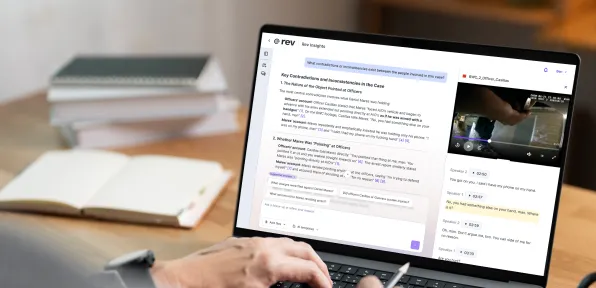
Over the course of any digital forensics investigation, there can be hours upon hours of recorded audio and video footage. Parsing this footage can take a lot of time and manpower that most teams simply don’t have. But with Rev in your toolkit, you can automatically turn audio and video into text documents that can easily be scanned, searched, and shared.
When it comes to analyzing that digital evidence, quick and accurate forensic audio transcription can be a case-breaker. Rev’s industry-leading ASR means that you can trust that the transcripts are reliable, and our AI tools can help you analyse those files for insights and other important information. For instance, if a person in a recorded conversation isn’t consistent about a date, Rev can point that out for you.
You can even create reusable AI templates that help with evidence management, organization, and presentations. Handy!
Type: Transcription and document analysis platform
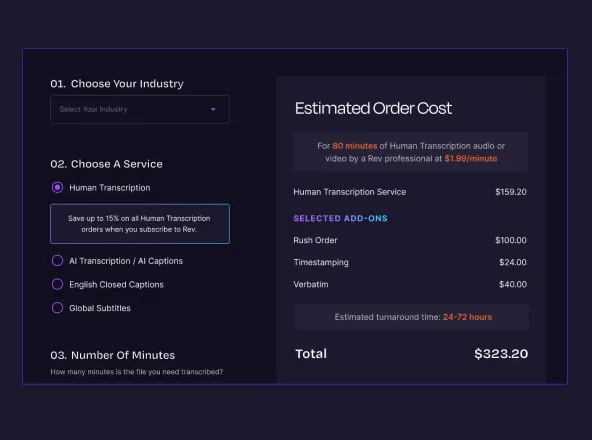
Price: Plans start at $29.99/month, but free subscriptions and unlimited plans are available.
Best for: Forensic audio transcription
What users say: “I appreciate that Rev offers a timeline feature that effectively organizes all of my evidence, which is beneficial for structuring my work…its functionality in assembling evidence systematically stands out as particularly useful.” -Louisiana F., on G2
4. OpenText EnCase
EnCase recovers evidence and analyzes computers, phones, hard drives, and other devices involved in cybersecurity breaches. It’s built to tackle digital forensics at all stages of a case, from intake to final report generation.
As part of the OpenText ecosystem, the platform offers access to EnCase Forensic, EnCase Endpoint Investigator, and EnCase Mobile Investigator, which can help everyone from law enforcement officials to HR investigators looking for compliance issues and IP theft.
Type: Comprehensive digital forensics platform
Price: Contact for pricing
Best for: Digital evidence recovery
What users say: “EnCase Endpoint Security stands out as a robust program for safeguarding against sophisticated cyber-attacks. Employing cutting-edge analytics, machine learning, and behavioral analysis, it promptly recognizes and addresses potential security threats. The program also boasts features like incident response, threat intelligence, and comprehensive data discovery and classification.” -Roland K., on G2
6. Guardz
Guardz sets itself apart by catering its cybersecurity platform specifically for small businesses. With a single intuitive dashboard, users have their essential security controls at their fingertips, with everything protected. While it’s built to protect identities, endpoints, and email, it also uses digital forensics to identify potential vulnerabilities like attack scenarios, leaked credentials, and other potential external threats.
Type: Unified cybersecurity platform
Price: Contact for pricing—free trial available
Best for: Cybersecurity for smaller companies
What users say: “What I like best about Guardz is how it’s built specifically for small businesses—it makes cybersecurity management straightforward and accessible. I appreciate how easy it is to get started, the clear dashboards, and the automatic monitoring features. It really helps me feel more confident about catching risks early without needing a dedicated IT security staff.” -Sean A., on G2
7. Imperva Attack Analytics
Imperva Attack Analytics is built to assist organizations in pinpointing and dissecting large-scale cyber attacks. Using AI as well as its own domain expertise, Imperva Attack Analytics unearths the patterns in the “noise” to detect as well as prevent attacks.
Imperva’s focus on large-scale attacks makes it a great option for large organizations. It tends to require a lot of storage and isn’t the easiest for beginners to learn, but its comprehensive security features make it ideal for deciphering and documenting current and future attacks.
Type: Attack detection and prevention
Price: Call for pricing—free trial available
Best for: Identifying and preventing large-scale cyber attacks
What users say: “I am currently using Imperva Analytics to analyze all the web traffic that our domains receive with this system we can measure different metrics, for example, we can know where the attacks come from in detail, what technique they used, from what country and the public IPs of attackers, in the same way we can see the peak hours of more attacks and the bandwidth that these events are causing us. In itself, it is an excellent security tool that gives us greater visibility.” -Franklin Lara, on TrustRadius
8. Cellebrite
For cellphone discovery, forensic investigators need Cellebrite. Cellebrite’s cellphone extraction software unlocks, decrypts, and extracts digital evidence on most Android and iOS devices.
Cellebrite’s compatibility with all sorts of mobile devices makes it a vital digital forensics tool; users can trust that it will work, no matter the device being analyzed. That compatibility extends to playing nice with other tech, too. Users don’t have to worry about incorporating Cellebrite into their tech stack, which is a major concern when looking at new platforms.
It’s pricey, though; while specific pricing isn’t available on its website, some users report more than $10,000 for an annual subscription.
Type: Cellphone extraction software
Price: Contact for pricing
Best for: Mobile data extraction
What users say: “Cellebrite offers comprehensive data extraction for ediscovery in a user-friendly interface. I also like the ability to customize via scripts and workflows and generate reports.” -Verified user, on G2
9. DomainTools
When it comes to researching domain names and DNS records, DomainTools is the go-to platform. DomainTools can provide immediate context and AI-driven risk analytics for those investigating potential digital threats.
The platform’s claim to fame is its comprehensive domain metadata extraction abilities. Those investigating cybercrime and cyberespionage can use its advanced domain intelligence to better understand behavior patterns, which, in turn, help better understand the crime. It has a steep learning curve, though, so be prepared to spend a lot of time on the platform when you’re getting started.
Type: Internet analysis
Price: $99/month
Best for: Domain and DNS research
What users say: “This is a perfect tool for security and managing domain-related tasks for my company. Its report system is awesome; the level of detail it provides is awesome. It is very easy to use and simple to integrate.” -Priyanka S., on G2
10. ExtraHop
ExtraHop monitors network activity and provides real-time updates and malware analysis. It essentially provides users with a complete look at all in-network traffic. This complete network visibility makes it easy to identify and prevent potential attacks and breaches.
What makes ExtraHop a good digital forensics tool is its advanced but easy-to-grasp graphic interface, which makes it simple for anyone to get the full picture of their network activity.
Type: Attack detection and prevention
Price: Plans start at $5.04/hour
Best for: Network activity analysis and malware analysis
What users say: “Where I find ExtraHop excels is through complete network visibility by mapping assets, learning network traffic and spotting anomalies, and giving Security Operations teams visibility into what is occurring on their network.” -Verified User on G2
11. Bulk Extractor
Bulk Extractor is an open-source digital forensics tool that can be used to scan literally any form of digital media, from hard drives and smartphones to SD cards. The software can scan a disk image, a file, or a directory of files, analyze the info, and extract useful data.
The extracted information can then be processed using built-in automated tools, like the “histogram creator” that uses word lists and email addresses to create a comprehensive picture of digital activity.
Type: Disk and data capture
Price: Free
Best for: Information extraction
What users say: “Bulk_extractor can be used to process any digital media. We have used the program to process hard drives, SSDs, optical media, camera cards, cell phones, network packet dumps, and other kinds of digital information,” from Forensics.wiki
What Is the Best Tool for Digital Forensics?
The best tool for digital forensics is Autopsy, due to its open source (and free!) format combined with a robust list of features that help investigators recreate digital breaches and other events.
However, you may find that Autopsy doesn’t provide all the help you really need during your investigation. That’s where Rev comes in. While we’re not technically a digital forensics platform, Rev is a perfect complement to every digital forensics platform. Our comprehensive list of AI offerings, from instant transcription to customizable templates, makes organizing digital evidence easier than ever, regardless of your primary forensics tool.
What Is a DFIR Tool?
A DFIR (Digital Forensics and Incident Response) is a tool that helps determine the ramifications of a cyberattack while investigating the attack as it happens. A DFIR investigation can not only fix problems caused by the attack, but it can also help prevent future attacks and uncover evidence needed for the prosecution of the attackers. Some prominent DFIR tools include:
- CrowdStrike Falcon Forensics: offers a variety of expert investigation, response, and recovery services.
- Magnet AXIOM Cyber: a digital investigative solution that can remotely collect data from computers and the cloud and analyze it alongside mobile, IoT, and third-party data.
- ProDiscover: a real-time cybercrime investigation platform that can analyze media files rapidly and locate hidden files, partitions, and recover deleted data quickly
Before You Buy…
The good news for digital investigators is that there are a lot of useful digital forensics tools available. The bad news is that with so many choices, it can be easy to choose the wrong tool.
Not every tool fits every budget, and while some tools are attractive for their comprehensive feature list, if you don’t use many of those key features, what are you truly gaining for your money?
For instance, if you specialize in data recovery, maybe you don’t need a more expensive tool that can also analyze mobile devices. But if your cases tend to include cellphone recovery, it might be worth finding a digital forensic solution that can do both.
Before you decide on what digital forensics software to buy, check to see if it meets your needs in these areas:
- Price: While there are plenty of high-quality free or open source digital forensic tools, these tools often don’t have the inherent tech support or polished dashboards. Weigh the cost of the platform against how much time it will actually save you. In some cases, the expensive options might be worth the investment.
- Compatibility: The forensic tools that play well with others will be easier to integrate into your tech stack. If you have to waste time constantly tweaking your data to work on each platform, any efficiency you gain could be squandered.
- Multi-tasking: The best platforms, just like the best investigators, are the ones that do several things well. The more options offered in a single platform, the easier it will be to do your job. Look for platforms with multiple "specialties." Does it do file recovery and internet analysis? What about forensic statement analysis? Can it tackle mobile devices and databases?
Analyze Evidence With Rev
If your primary digital forensic tool is Sherlock, Rev is your Watson. Whether your favorite platform is crime scene investigation software or specializes in cybersecurity investigations, Rev can turn the reams of data it collects into usable, actionable evidence. The fight for justice deserves better technology, and Rev is leading the digital charge by helping the best digital forensic tools be even better.

.webp)
.webp)
.webp)
.webp)